Download App
Better Online and Trade Show Sourcing Experiences.Scan the QR code to download.
Learn More

10 yrs
 ,
Exporter
| Model Number | XH-WA019-S-13-#1369 | Brand Name | XH |
|---|---|---|---|
| origin | China | ||
12V2A Power adapter, UL, FCC, CE, BS, GS, KC, PSE,SAA Certified
12V2A Power adapter Electrical characteristics:
12V2A Power adapter Applications:
Wireless telephone, routers, Bluetooth products, digital products, mobile phone chargers, battery chargers, electric toy charger, TV box charger and security camera
12V2A Power adapter Product characteristics:
Honor and Certificate
12V2A Power adapter Output protections:
12V2A Power adapter Environmental characteristics:
NOTE: Only one model is listed here. We have many models. We can also make customized products according to your needs. If you want to know more, please contact us.
There are obvious differences between power adapters and chargers in multiple aspects, and I will elaborate on them in detail from several aspects such as definition, structure, function, and application.
1. Definition and Function
Power adapter: It is a device that converts alternating current (AC) to direct current (DC), also known as an AC-DC converter. It is mainly used to provide stable and reliable power supply for various electronic devices, such as laptops, mobile phones, tablets, etc. The main function of a power adapter is voltage conversion and current stability, ensuring that electronic devices operate at the correct voltage and current.
Charger: As the name suggests, a charger is mainly used to charge batteries. It usually includes a power adapter and a charging cable (also known as a charging interface). The function of a charger is not only to convert AC power to DC power, but more importantly, it includes a charging control circuit that can intelligently and dynamically adjust according to the capacity and charging characteristics of the battery, achieving an efficient and safe charging process.
2. Structural composition
Power adapter: mainly composed of components such as housing, transformer, PCB board (printed circuit board), control chip, capacitor, inductor, etc. Its structure is simple, mainly responsible for power conversion and stable output.
Charger: It is relatively complex, in addition to including all the components of the power adapter, it also integrates various charging control circuits and protection mechanisms, such as voltage limiting, constant current, time limiting, etc., to ensure the safety and stability of the charging process.
3. Current mode
Power adapter: Its current mode is mainly from AC input to DC output, outputting stable DC power to meet the power needs of electronic devices.
Charger: It adopts a constant current and voltage limiting charging system, which automatically adjusts the charging current and voltage according to the charging status and demand of the battery to achieve efficient and safe charging.
4. Application scenarios
Power adapter: widely used in various electronic devices that require DC power supply, such as laptops, mobile phones, tablets, printers, etc. It is usually used as an external power supply device for the equipment, separate from the device.
Charger: It is mainly used to charge devices powered by rechargeable batteries, such as mobile phones, electric vehicles, flashlights, etc. Chargers are usually used in conjunction with devices or sold separately as accessories for devices.
In summary, there are significant differences between power adapters and chargers in terms of definition, structure, function, and application. Power adapters focus more on power conversion and stable output, while chargers focus more on controlling and protecting the charging process. When selecting and using, it is necessary to choose suitable equipment based on specific needs and equipment requirements.
Company profile
| Certificate Standard |
TUV
| ||||
|---|---|---|---|---|---|
| Certificate Image |  Click on the picture to see a larger one | ||||
| Certificate Number | N8AUK0969680032Rev.00 | ||||
| Validity | From 2022/05/25 To 2027/05/24 | ||||
| Issued By | TÜV SUD | ||||
| Certificate Standard |
UL
| ||||
|---|---|---|---|---|---|
| Certificate Image | 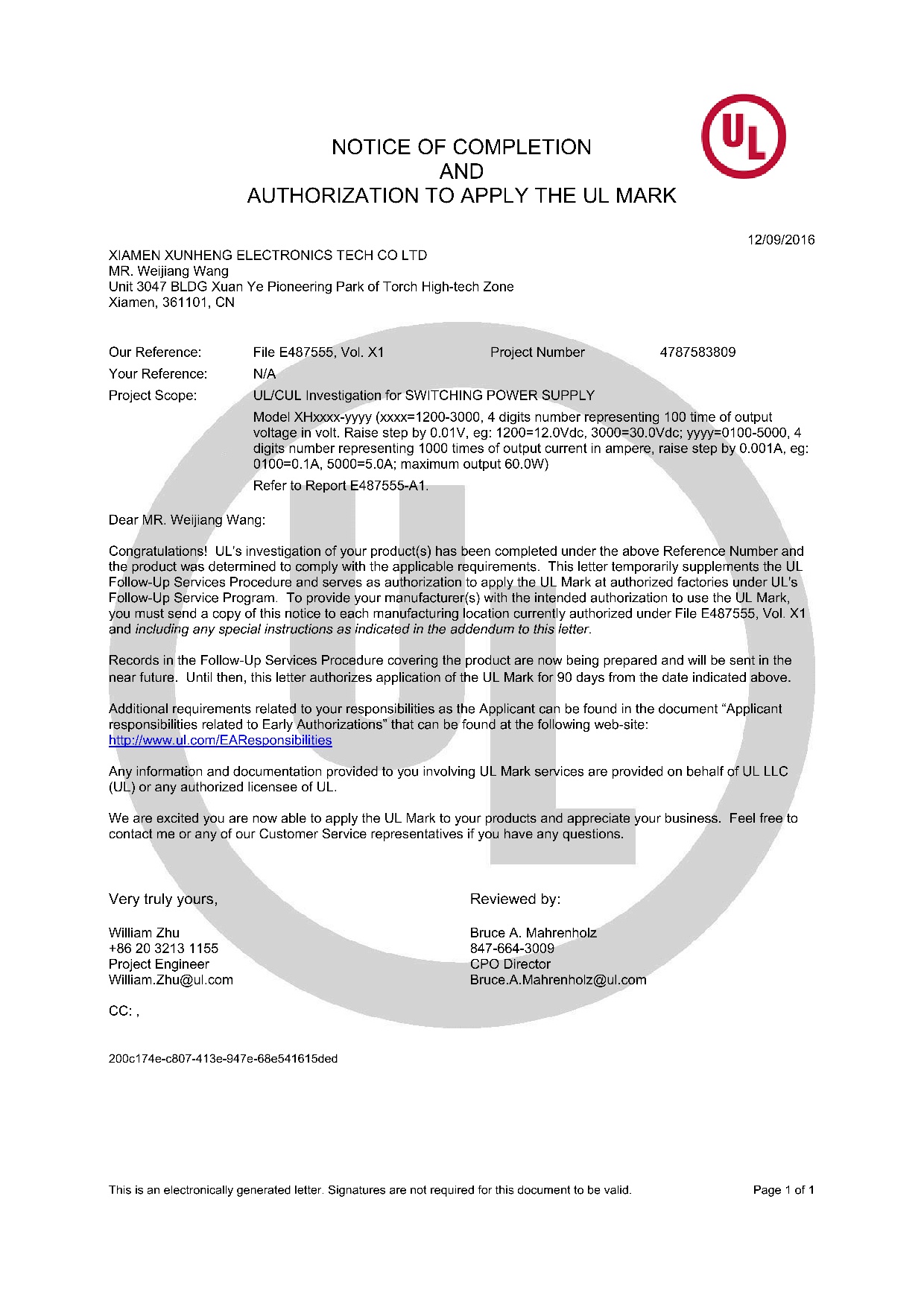 Click on the picture to see a larger one | ||||
| Certificate Number | E487555 | ||||
| Validity | From 2020/02/17 | ||||
| Issued By | UL Laboratory | ||||
| Certificate Standard |
UL
| ||||
|---|---|---|---|---|---|
| Certificate Image | 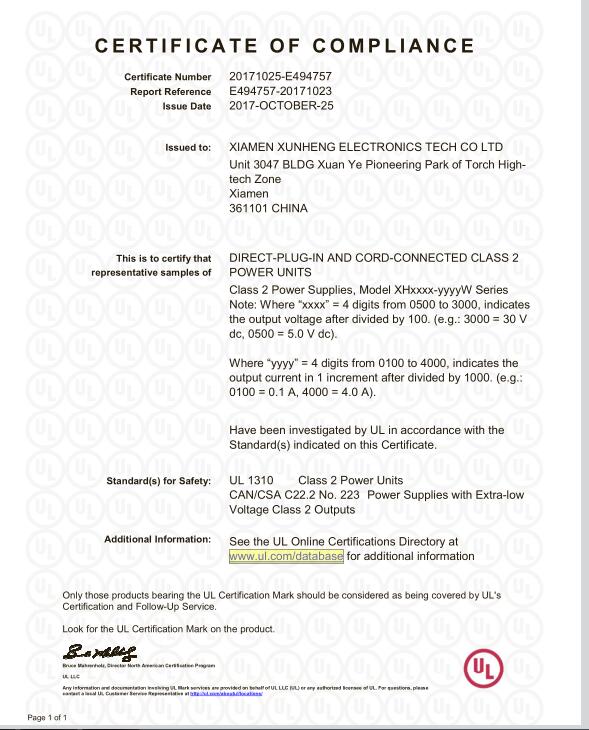 Click on the picture to see a larger one | ||||
| Certificate Number | E494757 | ||||
| Validity | From 2017/10/24 | ||||
| Issued By | UL LLC | ||||
| Certificate Standard |
EMC
| ||||
|---|---|---|---|---|---|
| Certificate Image | 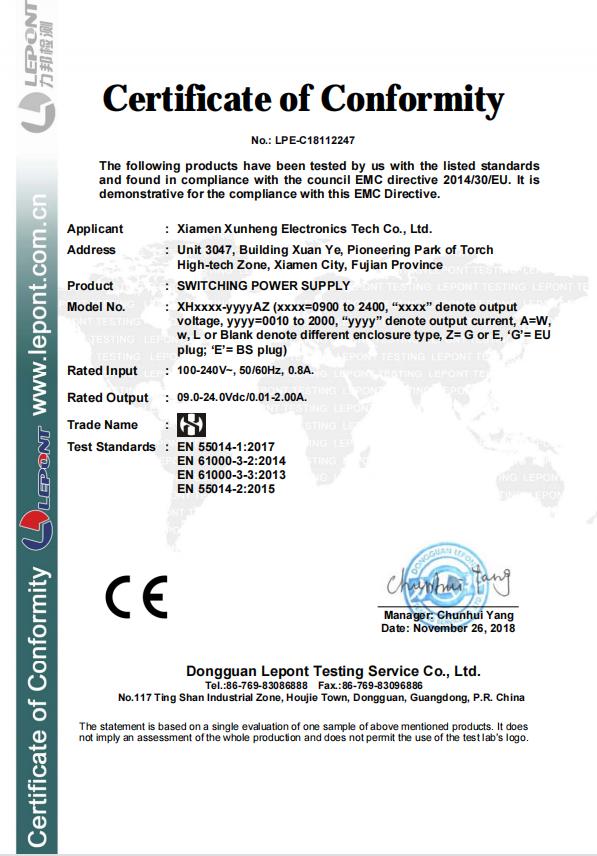 Click on the picture to see a larger one | ||||
| Certificate Number | LPE-C18112247 | ||||
| Validity | From 2016/11/25 | ||||
| Issued By | Lepont | ||||
| FOB Port | Xiamen | Lead Time | 15–20 days |
|---|---|---|---|
| Weight per Unit | 200.0 Grams | Dimensions per Unit | 7.7 x 6.7 x 17.5 Centimeters |
| HTS Code | 8504.40.95 10 | Units per Export Carton | 150.0 |
| Export Carton Dimensions L/W/H | 40.5 x 35.5 x 38.0 Centimeters | Export Carton Weight | 1.5 Kilograms |
| Main Export Markets |
Asia,
Australasia,
Central/South America,
Eastern Europe,
Mid East/Africa,
North America,
Western Europe | ||
|---|---|---|---|
| Payment Method | Telegraphic Transfer in Advance (Advance TT, T/T) | ||||
|---|---|---|---|---|---|


关注 “环球资源外贸” 官方微信,获取实时外贸资讯