




NdFeB magnets are the top choice for permanent magnet synchronous motors (PMSMs) and brushless DC (BLDC) motors used in electric vehicles (EVs). They are favored for their high magnetic field strength, allowing motors to produce more torque and boosting their energy efficiency while reducing their size and weight. As such, they are the strongest available for use in EVs, offering the best performance in compact configuration.
However, these magnets have an equally high cost as neodymium, being a rare-earth element (REE), is difficult to extract and separate. In addition, they pose a supply chain challenge because processing is concentrated in China, which has placed export restrictions on REEs and rare-earth magnets.
Outsized demand in EVs is another factor impacting supply. An EV requires 1 to 3kg of these magnets in its traction motor. Estimates by US-company Magnet Applications are between 2.5 and 5kg in a hybrid or pure-electric vehicle, listing rare-earth magnets used in HVAC, steering, transmission, brakes, and hybrid engine or electric motor compartment. Sensors, doors, windows, entertainment system, batteries, as well as fuel and exhaust systems in hybrids are the other applications.
As a result, NdFeB magnet costs surged, with industry reports between 2024 and 2026 indicating increases exceeding 40 percent in some cases. This development has encouraged research into alternatives, with ferrites tapped as sufficient and less expensive for entry-level and midrange EVs. Such use is said to bring down the total cost of motor drives, from 15 percent with NdFeB magnets to 7 percent with ferrites.
Doubling down
Capitalizing on their country’s near-monopoly on REE industry, Chinese manufacturers will continue to develop and release high-performance NdFeB magnets in the coming years. They are confident that it is still a long way to go to realize industrialization for alternative materials with comparable stability characteristics.
Based on estimates by China Securities, global demand for these magnets will skyrocket by 80 percent, hitting 188,000 tons in 2026 from 102,000 tons in 2022. By application, EVs accounted for 15 percent of high-performance NdFeB magnets worldwide in 2020 and increased to 29.1 percent in 2025 based on statistics from Frost & Sullivan. Despite the shift to ferrite magnets in entry-level and midrange EVs, the upward trend for neodymium will continue in the coming years, still the primary option in this automotive segment.
In China, NdFeB magnets reached $10.3 billion in 2024, rising by 11.44 percent year on year, according to Zhiyan Consulting. This will go higher as manufacturers expand production. Innuovo, a leading company in this category catering to demand in electric motors and EV components, announced an investment of $60.57 million in a new project. The facility is expected to be completed later in 2026 and will operate on a mass scale by early 2027, boosting the supplier’s annual capacity by 5,000 tons.
Meanwhile, Ganzhou-headquartered JL Mag achieved a record output of 29,300 tons of magnet blanks in 2024 at capacity utilization of more than 90 percent. The company pushed its annual capacity toward 40,000 tons the following year and is currently working on hitting 60,000 tons by 2027. Despite the export restrictions, JL Mag will likely remain a key partner of Tesla and Toyota. The company, which also supplies BYD, is the world’s top manufacturer of rare-earth permanent magnets.
Other Chinese manufacturers are turning to filling domestic demand and remain optimistic of sales growth in the years ahead.
Strengthening market control
China dominates the NdFeB magnet market, with a share of over 80 percent of global output. The rest comes from key suppliers including Proterial and TDK of Japan and VAC of Germany.
Zhong Ke San Huan, JL Mag, Ningbo Yunsheng, DMEGC, Innuovo and ZHMag are among the top 10 Chinese companies with a collective share exceeding 80 percent of the domestic market. Most of the sector’s homegrown enterprises in China are found in Beijing, Yantai, Baotou, Ningbo, Dongyang, Xiamen and Ganzhou.
China-made NdFeB magnets for EVs are available in grades of N35 to N58. These are mainly used in motor drives, audio devices and sensors.
Due to high demand in EVs and other applications, as well as export restrictions, the cost of REEs rose in 2025, leading NdFeB magnet suppliers to quote 10 to 20 percent higher prices. Prices went up by as much as 30 percent for advanced units. Further increases are expected for the rest of 2026.
China has the largest rare earth reserves, some 44 million tons according to the US Geological Survey’s report in January 2025. This is corroborated in data from China Securities, which has projected that REE production volume will reach 521,000 tons in 2030 and smelting and separating will be 519,000 tons.
REE-free alternatives
Research initiatives focus on finding alternatives that compare in performance to NdFeB magnets for use in high-end EVs.
Elon Musk announced that his engineers were working on a new permanent magnet electric motor with no rare-earth elements in 2023, but Tesla has yet to launch such an EV.
According to a November 2025 article on S&P Global, “The need for risk mitigation will see REE-free EV motors steadily gain share and nearly triple their representation by 2037.” The same source said that EV motors with REEs accounted for nearly 94.7 percent of the global light vehicle electric motor market in 2025.
Being considered are current-excited wound rotor synchronous motors or externally excited synchronous motors (EESM) as a replacement of interior permanent magnet (IPM) EV motors. “Recently, OEMs have been actively investigating EESM motors as a viable alternative to PMSM motors, as EESMs mitigate the risks linked to REEs,” said S&P Global Mobility technical research principal analyst Kartik Ganesh. “Additionally, more suppliers are beginning to develop EESMs to meet this growing demand.”
Other ongoing efforts include a “clean earth magnet” made from iron nitride at the University of Minnesota in collaboration with startup Niron Magnetics. In September 2025, Niron broke ground on its 17,652sqm facility in Sartell, Minnesota. The plant will be operational in early 2027.
Induction motors are another consideration. General Motors and Volkswagen are expected to follow Tesla’s lead by 2030.
The products in this gallery have been handpicked by our China-based market analyst for representing current trends in NdFeB magnets from Chinese manufacturers.
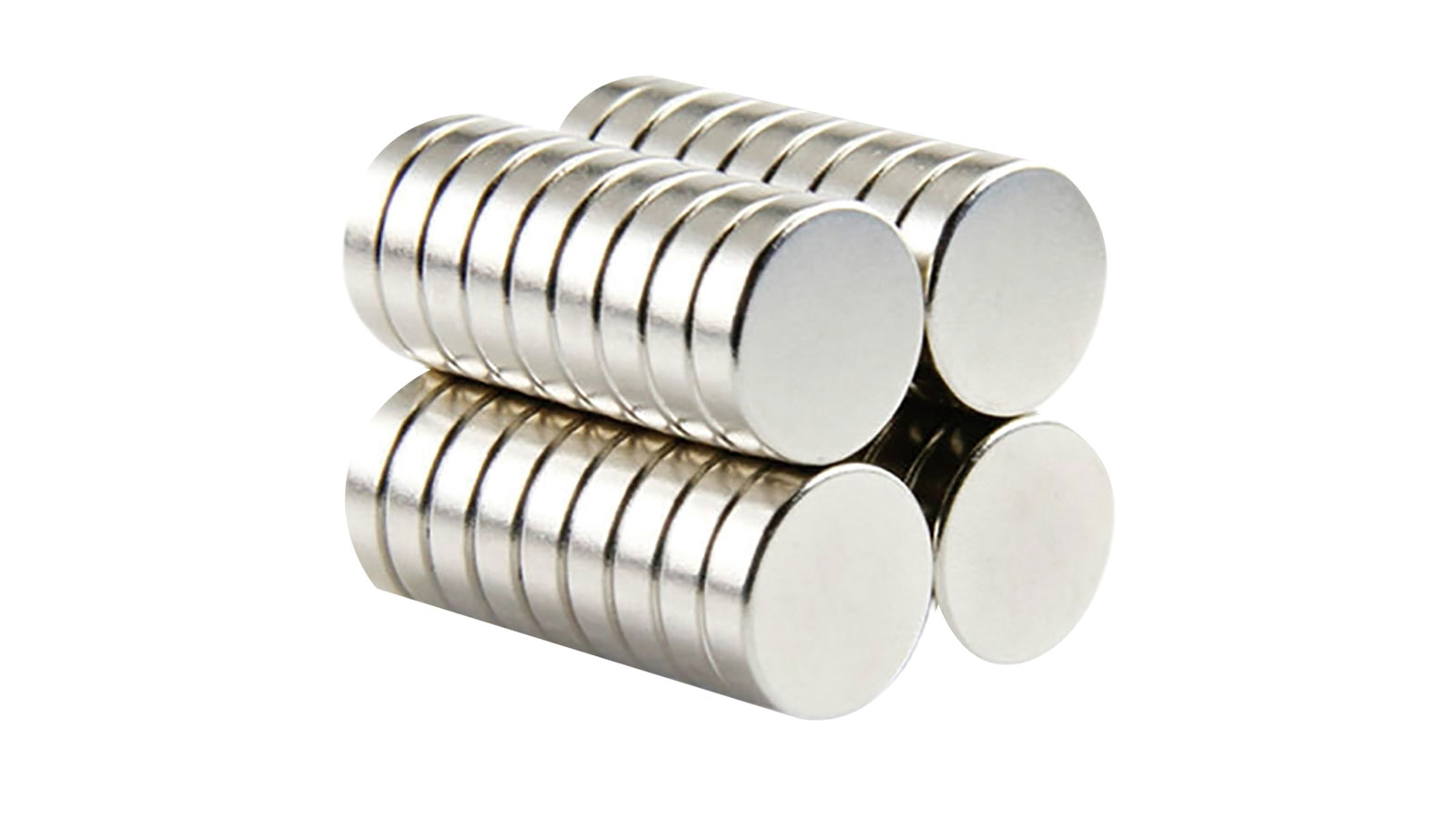
NdFeB magnet, N35 to N52 variants
Company: Dongguan Yuyue Permanent Magnet Technology Co. Ltd
Available in N35 to N52 grades and custom sizes and shapes, the NdFeB Magnet-1 from Dongguan Yuyue has NiCuNi, zinc or epoxy coating.
MOQ: 100 units
Lead time: 7 days
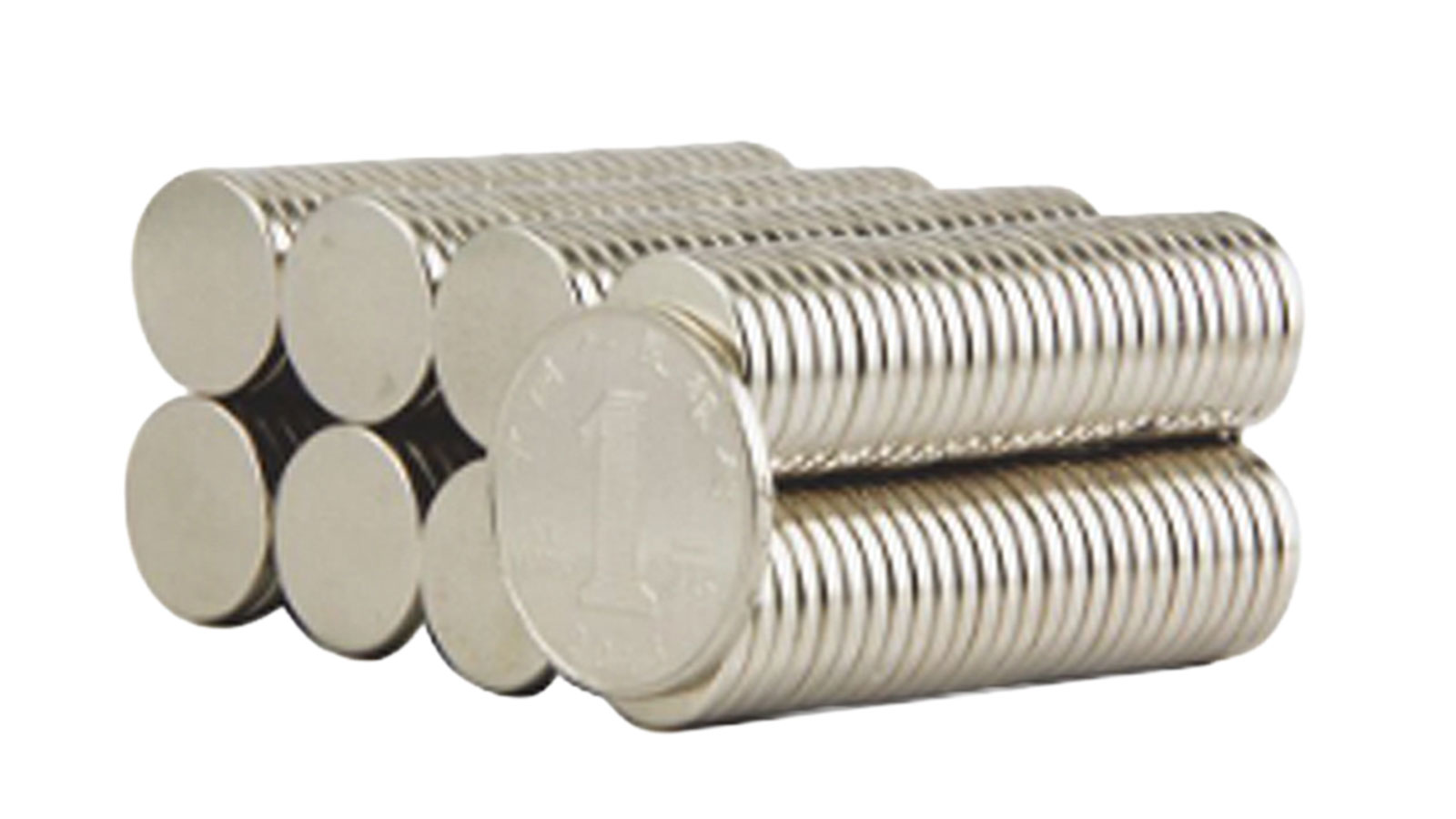
N52-grade NdFeB magnet
Company: Dongguan Zhongwang Permanent Magnet Technology Co. Ltd
Dongguan Zhongwang markets the ZW-03 N52-grade NdFeB magnet with 3,100G magnetic flux density.
MOQ: 5,000 units
Lead time: 10 days
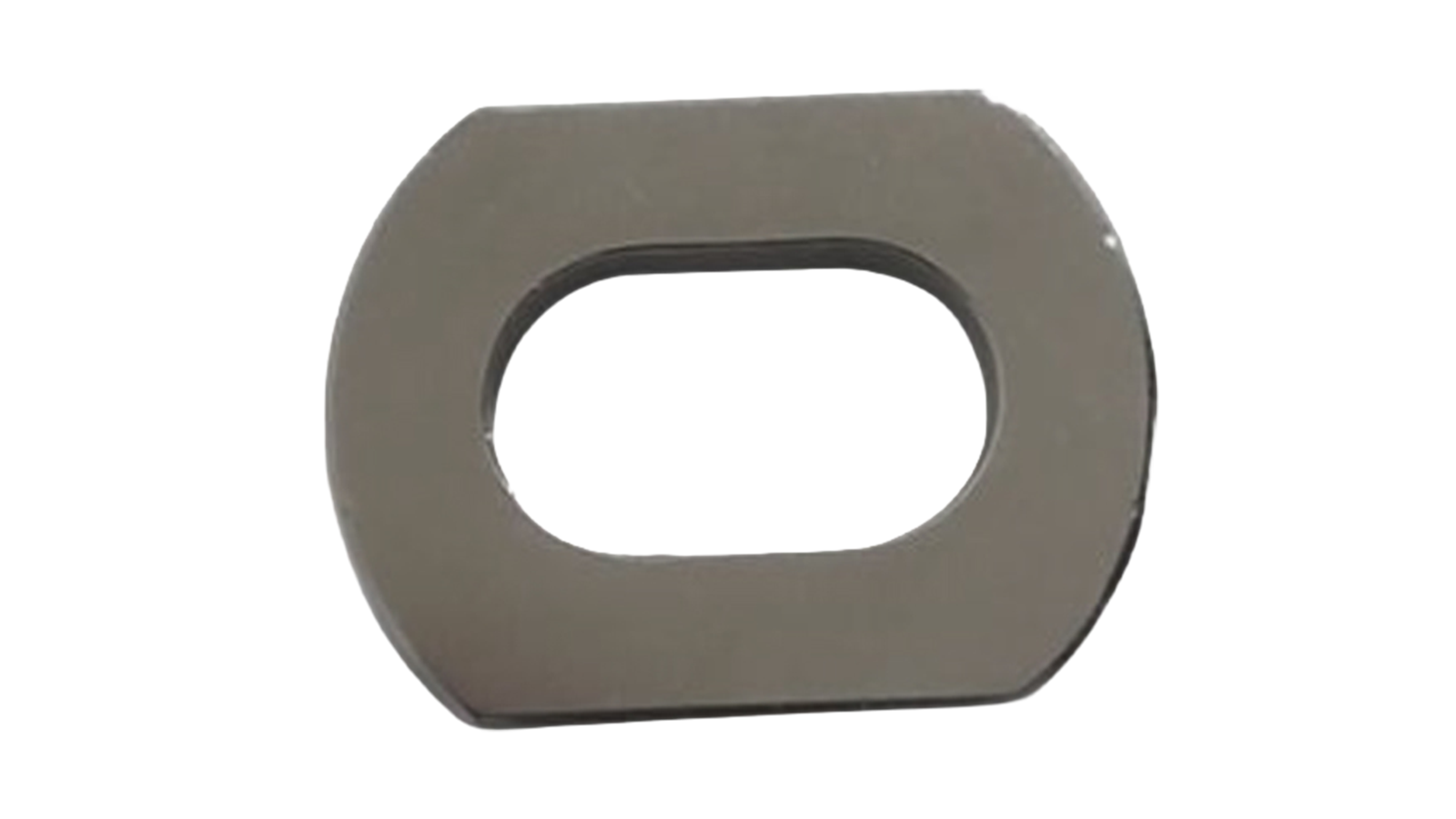
N50-grade NdFeB magnet
Company: Shenzhen Jyun Magnetism Industrial Co. Ltd
The Racetrack Shape N50 Magnet from Shenzhen Jyun has an N50 grade.
MOQ: Negotiable
Lead time: 15 days
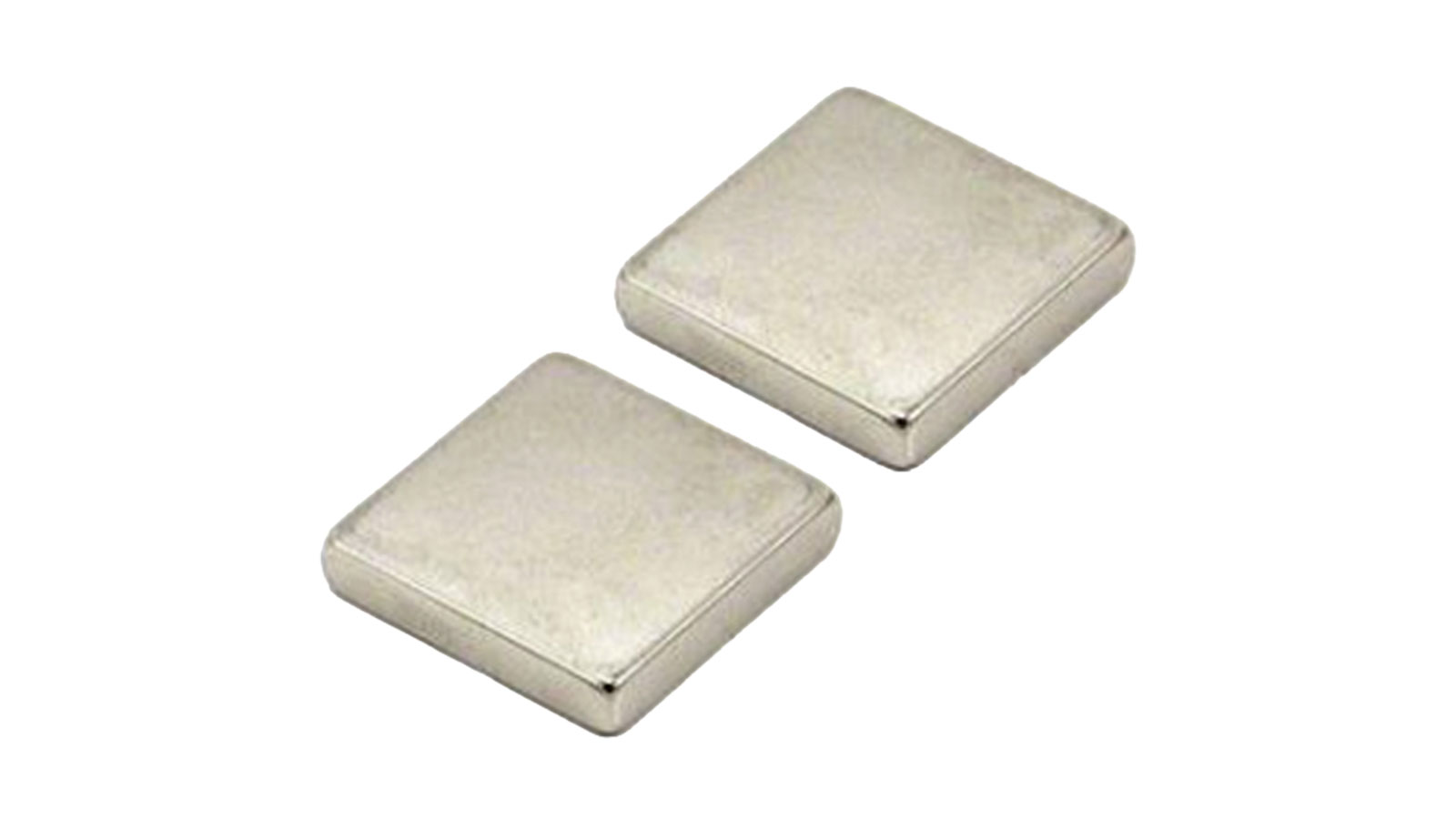
NdFeB magnet, N42, 2,700G
Company: Xiamen Yuxiang Magnetic Materials Technology Co. Ltd
Xiamen Yuxiang’s F425 N42 NdFeB magnet has NiCuNi plating, 2,700G magnetic flux density and 80 C maximum operating temperature. Dimensions are 25x25x5mm.
MOQ: 2,000 units
Lead time: 10 days

