Download App
Better Online and Trade Show Sourcing Experiences.Scan the QR code to download.
Learn More
Hot Topics
Partners like Huawei, HP and Xiaomi are working on ARM-powered Windows PCs.
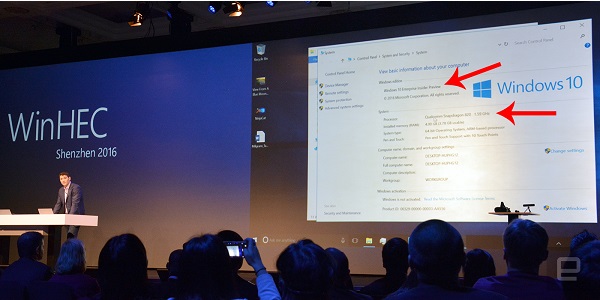
In December, Microsoft announced that it was bringing Windows 10 to ARM-powered PCs, and now manufacturers are building them. (Source: Microsoft)
ARM-powered Windows computers are on the way. Microsoft recently announced partners that are currently working on "always connected PCs." Asus, HP, Huawei, Lenovo, VAIO and Xiaomi were all said to be working on LTE-enabled Windows devices while Asus, HP, and Lenovo are reportedly focusing on ARM-powered ones.
ARM-powered PCs will have embedded eSIMs, so people won't have to switch out SIM cards. It will also allow Windows laptops and other devices to have 4G LTE modems embedded in the chip. The latest Surface Pro is the first Surface device to have the option of built-in LTE connectivity, although it runs on Intel x86 processors.
The ability for PCs to always stay connected will really come from ARM processors, though. ARM processors like Qualcomm’s Snapdragon chips have LTE modems integrated into the chips. Microsoft is working with Qualcomm on ARM-powered PCs that are expected to launch with the Snapdragon 835. No launch date has been announced, although it’s been previously suggested that they might start coming out by the fourth quarter.
What will really enable these computer to be always connected, however, is that ARM chips are low-powered, able to stay connected to the Internet and continue to receive notifications even while other parts of the device are sleeping. This could be useful for Windows devices that are meant to be used as smart home hubs. It would even be useful for Windows tablets like the Surface Pro, which disconnects from the Internet when it sleeps.
Microsoft previously unveiled that it’s working on an emulator that will allow win32 software to run on ARM chips. This could mean new ARM-powered PCs could look a lot more like full Windows PCs than the failed Windows RT experiment. Now there’s Windows 10 S, though, which only runs apps from the Windows Store. This strategy seems more designed for power efficiency and security, though. No one knows yet how that will fit in with the ARM strategy.
More Sourcing News
Read Also

关注 “环球资源外贸” 官方微信,获取实时外贸资讯
iOS & Android
iOS & Android(Mainland China)
Copyright © 2026 Publishers Representatives Limited. All rights reserved.




