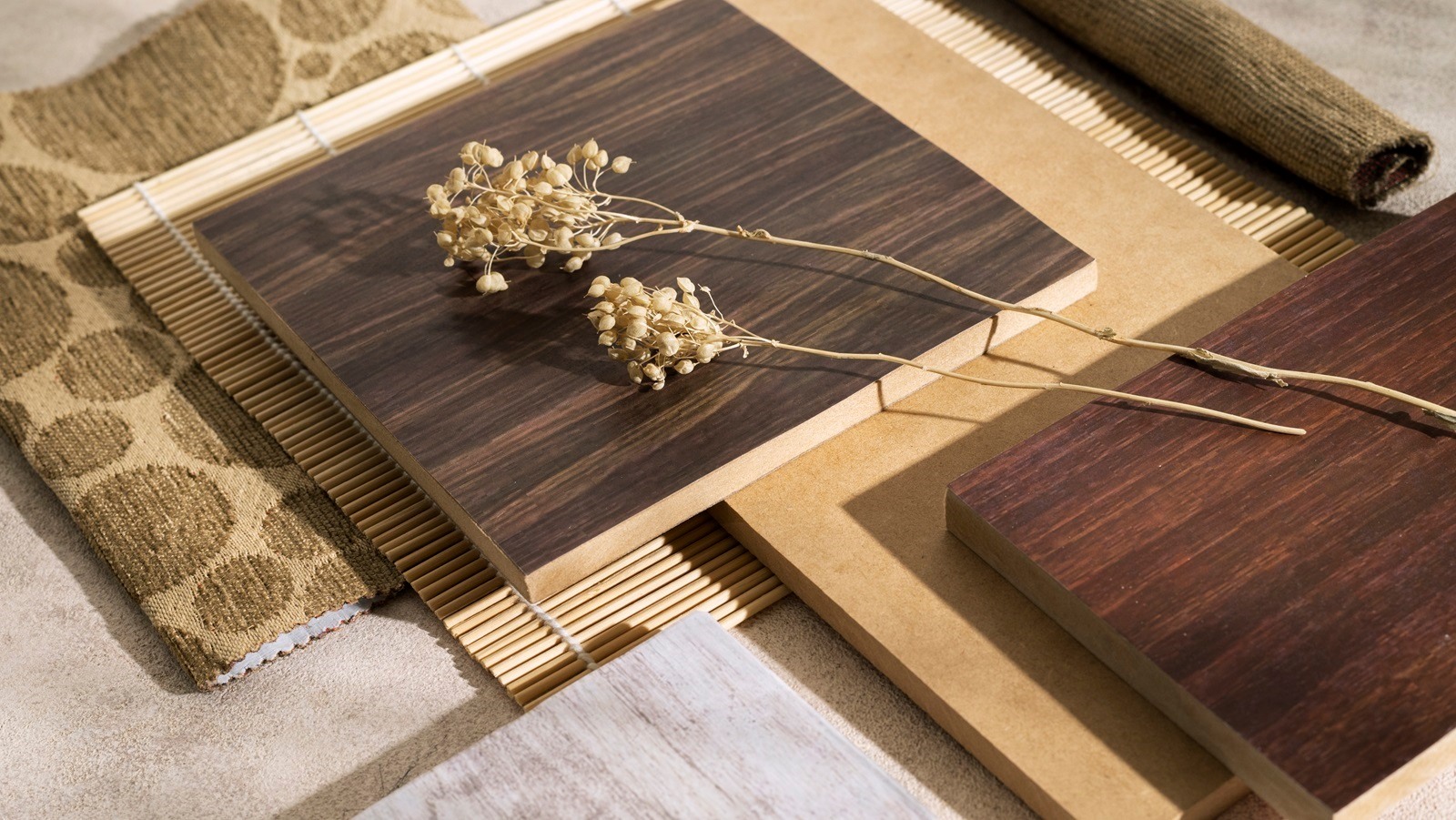



In our everyday life, work, and studies, a table or desk plays a crucial role. Whether you're considering buying a desk for personal use or planning to customize various tables for a business, understanding the best materials for desktops is essential. In this guide, we delve into the pros and cons of various tabletop materials.
#1 Fiberboard Materials
Fiberboard is a type of engineered wood made from wood fibers. It's a cost-effective choice, although it's not the most durable surface. There are three different densities of fiberboard:
Low-density fiberboard (Particle board or Chipboard)
Particle board is made up of wood chips that aren't tightly pressed together, resulting in a lightweight material. It's the preferred material for affordable desks. If you're on a tight budget and not aiming for high-end desks, it would be a practical material option.
Medium-density fiberboard (MDF)
Unlike particle board, MDF is composed of smaller wood fibers and is slightly heavier. MDF is a robust material with excellent stability and strong resistance to bending. However, it absorbs moisture rapidly, leading to potential deformations.
High-density fiberboard (HDF)
HDF surpasses both particle board and MDF in density, resulting in greater strength and hardness. It's extremely uniform and lacks visible texture.
#2 Solid Wood Desks
Solid hardwood has always been one of the most exquisite and beautiful choices for desks. Its natural grain looks authentic, exuding a vintage and fashionable vibe. Desks made from solid wood materials offer the benefits of safety and environmental friendliness. However, solid wood desks can be expensive due to the high-quality material.
#3 The Versatility of Plywood
Plywood is a common engineered wood created by bonding thin wood layers with adhesive. It's a great alternative for those wanting a natural wood appearance but don't have the budget for solid wood. However, ensure to pay attention to the environmental indicators of the product when selecting plywood desktops.
#4 The Appeal of Bamboo
Bamboo is a popular material for tabletops, offering a durable and visually appealing surface. While bamboo isn’t wood, it possesses an attractive natural texture, giving it the appearance of light hardwoods like white oak or maple.
#5 Laminate Desks
Laminate is another common tabletop option and is a synthetic material that mimics hardwood. It's hard and durable, capable of withstanding most scratches or dents.
#6 The Elegance of Glass
Glass tables offer a stylish and minimalist appearance. Tempered glass computer desks look refreshing and are easy to clean. However, glass tables are not cheap and require careful handling to prevent cracking.
#7 Acrylic Tabletops
Acrylic is a chemical polymer material known for its silky smooth finish and attractive appearance. However, this material is relatively costly and is typically used for reception desks, executive office tables, and home tea tables.
#8 Metal Desktops
Metal tabletops inherently possess a certain degree of sturdiness and durability, coupled with high malleability and versatile designs. When purchasing metal tabletops, consider factors such as strength, durability, price, and aesthetics.
#9 The Charm of Stone Tabletops
Stone materials used for desktops include granite, quartz, marble, etc. They exude elegance and beauty but are generally expensive and their weight can be quite substantial.
#10 Plastic Desks
Plastic tables are very cheap and lightweight, easy to move around. However, they often look not so high-end. Moreover, plastic tables have a limited weight capacity and are not suitable for holding heavy items, which reduces their practicality.
#11 Melamine Tabletop Surfaces
Melamine is essentially a layer of paper that is easy to print various patterns and designs on, thereby adding variety and vibrancy to office desks. It's environmentally friendly and durable, boasting strong resistance against scratches.
Conclusion
Choosing the right desktop material involves balancing cost and quality. In addition to the material itself, the weight of the tabletop should be considered as it relates to shipping costs. With the variety of materials available, you can select the one that best suits your needs and preferences.
For your custom desktop project, professional sourcing agents can assist you in finding suitable suppliers and provide competitive quotes. They can support desktops made of various materials of good quality and functions, and follow up on production, inspect finished products, and arrange shipments to your place at the best rates.