Download App
Better Online and Trade Show Sourcing Experiences.Scan the QR code to download.
Learn More
Hot Topics
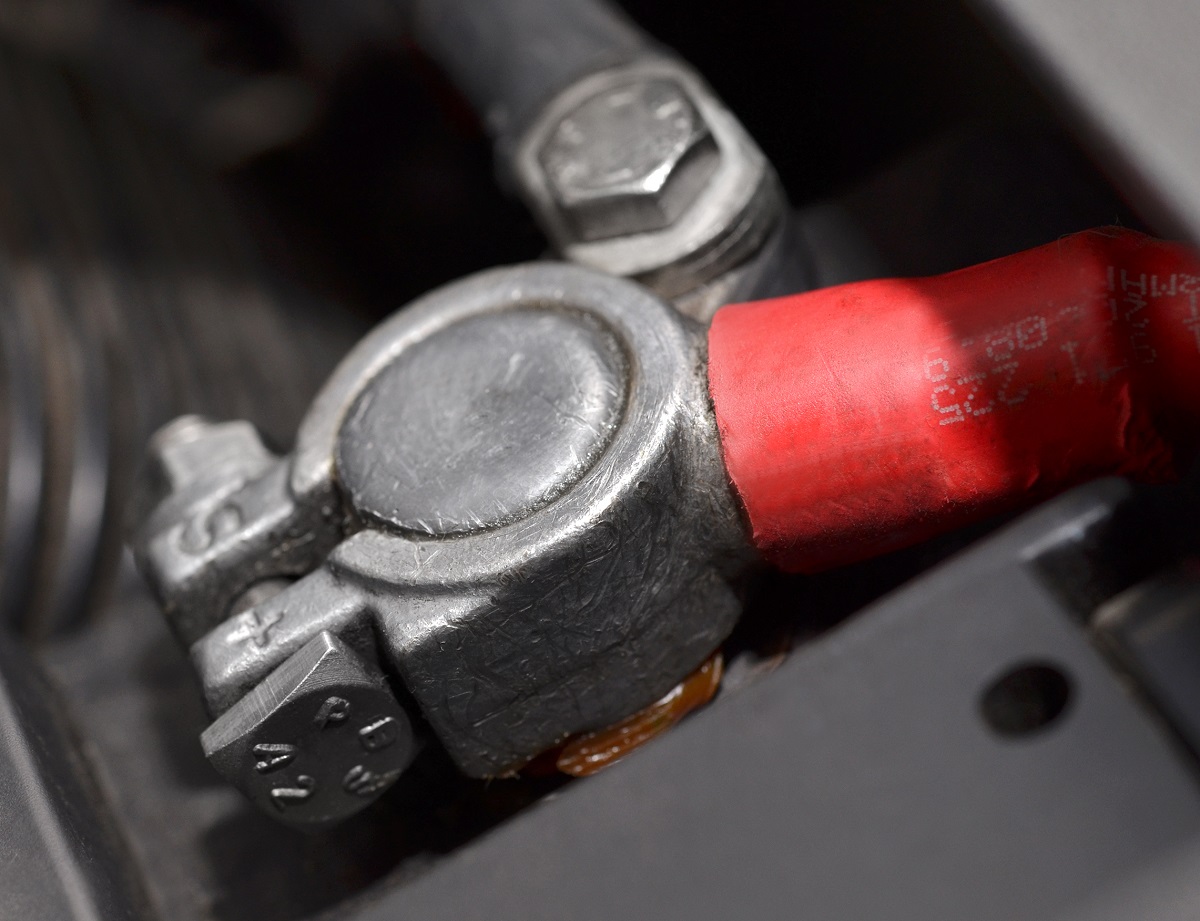
Image source: Getty
Car battery connectors, also known as terminals, are essential components that facilitate the flow of electrical energy between the battery and the vehicle's electrical system, including electrical components such as the starter motor, alternator and various accessories.
Lead-acid batteries, the most common type of car battery, require specific connectors that are usually made of lead or a lead alloy for a strong electrical connection and resistance to corrosion.
Gel batteries, also known as valve-regulated lead-acid (VRLA) batteries, use a gel-like electrolyte instead of a liquid. Their connectors are similar to those used in lead-acid batteries, but may have additional features for venting mechanisms or sealed designs to prevent leaks.
Absorbent glass mat (AGM) batteries are another type of VRLA battery that uses a glass mat separator to hold the electrolyte. Their connectors are designed to ensure a secure and stable connection, as these batteries are more sensitive to vibration and shock. They are typically made of corrosion-resistant materials, such as brass or copper, and may have additional features like insulation or protective covers to prevent damage and increase longevity.
Copper is a popular material for battery connectors due to its excellent electrical conductivity and resistance to corrosion. Copper connectors are often used in high-performance vehicles or applications that require a superior electrical connection.
Brass is another common option for battery connections. It offers good electrical conductivity and is more resistant to corrosion than copper. Brass connectors are often used in marine applications or environments with high humidity, as they can better withstand these conditions.
To improve the performance and life span of battery connectors, many are plated with a layer of corrosion-resistant material. Typical materials include tin, gold or silver, which can enhance the connector's electrical conductivity and protect the underlying metal from corrosion.
Electric vehicles (EVs) and plug-in hybrid electric vehicles (PHEVs) require specialized battery connectors to accommodate their high-voltage battery systems. Such connectors often feature advanced safety mechanisms to prevent short circuits and other electrical hazards.
High-voltage battery connectors connect the battery pack to the vehicle's electrical system. These are designed to handle high currents and voltages, ensuring a stable and secure connection between the battery and the vehicle.
Service disconnect connectors isolate the high-voltage battery system from the vehicle's electrical system during maintenance or repair. These are designed with safety features, such as interlocks or locking mechanisms, to prevent accidental disconnection or exposure to high voltages.
Based on materials and plating used, there are aluminum and copper-nickel types. Aluminum connectors are lightweight and offer good electrical conductivity, making them a suitable option for EV and PHEV battery connections. However, aluminum connectors are more susceptible to corrosion, so they often require additional plating or coatings to protect them from oxidation.
Copper-nickel connectors are a popular choice for EV and PHEV battery connections due to their excellent electrical conductivity and resistance to corrosion. These are often plated with a layer of tin or silver to further enhance their performance and longevity.
Compatible with most EVs and PHEVs, SAE J1772 connectors are the standard charging connector for Level 1 and Level 2 EV charging in North America. These provide a safe and secure connection for charging.
CHAdeMO connectors are used for DC fast charging in compatible vehicles, primarily found in Japanese EVs. These offer high-speed charging capabilities, allowing for faster charging times compared to Level 1 and Level 2 charging.
Combined Charging System (CCS) connectors are used for both AC and DC fast charging in compatible vehicles. They are becoming increasingly popular in Europe and North America for providing a versatile charging solution for a wide range of EVs and PHEVs.
Driven by the increasing demand for electric vehicles and advancements in battery technology, the car battery connector market is expected to grow significantly in the coming years. According to SNS Insider, it reached $20.71 billion in 2022 and will increase to $45.7 billion by 2030 at 10.4 percent CAGR from 2023.
A car battery connector typically consists of several parts, including:
Car battery connectors are not universal, as they can vary in size, shape and configuration depending on the specific battery type, vehicle make and model, and cable size. However, there are some universal connector designs available that can accommodate a wide range of battery types and cable sizes, making them a versatile option for various applications.
The best material for a car battery connector or terminal depends on several factors, including the specific application, the battery type and the environment in which the connector will be used. Copper and brass are popular choices due to their excellent electrical conductivity, while aluminum is lightweight and suitable for use in EV and PHEV applications. Plating materials like tin, gold, or silver can enhance the connector's performance and protect it from corrosion.
In general, the best material for a car battery connector is one that provides a strong and stable electrical connection, is resistant to corrosion, and can withstand the environmental conditions in which it will be used.
Radio-controlled (RC) cars typically use small-scale battery connectors that are designed to handle the high current demands of the vehicle's electric motor. The types of battery connectors used in RC cars include:
Deans connectors are a popular choice for RC car batteries due to their small size and high current capacity. They consist of a male and female connector that are soldered onto the battery and motor wires, respectively.
XT60 connectors are another common choice and are similar to Deans connectors but offer a more secure connection and are easier to plug and unplug.
Bullet connectors are simple, low-cost connectors that are suitable for low-current RC car applications. They consist of two metal pins that are inserted into the battery and motor wires, respectively, and secured with a small set screw.
Golf carts typically use lead-acid batteries and require connectors that can handle their electric motor’s high current demands. The types of battery connectors used in golf carts include:
Anderson connectors are a popular choice for golf cart batteries due to their high current capacity and easy-to-use design. They consist of a male and female connector that are crimped onto the battery and motor wires, respectively.
Eyelet connectors are a simple and cost-effective connector option for golf cart batteries. They consist of a metal eyelet that is bolted onto the battery post and a connector that attaches to the eyelet and motor wire.
Ring terminals are similar to eyelet connectors but are crimped onto the battery post instead of bolted. They are a versatile connector option that can be used in a variety of golf cart applications.
When selecting a battery connector or terminal, it is important to consider factors such as the battery type, the current and voltage requirements, and the environment in which the connector will be used. With the right connector, you can ensure optimal performance and longevity of a vehicle's electrical system.
So whether it’s a gas-powered car, an EV, an RC car, or a golf cart, choosing the right battery connector is essential for a reliable and efficient electrical system.
Online platforms nowadays allow buyers to easily look for the right manufacturer that meets their specific needs. Global Sources, for instance, not only provides site visitors with a comprehensive list of products and their details but also a list of suppliers that have been verified by third parties to ensure buyers are only dealing with legitimate companies. The B2B sourcing platform lets visitors filter and customize their searches, check the qualifications and relevant company information of the suppliers and take a virtual tour of some of the manufacturers’ facilities.
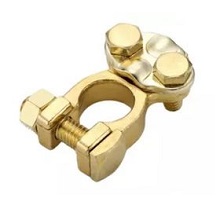
Company: Shanghai SPB Industry Co. Ltd
Description: Model 00154486323 is an automotive battery terminal available in positive and negative configurations. It is made of brass and copper. Aluminum and plastic can also be used when specified.
Shanghai SPB conducts a full inspection before shipment. It complies with ISO 9001:2000 requirements.
Price: $0.20 to $1.90
MOQ: 100 pieces
Lead time: 7 to 15 days
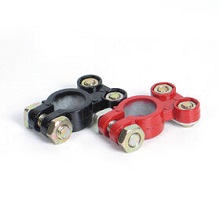
Company: Shenzhen ATR Industry Co. Ltd
Description: This automotive battery terminal, model number 73101, is made of lead and has a brass plating, although zinc can also be used as coating material when required.
Shenzhen ATR exports automotive accessories to Europe, the Middle East, Asia, Australia and South America.
Lead time: 25 to 30 days
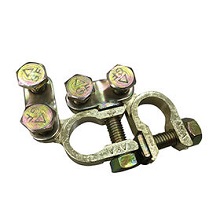
Company: AVIC Fujian Co. Ltd
Description: Model 110g Battery Terminal is made of aluminum alloy that is copper-plated. Its hole size is 18 or 17mm. Product weight is 120g.
AVIC specializes in automotive parts and has ISO/TS 16949:2009 certification.
Price: $0.36 to $0.38 per set
MOQ: 10,000 sets
Lead time: 15 to 20 days
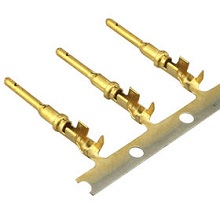
Company: Ace Industry Co. Ltd
Description: This stamped metal part for automotive terminals, model C30179, is made of 0.05 to 2mm-thick copper stainless steel or iron, and has selective nickel, tin, silver or gold plating. The tightest tolerance that can be achieved is ±0.01mm.
ISO/TS 16949-compliant Ace specializes in stamped, machined and deep-drawn formed sheet metal parts.
Price: $0.18 to $0.20
MOQ: 1,000 pieces
Lead time: 7 to 25 days
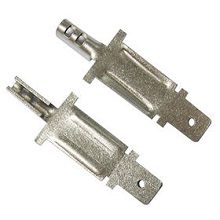
Company: Shenzhen Haohaichang Industrial Co. Ltd
Description: Model HHC-KY010271 is an automotive crimp terminal made of iron, steel, brass, copper or aluminum with thickness ranging from 0.1 to 3mm. It has silver, gold, aluminum, chromium, nickel, tin or zinc plating. Spade and screw terminals and lugs are also available.
Shenzhen Haohaichang provides OEM and ODM services. It complies with ISO 9001, IATF 16949, ISO 13485 and ISO 14001 standards.
Price: $0.05 to $0.08
MOQ: 50 pieces
Lead time: 5 to 10 days
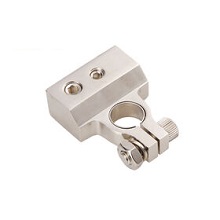
Company: Ningbo Newpin Electronic Technology Co. Ltd
Description: Model BT-10 is a battery terminal made of zinc alloy. It is compatible with 1x2ga, 1x4ga and 2x8ga cables used in car, truck and marine-use batteries. This connector is CE-approved.
Ningbo Newpin is a manufacturer of car audio fuse holders, circuit breakers, distribution blocks, battery terminals, RCA plugs and XLR connectors.
Price: $1.98 to $2.62
MOQ: 500 pieces
Lead time: 15 to 45 days
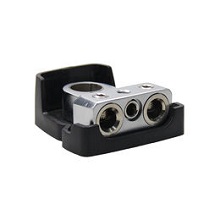
Company: Hangzhou Frankever Electronic Co. Ltd
Description: Model HX-202-1 is a positive or negative car battery terminal made of brass and plated with frosted nickel. It has a copper sleeve and a gold-plated screw.
ISO 9001:2008-compliant Hangzhou Frankever specializes in electronic components and assemblies. It provides OEM services.
Price: $3.55
MOQ: 500 pieces
Lead time: 20 to 25 days
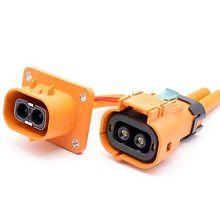
Company: Shenzhen Renhotec Technology Electronics Co. Ltd
Description: This high-voltage connector, with two pins, has 800VAC/DC rated voltage, 250A maximum rated current and 3,500VAC withstand voltage. For use in electric vehicles, model 16A - 63A HVIL Connector is IP67-rated and has IP6K9K rating when mated. It is CE-approved and RoHS-compliant. This connector comes with a 12-month warranty.
ISO 9001:2015-compliant Shenzhen Renhotec has also acquired ISO 14001, IECQ QC 080000 and ISO/TS 16949 certifications.
Price: $9.99 to $12.99
MOQ: 5 units
Lead time: 10 to 15 days
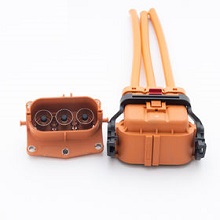
Company: Nanjing Kangni New Energy Auto Part Co. Ltd
Description: This high-voltage CCS2 EV charger connector, model EHPS3, has 1,000VDC rated voltage, 150 to 200A current and ≥200Mohm insulation resistance at 1,000VDC. Its operating temperature is -40 to 140 C. This plug is IP67-rated.
Price: $65 to $70
MOQ: 5 units
Lead time: 10 to 20 days
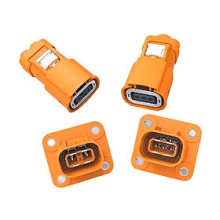
Company: Hangzhou Assem Technology Co. Ltd
Description: Model Automotive Connectors & Seals is a two- or three-core high-voltage connector with an anti-touch design with an IPXXB rating, a secondary locking mechanism and six anti-misinsertion key positions. It accepts wires with a diameter ranging from 2.5 to 4sqmm. The rated voltage is 1,000VDC and the rated current 16, 19 or 25A. This connector has an operating temperature of -40 to 140 C and ratings of IP6K9K and IP68.
Price: $2.50
MOQ: 500 units
Lead time: 15 to 30 days
More Sourcing News
Read Also

关注 “环球资源外贸” 官方微信,获取实时外贸资讯
iOS & Android
iOS & Android(Mainland China)
Copyright © 2026 Publishers Representatives Limited. All rights reserved.




