Download App
Better Online and Trade Show Sourcing Experiences.Scan the QR code to download.
Learn More
Hot Topics
Image source: Pixabay
Pressure die-casting is a key manufacturing process used to create parts out of metal alloys or nonferrous metals such as aluminum, copper, nickel, tin, titanium, zinc and copper alloys. In this process, molten metal is pressurized into a die or mold to form a desired shape, from intricate parts for complex machines to simple components for everyday objects. The process offers advantages of high-speed production, low costs and repeatability. In this article, we’ll take a look at what pressure die-casting is, its advantages, types, applications and more.
At its core, pressure die-casting is a metalworking process that involves injecting molten metal into a die or mold under pressure. It is often used to create complex shapes and intricate designs that would be difficult or impossible to make using other metalworking methods. Molten metal is placed in a furnace and heated to the molten temperature of the alloy being used. It is then injected into a die or mold using a hydraulic cylinder or a mechanical plunger. The die or mold is then cooled to solidify the metal and the desired shape is formed.
High speed and repeatability make this process well-suited for mass production because it yields complex parts in high volumes with great accuracy and consistency. Additionally, pressure die-casting offers high strength, tight tolerances and low costs.
Pressure die-casting offers a number of advantages that make it an attractive option for many parts manufacturers. Here are some of the most notable benefits of this process:
Pressure die-casting can be divided into two main types: high-pressure and low-pressure die-casting.
High-pressure die-casting is a process in which molten metal is injected into a die or mold at high pressures of up to 110MPa. This is usually used for producing small, intricate parts with complex shapes and for high-volume production, as it offers high speed and low costs.
In low-pressure die-casting, on the other hand, molten metal is injected into a die or mold at low pressures of up to 10MPa. This is used for making larger parts with simpler shapes and often for low-volume production, as it offers greater flexibility and control.
Pressure die-casting is used in many industries, including automotive, electronics, aerospace and medical, to produce small, intricate parts for complex machines.
These components include engine blocks, pistons and other engine components for the automotive industry, and connectors, switches and other electrical products for the electronic components sector.
For the aerospace industry, pressure die-casting turns out fuel tanks, structural components and other aircraft parts. It is used to produce implants, prosthetics and other medical devices.
Pressure die-casting is also suitable for making components of everyday objects such as door handles, hinges and locks.
The market for die-casting is forecast to post 5.92 percent CAGR from 2023 to 2028, reaching $86.3 billion, according to Mordor Intelligence. The industry analysis and consulting firm attributes this growth to demand for aluminum die-cast parts, especially in the automotive sector, where weight reduction in parts is highly desirable but safety, quality and performance cannot be sacrificed.
Gravity die-casting and pressure die-casting are two different processes used to create metal parts. The main difference is the type of force used to inject the molten metal into the die or mold. Gravity die-casting uses the force of gravity, while pressure die-casting employs a hydraulic cylinder or a mechanical plunger.
The former is a slower process, usually adopted in low-volume production. It is also more limited in terms of the size and complexity of the parts produced. Pressure die-casting is much faster and is suitable for high-volume projects. It is also more versatile and can be used to produce larger and more complex parts.
When sourcing pressure die-cast parts, here are a few important factors to consider.
Finding a reliable and reputable pressure die-cast parts manufacturer can be a challenge. Here are a few tips.
Finding a trustworthy pressure die-cast parts manufacturer can be a challenge, but with the right research and due diligence, it is possible to find a reliable and reputable one that meets needs and expectations.
Here are verified manufacturers and samples of their pressure die-cast parts on GlobalSources.com.
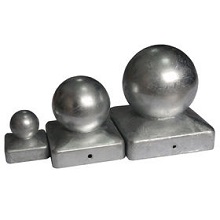
Company: Dongguan Xinruida Precision Technology Co. Ltd
Description: The Die Casting-9 is an A360 or ADC12 aluminum alloy part made using high-pressure die-casting. Dongguan Xinruida can handle mold design based on technical drawings or samples, with the mold ready in 20 to 30 days. It provides OEM and ODM services. Emerson, ABB Group, HP, Apple, Philips and Bosch are its major customers.
Price: $0.10 to $0.50
MOQ: 1 piece
Lead time: 20 to 25 days
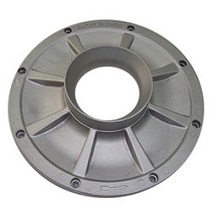
Company: Hexie Metal Die Casting Co. Ltd
Description: The HX107 is an aluminum part made using high-pressure die-casting. It is powder-coated in black. Other surface treatments and colors are accepted. ISO 9001:2015-compliant Hexie has its own R&D department and welcomes OEM orders.
Price: $10
MOQ: 500 pieces
Lead time: 8 to 10 days
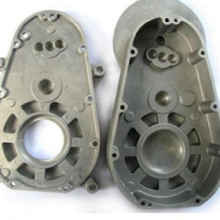
Company: ST Metal Manufacturer Ltd
Description: The ST-1810 is a custom-made part produced using aluminum and high-pressure die-casting. Tolerance is ±0.01mm. ST Metal has more than 15 years of experience in metal manufacturing and is ISO 9001:2008-compliant. It provides OEM and ODM services and exports products to the US, Europe, Asia and other regions.
Price: $1.21 to $4.23
MOQ: 100 pieces
Lead time: 7 to 25 days
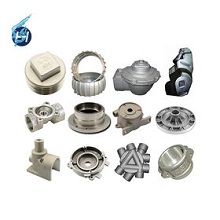
Company: Dalian Hongsheng Machine Co. Ltd
Description: Model HSH-3-8228 is a customized metal part produced using low-pressure die-casting. Dalian Hongsheng has been manufacturing metal parts since 2003. Its factory is equipped with 40 advanced processing and testing equipment. This company is compliant with ISO 9001:2015 and 9001:2008.
Price: $2 to $10
MOQ: 3 pieces
Lead time: 15 to 25 days
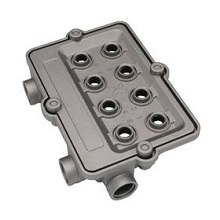
Company: Dongguan Senbao Plastic Products Co. Ltd
Description: The KB0220 is a die-cast part made using the high-pressure process. Material options include ADC1, ADC3, ADC10, ADC12, A413, A360, A380 and A383 aluminum alloy. Dongguan Senbao specializes in metal parts and is ISO 9001:2015-compliant. It accepts OEM projects.
Price: $3
MOQ: 1,000 pieces
Lead time: 15 to 20 days
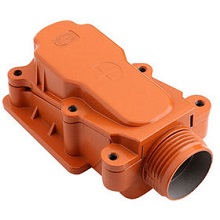
Company: Mestech Industrial Ltd
Description: The Mestech-350 (1) is a machinery part made of aluminum alloy part and processed using high-pressure die-casting and machining. Tolerance is ±0.1 to 0.05mm or as specified. Surface treatment options are powder coating, painting, sandblasting and anodizing. ISO 9001-compliant Mestech specializes in molds, and plastic and metal parts, and provides OEM services. Samsung is one of its major customers.
Price: $2
MOQ: 2,000 pieces
Lead time: 10 to 20 days
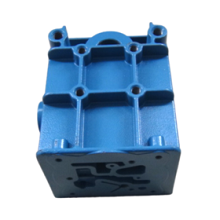
Company: Ningbo BMway Machinery Co. Ltd
Description: Model A Die Casting-070 is an aluminum alloy part made using high-pressure die-casting. Ningbo BMway uses Pro/E, UG, Solidworks, Auto CAD and PDF software and follows ASTM, DIN, JIS, EN and GB standards. Ningbo BMway has a 2,000sqm factory, and conducts QC and R&D in-house.
Price: $5 to $5.40
MOQ: 200 pieces
Lead time: 10 to 25 days
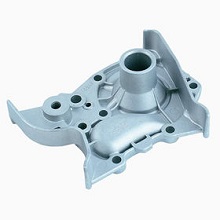
Company: Qingdao Juize Machinery Co. Ltd
Description: The Juize-G-042 is an automotive or industrial machinery part made of A356 or ADC12 aluminum alloy and processed using high-pressure die-casting and T6 heat treatment processes. Casting tolerance is CT4 to CT9. This part may be powder-coated, painted or anodized. Qingdao Juize is ISO 9001-compliant. It has more than 30 years of experience in casting, forging, stamping and CNC machining.
Price: $35.50 to $36.9 per kilogram
MOQ: 100kg
Lead time: 30 to 45 days
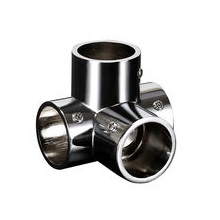
Company: Shenzhen Mingyuan Hardware Products Co. Ltd
Description: Model DC7 is a custom aluminum part made of aluminum and processed using high-pressure die-casting. Material used has tensile strength that is nearly two times higher than that of ordinary cast alloys.
Price: $0.20
MOQ: 5,000 pieces
Lead time: 10 to 20 days
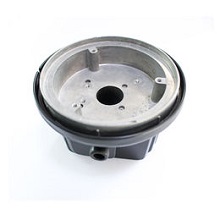
Company: Shenzhen Smart Mold Technology Co. Ltd
Description: The Customized Aluminium Parts-A-003 is made using high-pressure investment casting. Shenzhen Smart Mold accepts 3D drawings in STL, X-T and STP formats.
Price: $3.50 to $4.50
MOQ: 500 pieces
Lead time: 20 to 30 days
More Sourcing News
Read Also

关注 “环球资源外贸” 官方微信,获取实时外贸资讯
iOS & Android
iOS & Android(Mainland China)
Copyright © 2026 Publishers Representatives Limited. All rights reserved.




