Download App
Better Online and Trade Show Sourcing Experiences.Scan the QR code to download.
Learn More
Hot Topics
by Cecile de Veyra (Managing Editor)
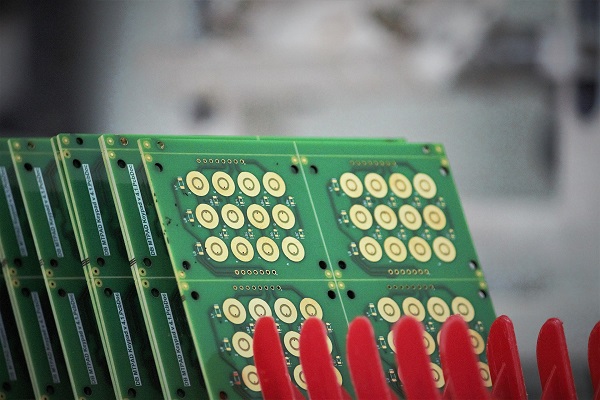
Image source: Pixabay
Printed circuit boards or PCBs are one of the most integral components in the electronics industry. They are nonconductive materials with printed or etched conductive materials that ensure electrical connectivity of components mounted on them.
PCBs come in a variety options, depending on intended applications. There are rigid PCBs, flexible PCBs and rigid-flex PCBs based on material hardness, and single-, double-sided and multilayer PCBs by layer count. These boards may be configured for through-hole or SMT, with the latter not requiring drilled holes. There are also heavy copper PCBs for products that need increased current carrying capacity and require high endurance to thermal strains. For specific-purpose applications, such as in keyboards, an option is a hot swappable PCB, which makes installation of switches easier for custom builds.
As technology continues to evolve and requires more complex electronic circuits, manufacturers also offer high-density interconnect or HDI PCBs to meet market demand for innovative solutions. A type of multilayer board, HDI PCBs have finer spaces and lines, allowing greater wiring density per unit area than conventional boards.
From $75 billion in 2021, the global PCB market is forecast to exceed $128 billion by 2030, posting a CAGR of 5 percent during the period, according to the latest report by Spherical Insights & Consulting. The report attributes growth to the increasing use of PCBs in the automotive industry, driven by trends for greater vehicle safety, security and interconnectivity with mobile and other electronic devices. It also cites 3D printing technology as another potential catalyst for future market expansion.
Of course, consumer electronics remain PCB’s biggest market. Spending on desktop, notebook and tablet computers, smartphones, TVs, gaming devices, speakers, headphones, earphones and wearables is up by 20 percent since 2020, according to Shopify Plus, and is not likely to slow down in 2023.
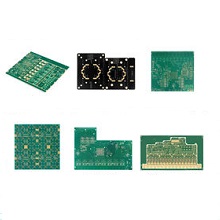
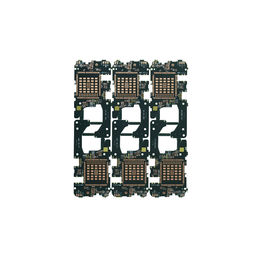
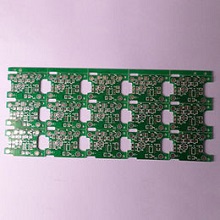
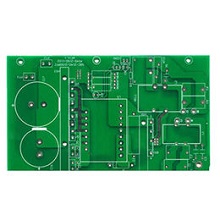
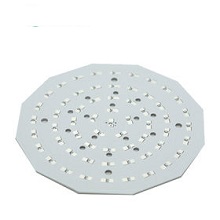
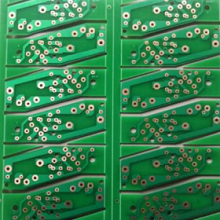
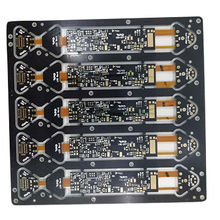
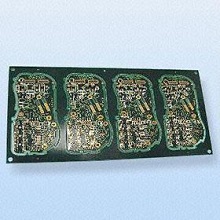
Here are PCBs available for sourcing from Global Sources’ verified suppliers:
The best PCB material will depend on the application. Different materials have properties that make them better suited for certain applications. The most common are FR-4, polyimide and aluminum.
FR-4 is widely used because it is flame-retardant, durable, and resistant to temperature and moisture, making it suitable for most applications.
Polyimide and aluminum are also popular materials for their lightweight and highly durable characteristics. These are often used in the aerospace, medical and industrial spheres.
When it comes to finding the best PCB manufacturer, there is no one-size-fits-all answer. There are manufacturers that specialize in certain types of PCBs, so it is important to do research and find the right one for specific projects.
Going by market value in January 2022, software analytics company Value.Today said that the world’s top 10 PCB companies were from the Greater China region, with five from the Chinese mainland, four from Taiwan and one from Hong Kong. These manufacturers were Hon Hai, Avary, Nan Ya, Unicmicron, Shennan Circuits, Shengyi Technology, Kingboard, WUS, Shenzhen Kinwong and Tripod.
Nippon Mektron, TTM and Daeduck, respectively from Japan, the US and South Korea, are also among the major players in this product category as listed by market research firm BrandEssence.
PCBs that can be sourced are as varied as their applications. Board specifications are based on custom device requirements, so there are no off-the-shelf solutions on the market. To have the right PCBs fabricated, buyers need to find reliable manufacturers that can produce the types, stackups and board sizes, and use materials according to their preferences and relevant quality standards.
More Sourcing News
Read Also

关注 “环球资源外贸” 官方微信,获取实时外贸资讯
iOS & Android
iOS & Android(Mainland China)
Copyright © 2026 Publishers Representatives Limited. All rights reserved.