




Image from iStock
China will continue to strengthen its manufacturing for PCBs, the backbone technology of the electronics industry and a sector it dominates in terms of volume and value.
From 8.1 percent of global production value in 2000, by 2024 its share was estimated at 55.74 percent, according to Beijing Puhua Youce Information Consulting. This was concurred by Expert Market Research, saying that the country realized a market value of $43.22 billion that year and is forecast to reach $57.52 billion by 2034 or a 2.9 percent CAGR from 2025.
Writing for the World Economic Forum website, podcaster Kaiser Kuo stated in June 2025, “Supply chains, while de-risked and diversified for geopolitical reasons, will still rely on the unique advantages of China’s manufacturing heartlands. These regions – particularly the Yangtze River Delta and … Pearl River Delta – will function as innovation hubs, where new materials, new energy systems, and new human-machine interfaces are co-developed in situ.”
Chinese company FASTPCB said in an article on its website that current trade challenges influence margins but are also prompting exporters to pursue technological advancement as well as “relocating production, optimizing supply chains and expanding into new markets.”
But even in recent years, Chinese PCB manufacturers with large-scale operations have shifted their R&D initiatives and production efforts toward midrange and high-end types, such as HDI and high-layer variants and IC substrates. This is to meet the more advanced requirements of smaller but features-rich electronics, including smartphones, wearables, AR/VR and IoT devices, as well as in automotive applications driven by increasing electrification.
State-owned Founder Technology has announced that it will invest $275 million in a project which will turn out HDI PCBs for AI servers, GPUs and high-frequency and high-speed electronics. Jiangsu Bomin, meanwhile, will build an 80,000sqm factory in Yancheng. This undertaking, with a total investment of $277 billion, will produce high-end HDI PCBs, including any-layer types, as well as IC substrates and backboards for Micro-LEDs.
Combined, the communications, computer, automotive and consumer electronic sectors have over 85 percent share of the domestic PCB market, according to Beijing Puhua Youce Information Consulting.
Smart & green
Smart and green manufacturing are emerging trends in China’s PCB industry. There is increasing reliance on robotics to improve production efficiency and output quality while driving down labor costs and defect rates. Investment in AI continues to pour in, with the goal of using it much more extensively, from optimizing design and quality control processes to implementing predictive maintenance practices.
Meanwhile, to lower carbon footprint, Chinese suppliers have been implementing measures to comply with environmental protection, including eliminating the use of halogens, reducing wastes and recycling materials.
PCB powerhouse
Smartphones, computers, automotive electronics, communications, medical and industrial applications will remain demand drivers for China-made PCBs.
Going by customs statistics, exports to the US accounted for 3.6 percent of the total value in 2024. It remains to be seen, however, if the forecast growth for 2025 and 2026 will materialize. Based on historical data, AskCI said that the category would reach $60.18 billion by the end of 2025, increasing from $57.23 billion in 2024, while the value would be $96.8 billion globally.
Nevertheless, manufacturers hope that current efforts, such as setting up new factories in Southeast Asia, will help lower costs and deal with tariff issues.
Analysts contend that sourcing PCBs from China is still a viable option. This is because of the country’s mature industry with a comprehensive supply chain, large-scale manufacturing and skilled workforce as well as a logistics infrastructure – built over decades of investment and development.
There are more than a thousand suppliers there, including industry giants such as Avary Holding, DSBJ, Shennan Circuit, Tripod Tech, Compeq, Mektec, Kingwong, Kingboard, Wus and Unimicron.
The top five homegrown companies in 2024 were DSBJ, Shennan Circuit, Kingwong, Victory Giant and AKM Meadville. They realized sales values of $3.23 billion, $1.878 billion, $1.494 billion, $1.101 billion and $1.011 billion, respectively.
These manufacturers are found in various hubs such as Shenzhen, Dongguan, Zhongshan, Huizhou, Shantou, Xiamen, Zhuhai, Kunshan, Suzhou and Changzhou. There are factories in the inland provinces of Hubei, Jiangxi and Anhui as well.
PCBs from China
Shipped from China in 2024 were mostly rigid PCBs accounting for 63 percent and HDI types for 18 percent of the total volume. In the rigid subcategory, multilayer boards had a 49 percent share, while single- and double-sided units had a combined 14 percent.
Based on data collected by Beijing Puhua Youce Information Consulting, rigid PCBs from China represented 48.3 percent or almost half of global shipments in 2024. They were 37.6 percent multilayer and 10.7 percent single- and double-sided. IC substrates, flexible and HDI PCBs made up 17.4, 17.4 and 16.9 percent, respectively.
The same source said that over 75 percent of high-end HDI PCBs and boards with a layer count of 20 and above, however, were from foreign companies with factories in the country.
To remain competitive, Chinese manufacturers will continue to push R&D toward higher-value PCBs while catering to markets with diverse customization requirements and ensuring UL, CE and RoHS standards are met.
CCL advantage
Chinese PCB manufacturers are generally optimistic about market prospects despite current challenges, in part because they see an additional leverage from being in the world’s largest production base for copper-clad laminates.
CCLs are a core material in PCB production and typically account for at least 40 percent of input costs. This proportion can rise further for HDI and substrate-like PCBs, which use high-frequency, low-loss, halogen-free or ultrathin copper foil laminates that are more expensive than conventional types.
In 2025, the CCL sector in China is projected to reach 1.17 billion square meters, from 1.09 billion in the previous year, according to AskCI. The top suppliers include Kingboard, Shengyi and Goldenmax.
The products in this gallery have been handpicked by our China-based market analyst for representing current trends in PCBs from Chinese makers.
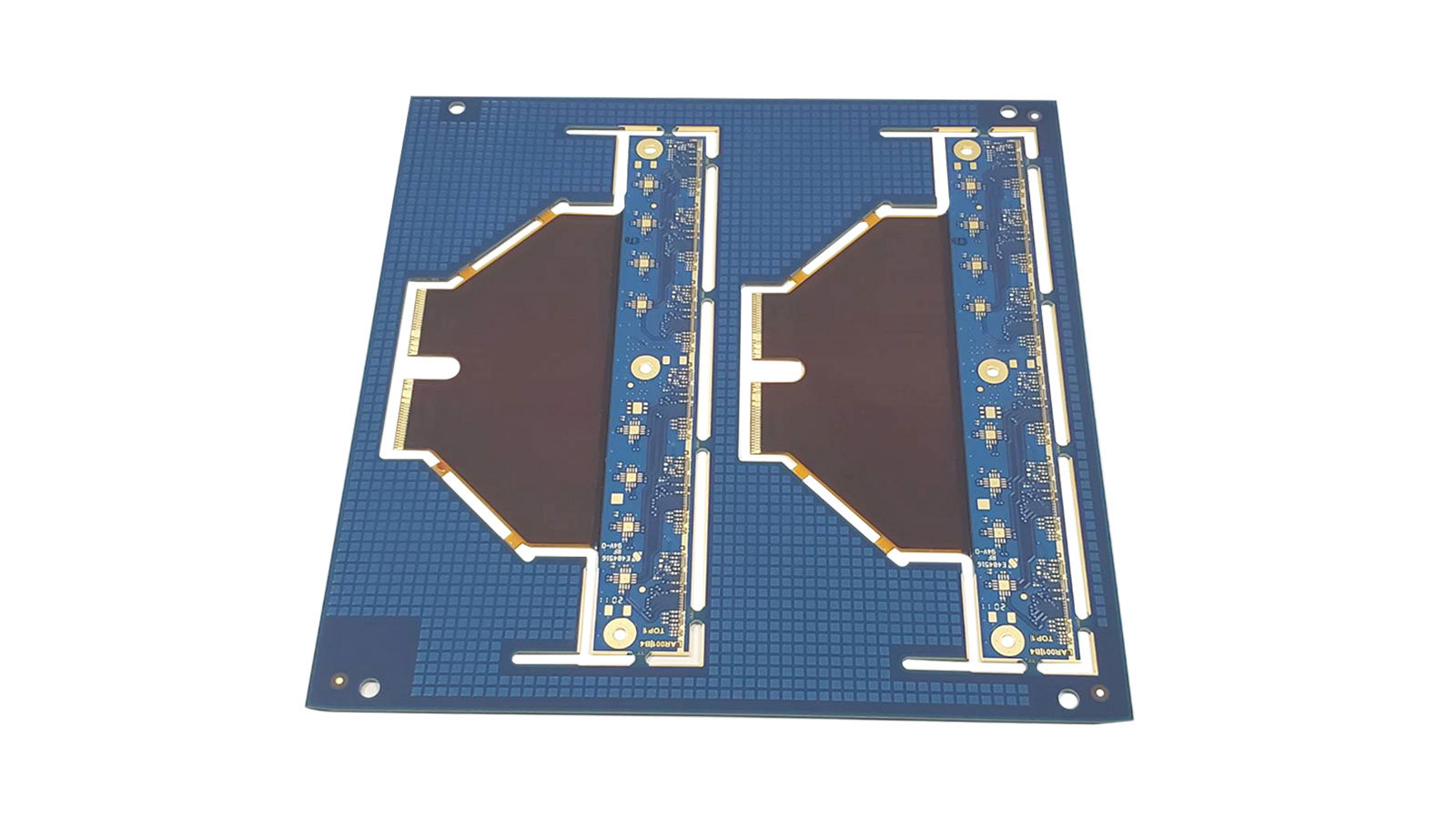
Rigid-flex PCB, eight layers
Company: Full Years Technology Co. Ltd
Full Years offers this eight-layer RFPCB-F003 with Tg170 FR-4 TU-768 and Thinflex-branded 1005RD base materials, 1, 1, 1, 0.5, 0.5, 1, 1 and 1oz per-layer copper, blue solder mask on the rigid section and 2µm immersion gold finish. This 55.1x116.75mm unit has 1.3mm board thickness. It is RoHS-compliant and meets IPC-A-600 Class 2 standard.
MOQ: 8 units
Lead time: 15 days
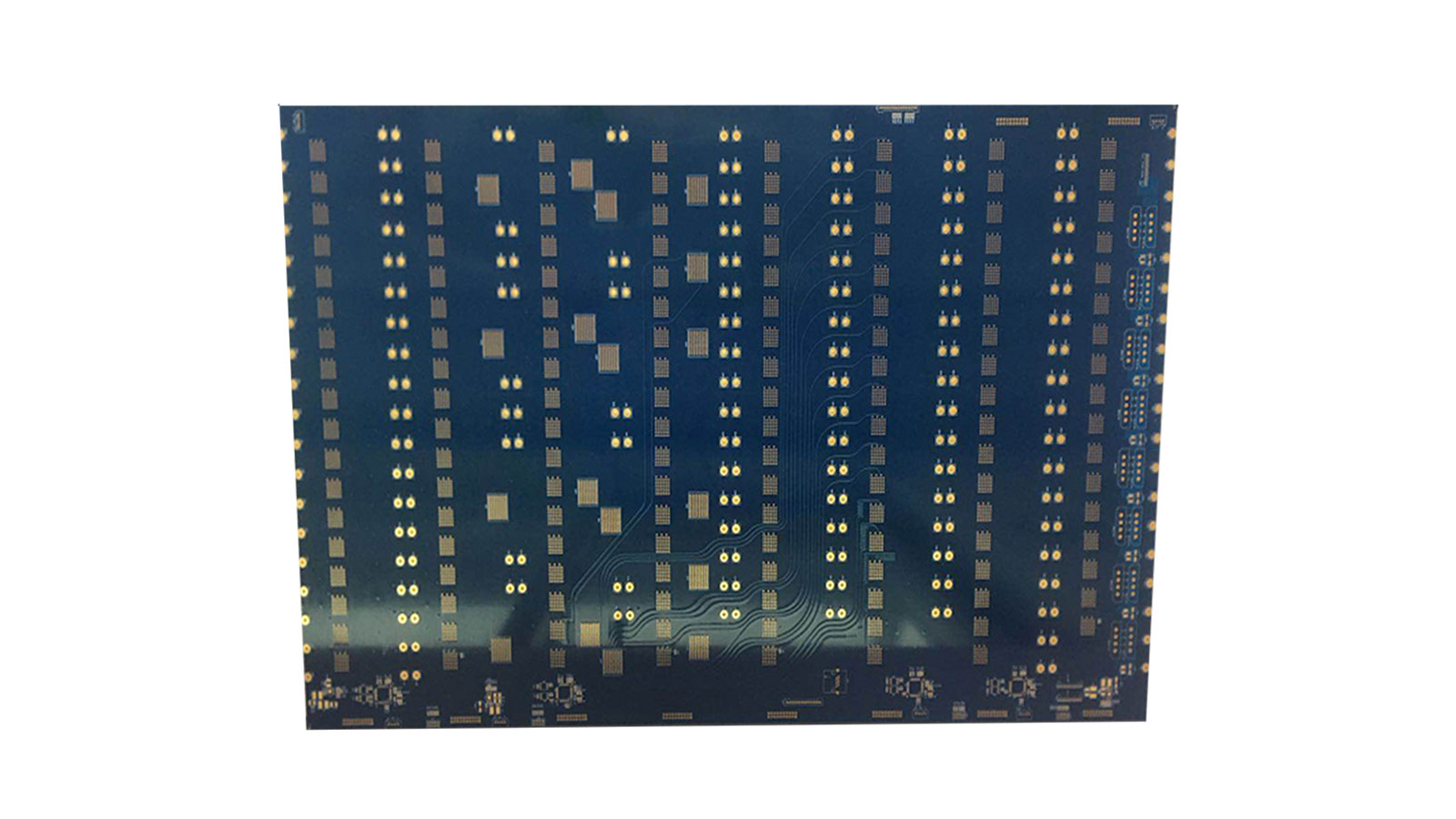
30-layer PCB
Company: Shenzhen Benqiang Circuit Co. Ltd
From Shenzhen Benqiang, the S101055C30 30-layer PCB has 0.05µm ENIG surface finish, 3.9 and 0.39mil minimum line width and spacing, as small as 0.4mm mechanical holes, 9:1 aspect ratio and 3.7±0.37mm board thickness.
MOQ: Negotiable
Lead time: 7 days
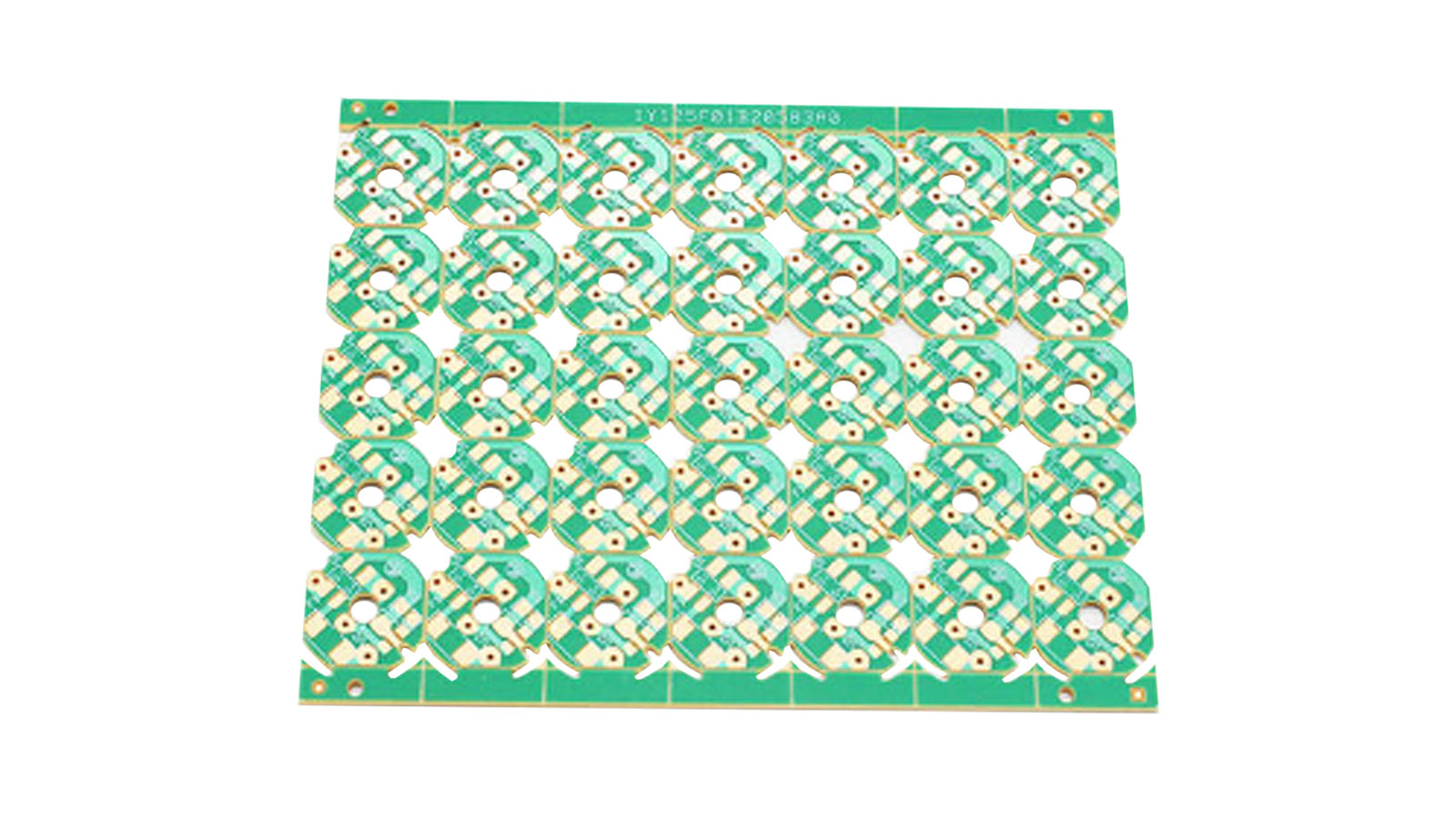
Single-sided PCB with CEM-1 base
Company: Syhogy (Xiamen) Tech Co. Ltd
The PCB-osp-01-3824 from Syhogy is a single-sided PCB with CEM-1 base, OSP surface finish, 0.2mm minimum hole size and 3.94mil minimum line width and spacing. It meets UL standards.
MOQ: 500 units
Lead time: 7 days
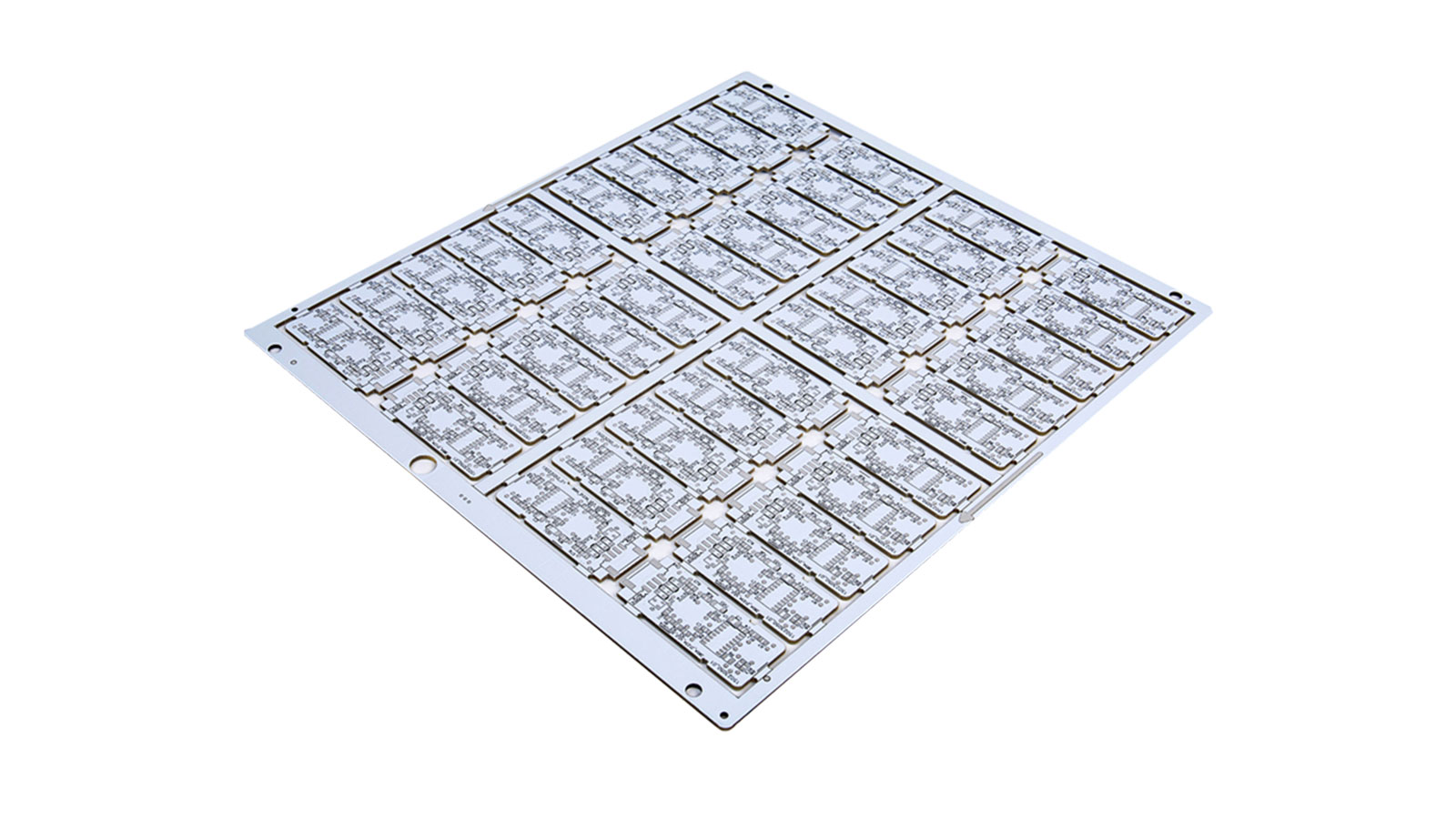
PCB with 1 or 2 layers, 3mil minimum line width and spacing
Company: Uniwell Electronic Ltd
Available in up to two layers, the 5M5A2170 PCB from Uniwell has 3mil minimum line width and spacing, 0.5 to 3oz copper thickness, OSP, lead-free HASL, ENIG, gold-plated or immersion tin or silver surface finish, green, yellow, black, white, red or blue solder mask and FR-4, XPC, FR1, CEM-1, CEM-3, high-Tg, halogen-free FR-4 or Rogers base. This UL-listed unit has a board thickness of 0.08 to 3.2mm.
MOQ: 1,000 units
Lead time: 7 days

