Download App
Better Online and Trade Show Sourcing Experiences.Scan the QR code to download.
Learn More
Hot Topics
Croatia becomes the latest addition to the growing list of countries that have abolished fur farming.
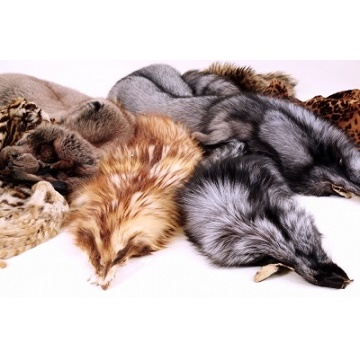
Image courtesy of Suat Eman at FreeDigitalPhotos.net
After 10-year-long phase-out period, which was supported by a large majority of the Eastern Europe nation's citizens, the Ministry of Agriculture implemented a complete stoppage on fur farming, which began on January 1. The ban became a part of the country's Animal Protection Act in 2006.
During the transition period, many chinchilla breeders have ceased operations but a few continued the practice hoping to get the abolition lifted. Chinchillas are the only animals raised for their fur in Croatia.
"Ethical awareness of our citizens managed to overcome the petty profiteering interests and placed Croatia on the map of civilized countries that respect public opinion and adopt high ethical and environmental standards in the treatment of animals'', Animal Friends Croatia said in a statement. The organization also thanked the Ministry of Agriculture, President Kolinda Grabar Kitarovic and Prime Minister Andrej Plenkovic.
Fur farming, the raising and slaughter of animals solely for fur production, is considered among the cruelest and most-criticized industries in the world, with most opponents saying that animals are exposed to extreme physical and psychological hardships before being killed. Some inhumane slaughter methods have also been documented worldwide.
Minks and foxes are the most-commonly farmed fur-bearing animals. Some breeders raise lynxes and hamsters as well.
According to the International Fur Trade Federation, about 60 percent of mink farms are located in Europe, one-tenth are in North America, while the rest are dispersed in other countries, including Argentina, China, and Russia.
But support for fur farming has been dwindling as of late in light of increasing awareness on animal rights among brands and consumers.
Apart from Croatia, several other nations have imposed ban on domesticating animals solely for fur.
The UK and Austria were the first to prohibit fur farming, banning the practice in 2000 and 2004, respectively.
In December 2012, the Netherlands, which is the EU's second-largest producer of mink, has passed legislation to ban fur farming and plans to phase-out mink production entirely by 2024. Fox and chinchilla fur production are already prohibited in the country, following bans adopted in the mid-1990s.
Fox farming has also been stopped in Sweden with the introduction of stringent animal-welfare laws, requiring breeders to provide conditions, in which the animals can be active and able to socialize. These stipulations have effectively rendered fox farming in the Scandinavian nation economically infeasible.
Slovenia has abolished farms last year, after the three-year phase-out period that began in March 2013 has ended. Neighboring Macedonia and Bosnia and Herzegovina have also banned fur breeding.
Proposed legislation to prohibit the practice is currently being considered in Belgium, Germany, Luxembourg, Norway and the Czech Republic.
In 2009, Germany has adopted new regulations for fur farming, which required increased cage space. Breeders were also obligated to provide swimming water for minks, and digging areas for foxes and raccoons starting last year. Many believe these prerequisites could potentially lead to the closure of many fur farms in the country.
More Sourcing News
Read Also

关注 “环球资源外贸” 官方微信,获取实时外贸资讯
iOS & Android
iOS & Android(Mainland China)
Copyright © 2026 Publishers Representatives Limited. All rights reserved.




