Download App
Better Online and Trade Show Sourcing Experiences.Scan the QR code to download.
Learn More
Hot Topics
Consumer reactions attract bigger fish.
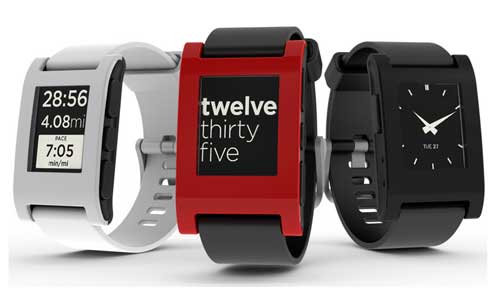
Pebble’s $10 million crowdfunding effort was one of the first successful IoT/wearable campaigns (Source: Pebble/Kickstarter)
Crowdfunding websites have led to an explosion of hardware-related companies, especially wearable startups, said speakers at Wearable World Congress in San Francisco, California, debating the pros and cons of their impact.
Pebble, for example, shipped a million smart watches to crowdfunders and others in 18 months. “In 2012 when we first launched on Kickstarter, investors weren’t investing in hardware. Now there’s an app store for literally everything,” said Pebble CEO Eric Migicovsky.
At the time, Pebble was Kickstarter’s best-funded campaign at $10 million. Tech products continue to make up 30 percent of all money pledged on the site. Crowdsourcing platforms continue to see hardware projects on the rise, specifically those targeting medical applications, and bigger players are getting in on the game.
Larger companies on the hunt for new talent, as well as venture capital firms looking to invest, have turned toward crowdfunding platforms as a means of measuring a potential investment. An investor could take the statistics from funders and read community response to determine whether a startup has a good chance of success.
Big online retailers such as Amazon will start developing close partnerships to sell products advertised in crowdfunding campaigns, said Indiegogo CEO and co-founder Slava Rubin.
Intel announced an IoT module, Curie, at this year’s CES and means to put the button-sized SoC into a variety of wearables, most notably in a partnership with eyeglass manufacturer Luxottica. Still, consumers are often reticent about using wearables, said Ayse Ildeniz, vice president and general manager of strategy and development for new devices at Intel.
“The paradigm right now is largely fitness devices – we’ve got to get the debate out of this space [because the target audience is] everyday people who don’t have genuine interest in geeking out with 2,500 features,” she said, adding that 58 percent of wearable buyers are women and many wearers of Intel’s Mica smart bracelet don’t want people to know that they’re wearing technology.
This article was originally published on EE Times. To read the rest of the article, please click here.
More Sourcing News
Read Also

关注 “环球资源外贸” 官方微信,获取实时外贸资讯
iOS & Android
iOS & Android(Mainland China)
Copyright © 2026 Publishers Representatives Limited. All rights reserved.