




Crystal oscillators are ubiquitous in electronics applications that require precise timing, frequency control and synchronization in their operations. With the rise of 5G communication, Internet of Things, artificial intelligence and other technologies, these active components have found greater application, extending reach in wearables, robotics, autonomous driving and smart homes.
In today’s homes, crystal oscillators are found in smart locks, audio products, lighting, cameras and appliances, enabling performance of set functions and transmission of data through networks accurately and reliably. By ensuring efficient operation, they help extend the life of batteries in devices that depend on these power sources.
Building on these features and adapting them to upgrades in electronics, manufacturers of crystal oscillators in China are enhancing component accuracy further while shrinking their sizes. Many focus on developing SMD variants with wide operating frequency and temperature ranges and various load capacitance options and can meet diverse customization requirements.
Steady market growth
Earlier projections for the smart home market based on its 2024 global performance point to a CAGR of 23.1 percent, underscoring the broadening base of the automation trend. It reached $121.59 billion that year and will be in the scale of $630 billion in 2032, according to Fortune Business Insights.
The Chinese market is no exception, with US-based QY Research estimating its size at $111.11 billion as early as 2025 from $109 billion in the previous year and $98.61 billion in 2023.
For the crystal oscillator segment, this means growth prospects. Globally, the smart home market is expected to bring this category to $230 million in 2031 from $179 million in 2024, or at a CAGR of 3.7 percent, based on the forecast made by Market Monitor Global.
Currently, Japan is the largest producer of crystal oscillators, followed by the Taiwan region and the Chinese mainland. In 2024, the top five suppliers had a collective share of 47 percent of global shipments, according to QY Research. They were TXC, Seiko Epson, Nihon Dempa Kogyo, Kyocera Crystal Device and Daishinku, with the last four from Japan.
To offset the effect of the US tariffs on their competitiveness, many Chinese suppliers have gradually shifted their focus to other markets such as Southeast Asia, the Middle East, Eastern Europe and South America.
Companies are generally hopeful of steady demand in the coming years, and there are some that have already undertaken expansion. Tier-one supplier Guangdong Faith Long, for instance, will realize mass manufacture of crystal oscillators and filters at its 100,050sqm new facility in Chongqing before the end of 2025. By then, this $179 million investment is expected to yield a production value of reach $250 million.
Going high end
Although only third in terms of crystal oscillator production, China is the largest market, with a 41 percent share, with Japan having 36 percent and North America 12 percent, according to QY Research.
To compete in this market and catch up with their overseas rivals, top Chinese manufacturers are boosting their R&D efforts and production capability. They include Jingsai, Guangdong Faith Long, Zhejiang Dongjing and Shenzhen Yangxing.
Most domestic enterprises, however, continue to cater to the entry-level and midrange segments.
The major hubs for crystal oscillator manufacturing are found in Shenzhen, Dongguan, Yangzhou, Nanjing, Ningbo and Jinhua.
Mainstream selection
Widely available crystal oscillators in China for smart home applications are HC-49S, UM-1, UM-5 and AT-cut types. These are UL-listed, CE-marked and RoHS-compliant.
The HC-49S units are designed for through-hole mounting and have a frequency range of 1.8432MHz to 54MHz, while the UM-1 and UM-5 in SMD packages operate on several to a hundred MHz. The AT-cut versions have various ranges, usually 32.768kHz, 12 or 24MHz.
All types can be customized according to the intended application.
Manufacturers source components, including quartz crystals, leads and cases, from domestic providers. Material costs are expected to stabilize in the coming months and keep product prices from increasing further.
The products in this gallery have been handpicked by our China-based market analyst for representing current trends in crystal oscillators from manufacturers in the Greater China region.
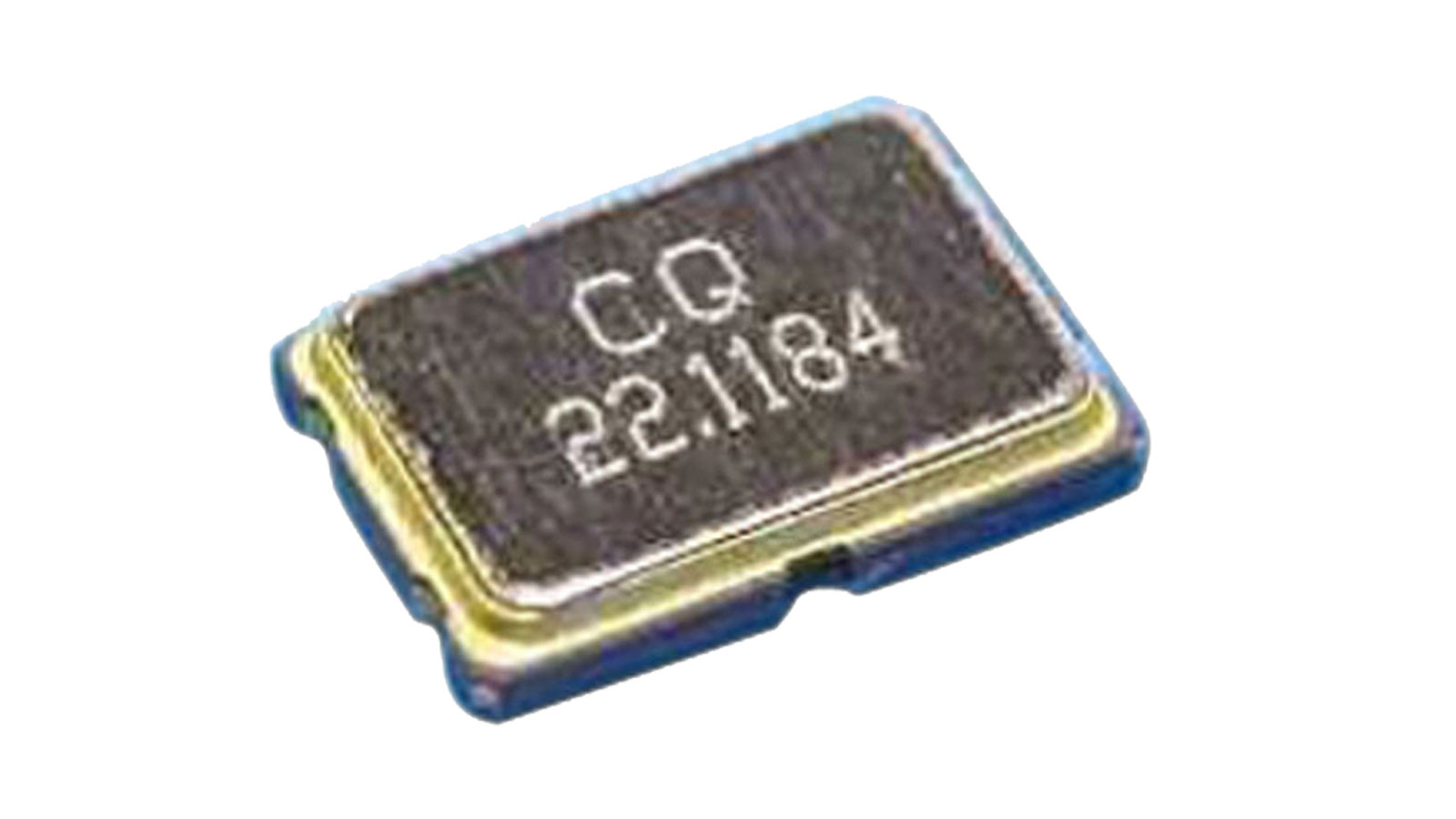
Crystal oscillator, 1 to 220MHz frequency range
Company: Chequers Electronic (China) Ltd
From Chequers, the 7050-6 crystal oscillator has 1 to 220MHz frequency range, ±25 to ±50ppm frequency stability, 2.5 to 3.3V supply voltage and 55mA or 60mA current.
MOQ: Negotiable
Lead time: 28 days
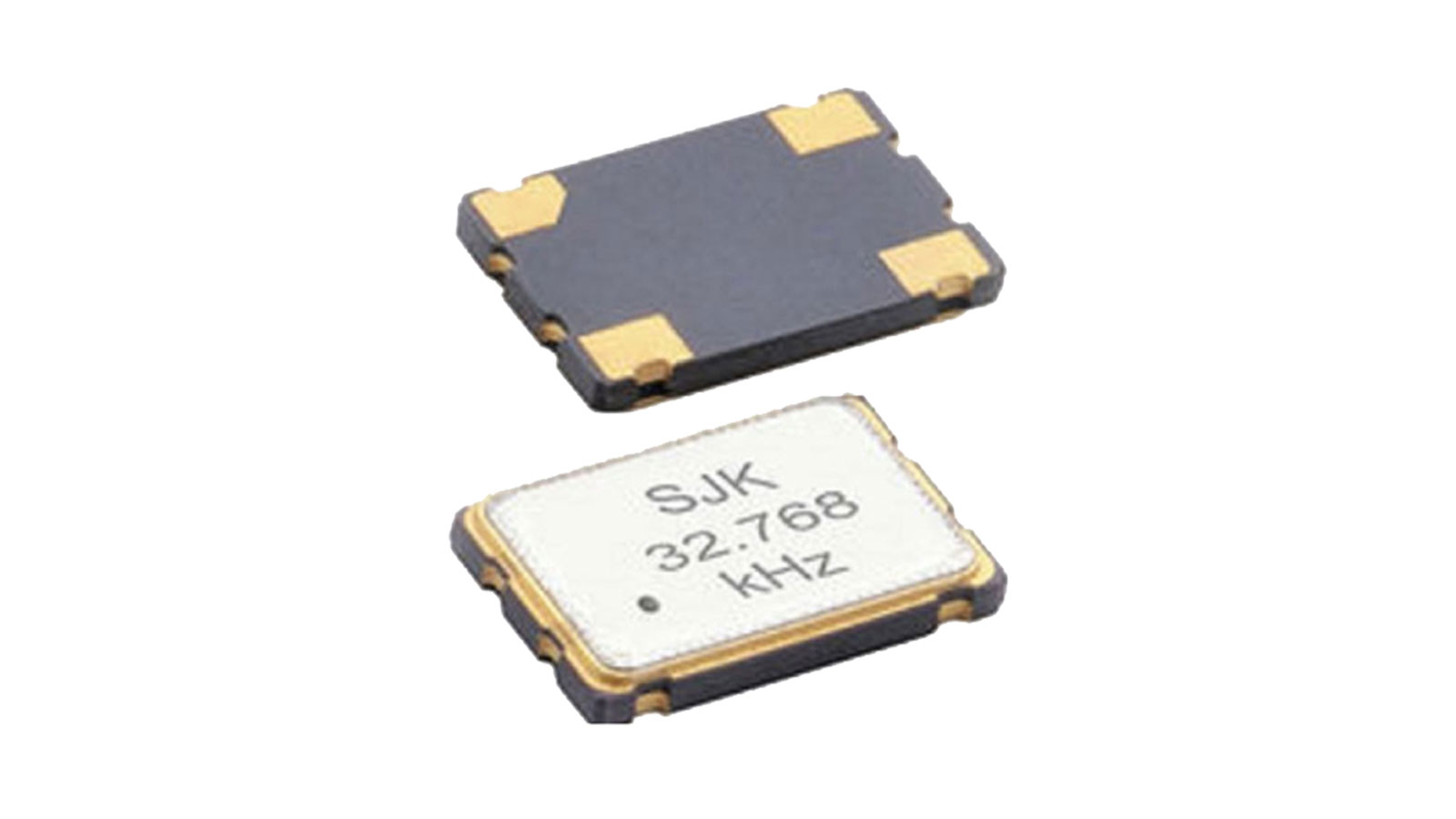
Crystal oscillator, 32.768kHz frequency
Company: Shenzhen Crystal Technology Industrial Co. Ltd
Designed for use in real-time clocks, digital signal controllers, car navigation systems and HDTVs, the 7A-7050 32.768KHz 2.8V RTC OSC crystal oscillator uses an AT-cut crystal as a resonator. It comes in a 7050 SMD package. This RoHS-compliant unit has 32.768kHz frequency and 1.8, 2.5 or 3.3V operating voltage.
MOQ: 1,000 units
Lead time: 14 days
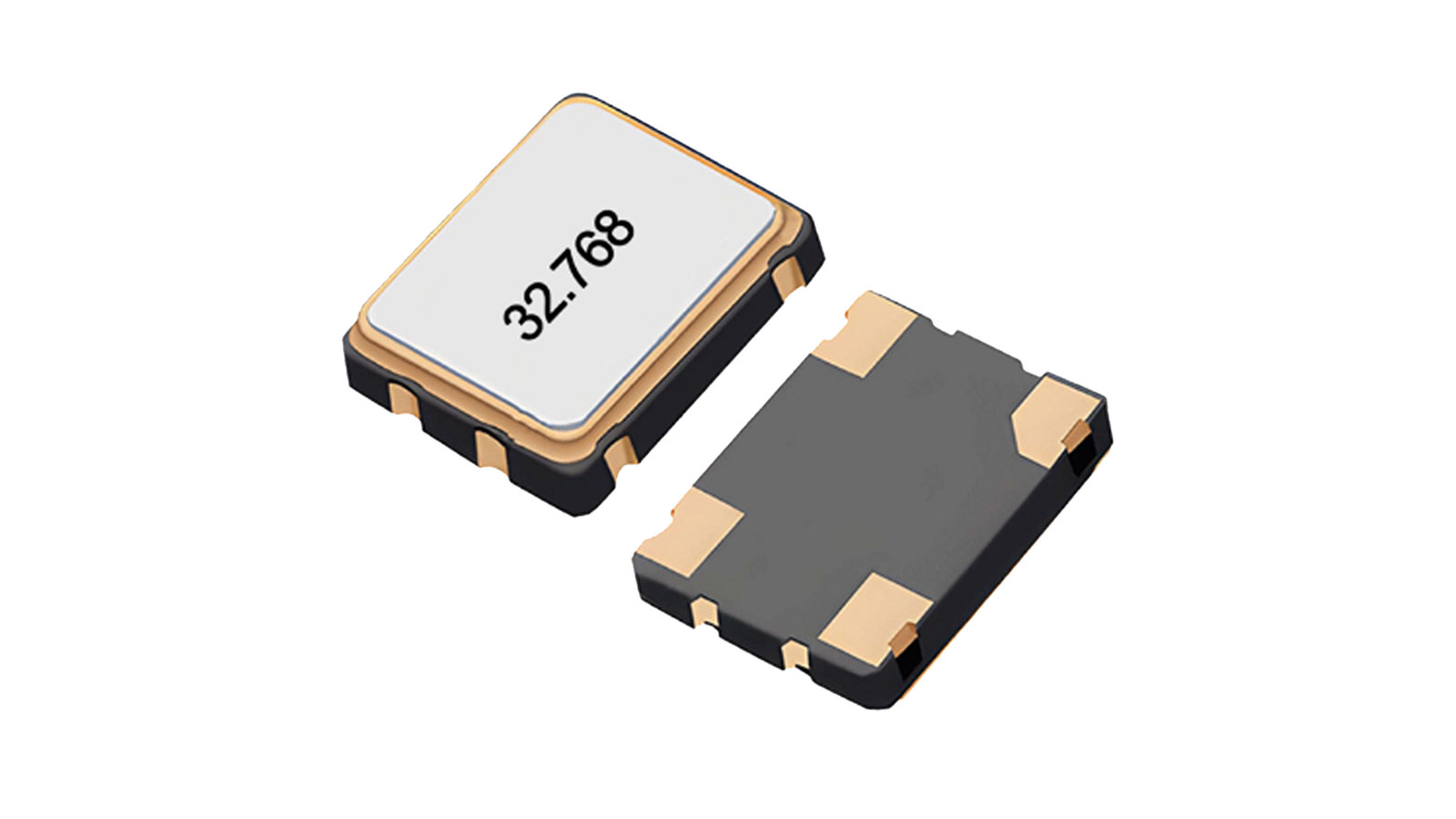
Crystal oscillator, 5x3.2x1.2mm SMD package
Company: Shenzhen LC Electronic Co. Ltd
Measuring 5x3.2x1.2mm, this SMD crystal oscillator from Shenzhen LC, the LCC OSC 5032-32.768KHz, has 1.8 to 3.3V supply voltage. It conforms to RoHS and REACH standards.
MOQ: 3,000 units
Lead time: 10 days
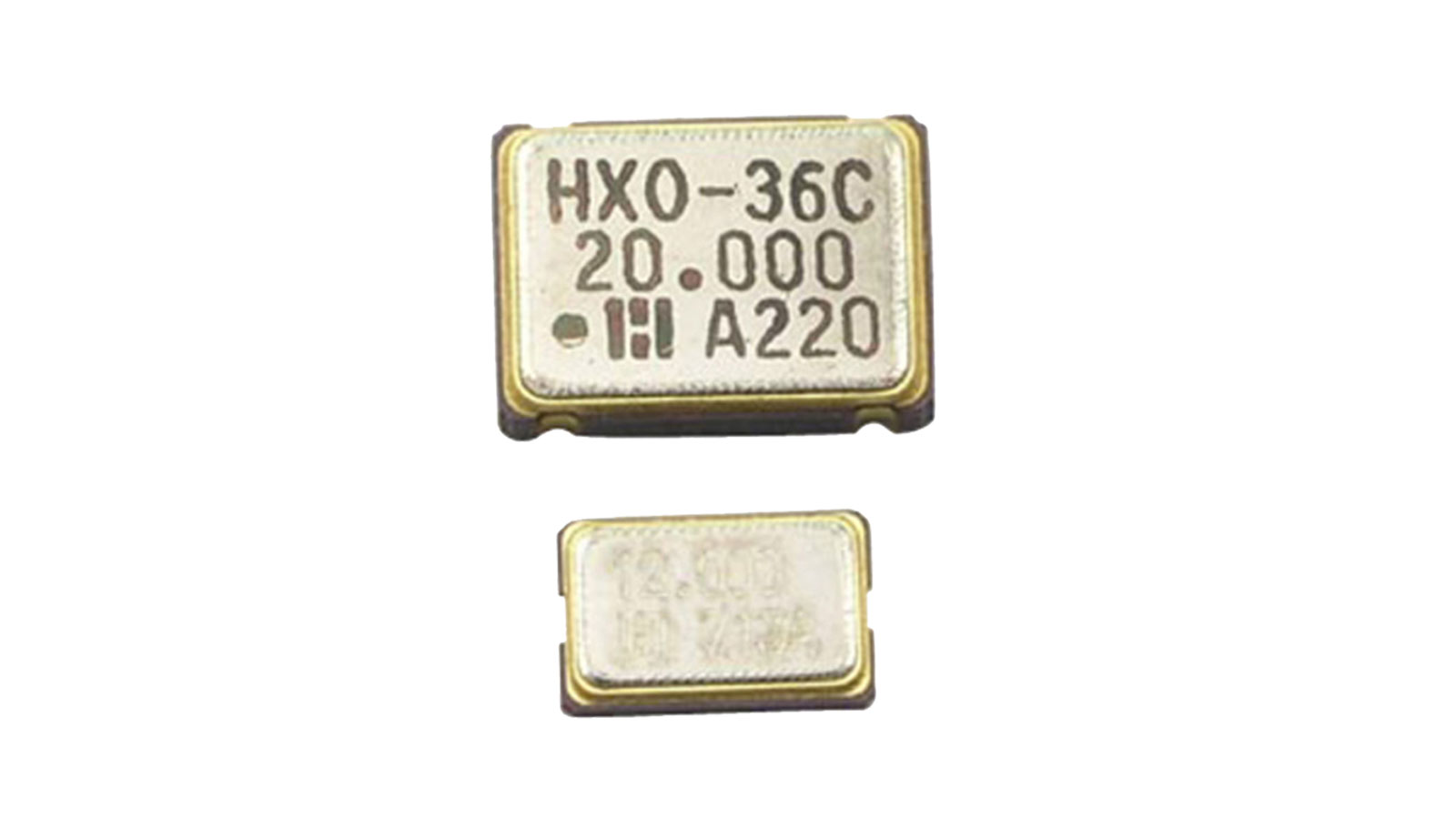
Crystal oscillator, ±20ppm frequency tolerance
Company: Supertech Electronic Co. Ltd
Supertech markets the Crystal-CRY-01 oscillator with 32.768kHz frequency, ±20ppm tolerance at 25 C, 3pF shunt and 6, 7, 9 or 12.5pF maximum load capacitance and 5,000Mohm insulation resistance at 100VDC. This component’s aging rate is ±5ppm per year.
MOQ: 3,000 units
Lead time: 21 days

