




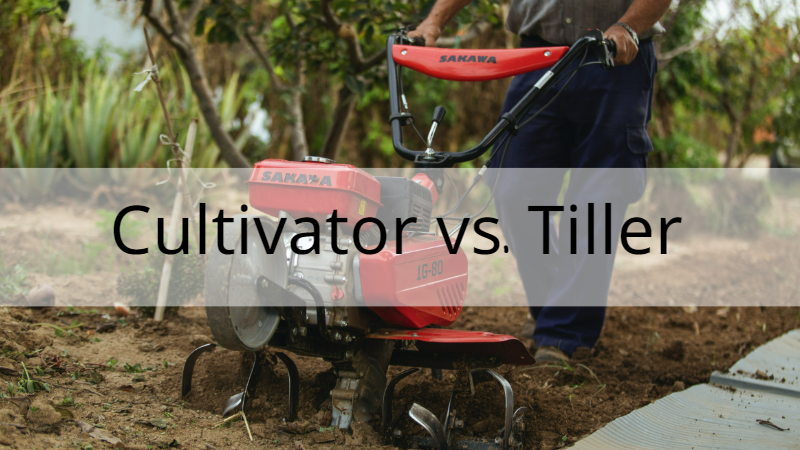
 When it comes to gardening and landscaping, having the right tools can make a significant difference in the success of your endeavours. Two commonly used tools for soil preparation are cultivators and tillers. While they share similarities in their purpose, there are distinct differences between the two machines.
Table of Contents
Part 1. Cultivator vs Tiller Comparison Chart
Part 4. Tiller vs. Cultivator Similarities
Part 5. Tiller vs. Cultivator Differences
Part 6. Tiller vs. Cultivator: Which Tool Is Best for the Job?
Part 7. Buying Wholesale Cultivator & Tiller at Factory Price on Global Sources
Part 8. FAQ About Cultivators and Tillers
Part 1. Cultivator vs. Tiller Comparison Chart
This cultivator vs. tiller comparison chart aims to provide an informative breakdown of their essential details to help you make an informed decision for your gardening needs.
| Aspect | Cultivator | Tiller |
|---|---|---|
| Purpose | Soil aeration, weed control, mixing in compost/fertiliser Maintaining small planting areas and garden beds, creating a fine-textured seedbed. | Extensive soil preparation, large-scale gardening, and landscapingTilling compacted soil, breaking new ground for planting. |
| Size and Design | Smaller and lightweight, equipped with rotating tines/blades in the front. May have wheels for maneuverability and depth adjustment. | Larger and heavier, designed for heavy-duty tasks, featuring larger, deeper digging tines/blades.Some have rear tines for added power and stability. |
| Power Source | Available in electric and gas-powered models. Electric for lighter tasks, gas-powered for tougher soil conditions. | Primarily gas-powered, with higher torque and digging capacity for substantial tilling tasks. Some models may have electric start options. |
| Working Depth | Shallow depth, typically 4 to 8 inches. Best for topsoil cultivation. | Greater depth, ranging from 6 to 10 inches or more. Ideal for breaking up compacted soil and preparing deep planting beds. |
| Application | Routine soil maintenance, weeding, seedbed preparation, mixing in soil amendments and nutrients. | Initial soil preparation, establishing new gardens, breaking new ground. |
| Maneuverability | Highly manoeuvrable, suitable for tight spaces and raised beds. | Less manoeuvrable, better for open spaces and larger gardening areas. |
| Horsepower | Gas-powered models: 1 to 5 HP. Electric models: 0.5 to 2 HP. | Gas-powered models: 3 to 10+ HP. |
| Weight | Lighter, usually 20 to 100 pounds depending on the model. | Heavier, usually 100 to 300 pounds or more depending on size and type. |
Both cultivators and tillers serve essential roles in gardening and landscaping, but they cater to different tasks and scale of projects. Cultivators are ideal for regular soil maintenance and preparing small planting areas, while tillers excel in heavy-duty soil preparation and large-scale gardening tasks. Consider the size of your gardening area, the depth of soil preparation required, and the type of tasks you intend to perform before choosing the most suitable tool. By understanding the distinctions outlined in this comparison chart, you can make an informed decision and select the right tool to achieve a successful and thriving garden.
Part 2. What Is a Cultivator?
A cultivator is a tool used in farming to prepare the soil for planting crops. It is designed to break up and loosen the earth, making it easier for seeds to take root and grow. The cultivator can be operated manually by farmers or attached to a tractor for larger-scale farming.
The main part of a cultivator is a set of metal tines or blades. These tines are mounted on a frame and penetrate the soil as the cultivator is pulled or driven through the fields. The tines are strategically spaced to ensure optimal soil disturbance without causing excessive damage to the growing plants.
Farm MachineCultivators come in various sizes and designs to suit different soil types and crops. Some are equipped with adjustable tines, allowing farmers to control the depth of cultivation. This flexibility ensures the right amount of soil is overturned, promoting healthy root development.
Farmers typically use cultivators in the early stages of farming, after ploughing the fields, to turn over the soil and remove weeds. The process of using a cultivator is called cultivation. It is a crucial step in preparing the land for planting, as it aerates the soil, improves water absorption, and helps with nutrient distribution.
In traditional agriculture, where manual labour is predominant, draft animals like oxen or horses often pull cultivators. These animals provide the power to move the cultivator through the fields, making it easier for farmers to work on large land areas.
In modern agriculture, with the advent of machinery, tractors have become the primary means of powering cultivators. Tractor-mounted cultivators offer greater efficiency and speed, enabling farmers to cover large areas in less time.
Overall, the cultivator plays a vital role in ensuring successful crop growth. Breaking up compacted soil and controlling weeds creates an ideal environment for seeds to germinate and plants to flourish. Its simplicity and effectiveness have made it an indispensable tool for farmers worldwide, contributing significantly to global food production.
Part 3. What Is a Tiller?
A tiller is a specialized machine used to prepare the soil for planting crops. The primary purpose of a tiller is to break up and turn over the soil in a specific pattern, creating a finely cultivated seedbed. This process helps improve soil structure, aeration, and water infiltration, which is essential for healthy plant growth.
A tiller consists of blades or tines attached to a horizontal shaft. The machine is usually pulled or driven by a tractor. As the tiller moves through the field, the blades penetrate the soil at a certain depth, typically around 6 to 12 inches, depending on the type of crop and soil conditions.
The blades of the tiller are designed to cut through the soil and turn it over, effectively mixing the top layer with the subsoil. This process is called tilling or tilting, hence the name "tiller" for the machine. By blending the soil layers, the tiller helps distribute nutrients and organic matter throughout the planting area.
Tiling is especially beneficial in compacted or hardpan soil areas, as it helps break up the dense layers, allowing roots to penetrate deeper. This, in turn, promotes better nutrient uptake and increases the overall productivity of the crops.
One of the key advantages of using a tiller is its efficiency in preparing large areas of land for planting. Compared to manual methods like ploughing, tiling can cover more ground in less time, making it a valuable tool for modern farming practices.
Farmers often use a tiller after harvesting the previous crop or in preparation for planting a new one. Farmers create a favourable environment for young plants to establish themselves and grow effectively by tilling the soil before sowing seeds or transplanting seedlings.
However, using the tiller judiciously and avoiding over-tilling is essential, as excessive soil disturbance can lead to erosion and loss of valuable topsoil. Farmers must consider factors like soil type, moisture content, and the specific needs of the crops they plan to cultivate.
Part 4. Tiller vs. Cultivator Similarities
Tillers and cultivators are both agricultural tools used to prepare the soil for planting crops, and they share several similarities in their functions and objectives. Despite their common goals, they differ in their design, usage, and scale of operation.
Let's explore the similarities between tillers and cultivators in simpler terms.
1. Soil Preparation
Both tillers and cultivators are employed to enhance the condition of the soil before planting. They work to break up compacted soil, improve aeration, and create a suitable crop seedbed. Loosening the earth facilitates better root growth and nutrient absorption, leading to healthier and more productive plants.
2. Mechanical Assistance
Both tools are mechanized, reducing the need for extensive manual labour in preparing the land for cultivation. This mechanization has significantly increased efficiency and productivity in modern farming practices, allowing farmers to cover larger areas in less time.
3. Tractor Attachment
Tillers and cultivators are typically attached to tractors for operation. They are towed behind the tractor as it moves through the fields, powered by its engine. This connection to a tractor provides the necessary pulling force and allows the farmer to control the depth and speed of the soil preparation process.
4. Blades or Tines
Both tools utilize blades or tines to work the soil. These blades are the crucial components that penetrate the ground and perform soil preparation tasks. The design and arrangement of the blades may vary depending on the specific model and purpose of the machine.
5. Seedbed Preparation
A primary objective of both tillers and cultivators is to create an optimal seedbed for planting. The seedbed is the top layer of soil where seeds are sown, or seedlings are transplanted. By preparing a well-tilled and weed-free seedbed, the farmer ensures better seed germination and successful crop establishment.
6. Farming Efficiency
Both tools contribute to increased farming efficiency. They enable farmers to prepare the soil more effectively and quickly, saving time and resources. Additionally, the improved seedbed created by tillers and cultivators enhances the overall yield and quality of the crops.
Despite these similarities, it is essential to understand the distinct characteristics of each tool to make informed decisions about its use in different agricultural contexts.
7. Weed Control
Both tillers and cultivators aid in weed control during the soil preparation process. Weeds compete with crops for nutrients, water, and sunlight, hindering their growth and reducing yield. When the blades or tines of tillers and cultivators penetrate the soil, they uproot and disturb weed growth, helping to manage weed populations in the fields.
Tillers and cultivators share common goals in soil preparation and seedbed creation, and both are powered by tractors. However, they differ in their design and applications. Tillers are more robust and suitable for deep soil tillage, while cultivators are lighter and better suited for maintaining cultivated fields and weed control. By understanding their similarities and differences, farmers can make informed decisions on when to use each tool to optimize their farming practices and achieve better crop yields.
Part 5. Tiller vs. Cultivator Differences
When preparing the soil for planting crops, two essential agricultural tools come to mind: tillers and cultivators. While both serve the common purpose of enhancing soil conditions and creating a favourable seedbed, they are distinct in their design, usage, and scale of operation.
Below, we'll explore the key differences between tillers and cultivators and how farmers can make informed decisions about their application in different agricultural contexts.
1. Depth of Soil Penetration
One of the most significant differences between tillers and cultivators lies in soil penetration depth. Tillers are heavy-duty machines designed for deep soil tillage. They are commonly used in the initial stages of soil preparation when converting grassland or uncultivated land into arable farmland.
The deep penetration of tillers effectively incorporates organic matter like compost or manure, further enriching the soil's fertility. However, their aggressive nature makes them less suitable for use in established plantations, as they may disrupt the root systems of existing crops.
Cultivators, on the other hand, are lighter and more versatile tools designed for shallower soil cultivation. They typically reach depths of 4 to 6 inches, making them well-suited for maintaining cultivated fields and controlling weed growth during the early stages of crop development. Their shallower operation ensures that they do not disturb the root systems of established crops.
2. Aggressiveness and Soil Disturbance
Another critical difference between tillers and cultivators is their aggressiveness and soil disturbance level. With their large and sturdy blades or tines, Tillers aggressively penetrate the soil to considerable depths, significantly breaking up compacted soil. Overusing tillers in established plantations may damage crop root systems, potentially affecting crop growth and yield.
Cultivators, being lighter and with shallower penetration, are less aggressive in their soil disturbance. They work more gently on the soil surface, making them ideal for use between rows of established crops. Cultivators effectively control weeds without causing substantial disruption to the plant's root systems, ensuring the crops' health and productivity.
3. Field Applications
Tillers and cultivators are suited for different field applications based on the land's condition and the farming stage. They are ideal for converting uncultivated land into arable farmland, incorporating organic matter, and improving soil fertility.
Cultivators, on the other hand, excel in maintaining cultivated fields and managing weed growth. They are versatile tools that find utility in various stages of crop development. Cultivators are commonly used after primary soil preparation to refine and prepare the seedbed for planting.
4. Tractor Power Requirements
Both tillers and cultivators require attachment to tractors for operation. However, due to their design and depth of soil penetration, tillers typically require more tractor power than cultivators. The powerful engine of the tractor is necessary to pull the heavy-duty tiller through the soil and ensure effective soil tillage.
Cultivators, being lighter and shallower in their operation, demand less tractor power. This makes them a more practical choice for farmers with smaller tractors or working on less challenging soil conditions.
5. Versatility
While both tillers and cultivators serve essential functions in soil preparation, cultivators are more versatile in their applications. Their lighter and less aggressive nature allows for use in various stages of crop development, from initial seedbed preparation to weed control in established fields. They offer flexibility and efficiency, making them a valuable tool for maintaining productive farmland.
Part 6. Tiller vs. Cultivator: Which Tool Is Best for the Job?
Whether preparing uncultivated land or refining an existing seedbed, understanding the differences between tillers and cultivators will empower farmers to make informed decisions. Farmers can gain valuable insights into the most suitable option for their specific farming needs by examining the unique features of these agricultural tools.
1. Soil Preparation
The primary goal of tillers and cultivators is to improve the soil before planting. Tillers are heavy-duty machines designed for deep soil tillage. With powerful blades or tines that can reach depths of 6 to 12 inches or more, they are ideal for breaking up compacted or hardpan soil.
Tillers excel in converting grassland or uncultivated land into arable farmland, effectively incorporating organic matter like compost or manure, enriching the soil's fertility. Cultivators are lighter and designed for shallower soil cultivation, typically reaching depths of 4 to 6 inches. They are more suitable for maintaining cultivated fields and controlling weed growth during the early stages of crop development.
2. Weed Control
Both tillers and cultivators play a role in weed control during soil preparation. Weeds compete with crops for nutrients, water, and sunlight, inhibiting their growth and reducing yield.
The blades or tines of both tools uproot and disturb weed growth as they penetrate the soil, helping to manage weed populations in the fields. Creating a well-prepared seedbed, tillers, and cultivators provide a head start for crops, minimizing weed interference and facilitating healthier plant growth.
3. Mechanical Assistance
Tillers and cultivators are mechanized tools, reducing the need for labor-intensive manual work in the field. They are attached to tractors, using their power to pull them through the fields.
Tractor attachment provides the necessary force for the blades or tines to penetrate the soil and carry out soil preparation tasks. It also allows farmers to adjust the depth and speed of the operation, ensuring optimal results for different soil types and crop requirements.
4. Seedbed Preparation
Creating an ideal seedbed is a primary objective of both tools. The seedbed is the top layer of soil where seeds are sown, or seedlings are transplanted. Farmers ensure optimal seed germination and successful crop establishment by properly preparing the seedbed.
With their deep soil penetration and aggressive nature, Tillers are well-suited for initial soil preparation, incorporating organic matter and creating a rich seedbed. Cultivators, with their shallower operation, are more suitable for refining the seedbed in already cultivated fields and providing a smooth surface for planting.
5. Farming Efficiency
Both tools significantly contribute to farming efficiency. By enabling efficient soil preparation, they save valuable time and resources for farmers. The improved seedbed created by tillers and cultivators enhances crop yield and quality, ultimately leading to more successful harvests.
Making the Right Choice
Farmers must consider the specific requirements of their fields and crops to determine which tool is best for the job. If the land is uncultivated or has not been tilled for an extended period, a tiller may be the ideal choice to break up compacted soil and incorporate organic matter. However, a cultivator would be more suitable if the field is already cultivated and requires surface soil preparation or weed control.
Moreover, the scale of the operation should also be taken into account. A tiller's power and efficiency may be advantageous for larger farms and extensive land preparation. On the other hand, for smaller fields and precision work, a cultivator's lighter and more maneuverable design could be the better option.
Part 7. Buying Wholesale Cultivators & Tillers at Factory Prices on Global Sources
If you're looking to buy cultivators and tillers at factory prices, Global Sources is the place to explore. Global Sources is a renowned online marketplace that connects buyers with manufacturers and suppliers worldwide. They offer a wide range of agricultural tools, including various types of cultivators and tillers, all available at wholesale prices.
At Global Sources, you can find different types of cultivators and tillers tailored to meet various farming needs. One popular type is the rotary tiller, also known as a rotary hoe or power tiller. Rotary tillers feature multiple blades or tines rotating horizontally to effectively till the soil. They come in various sizes and power capacities, allowing farmers to select the most suitable option based on land size and soil conditions. Prices for rotary tillers on Global Sources range from $200 to $1000, depending on the specifications and brand.
A multi-functional cultivator could be the ideal choice for farmers looking for versatility. Multi-functional cultivators combine the features of both tillers and cultivators, offering a comprehensive solution for soil preparation and weed control. These cultivators often come with adjustable tines and additional attachments, allowing farmers to customize their usage for different tasks. Global Sources offers multi-functional cultivators at wholesale prices ranging from $300 to $1500.
If you require a smaller and more compact option for small-scale farming or gardening, mini tillers, and cultivators are also available at Global Sources. Mini tillers are lightweight and easy to maneuver, perfect for small plots or tight spaces. These handy tools can be found at factory prices from $100 to $500.
Global Sources also offers a selection of tractor-mounted cultivators and tillers for large-scale farming operations. These heavy-duty machines are designed to be attached to tractors, utilizing the tractor's power to operate effectively. Tractor-mounted cultivators and tillers are perfect for preparing vast fields time-efficiently. Prices for tractor-mounted cultivators and tillers on Global Sources start from $1000 and can go up to $5000, depending on the size and specifications.
Aside from the various cultivators and tillers available, Global Sources ensures buyers receive quality products directly from manufacturers. The platform provides detailed product descriptions, specifications, and user reviews, giving farmers confidence in their purchase decisions.
Global Sources employs a well-established logistics and shipping network that efficiently delivers tillers and cultivators of any size to customers worldwide. Global Sources can handle diverse shipping requirements, whether it's a compact mini tiller or a heavy-duty tractor-mounted cultivator. Their efficient shipping process begins with careful coordination between manufacturers, suppliers, and logistics partners.
Global Sources' logistics partners are experienced in handling agricultural machinery, ensuring that the items are loaded and unloaded with utmost care. This attention to detail minimizes the risk of damage during transportation, regardless of the equipment size.
Whether for small-scale gardening or large-scale farming, sourcing these tools from Global Sources guarantees both quality and cost-effectiveness. With the right cultivator or tiller in hand, farmers can enhance their farming efficiency, leading to successful crop growth and improved agricultural outcomes.
One of the key advantages of sourcing cultivators and tillers from Global Sources is the assurance of quality products directly from manufacturers. The platform provides detailed product descriptions, specifications, and user reviews, empowering farmers to make well-informed purchase decisions.
Are you familiar with the methods sellers on platforms like Temu use to find suppliers for the goods sold on their B2C platforms?
When it comes to major purchases, sellers tend to establish long-term strategic partnerships with manufacturers while also exploring trusted wholesalers face-to-face at trade shows. Additionally, in the digital age, finding verified suppliers through online third-party B2B platform channels has become a common and effective practice.
One notable B2B platform excelling in this regard is Global Sources. For over 50 years, Global Sources has stood as one of the world's largest facilitators of Business-to-Business (B2B) trade, garnering trust as a genuine and safe hands-on sourcing platform.
With a remarkable track record, it has served over 10 million registered buyers and users worldwide, boasting the participation of 97 of the world's top 100 retailers. Global Sources caters to online sellers across various platforms, including Amazon, Temu, Wish, eBay, Shein, Walmart, and Etsy. It offers a wide array of trusted suppliers from countries like China, Vietnam, South Korea, and India, ensuring diverse sourcing options.
Global Sources provides a comprehensive solution for buyers, showcasing products online and organizing offline trade shows through its Online-to-Offline feature. This innovative approach enables users to discover the best-suited suppliers across all industries, guaranteeing access to hot new products and verified manufacturers in different sectors.
By leveraging Global Sources' extensive network, you can confidently explore tens of thousands of wholesale products on GlobalSources.com, effectively meeting all your sourcing needs and gaining a competitive edge in your business endeavors.
Still wondering where to find a reputable online marketing platform? Global Sources emerges as a reliable go-to platform for online sellers seeking trusted suppliers. Its blend of digital and traditional sourcing channels empowers businesses to thrive in today's dynamic marketplace. Get in touch today to get started.
Conclusion
When gardening and landscaping, the right tools can make all the difference. Cultivators and tillers are essential for soil preparation but serve different purposes.
Cultivators are ideal for small-scale gardens and flowerbeds, loosening the soil surface for aeration and weed control. They are lightweight and have rotating tines, perfect for regular soil maintenance.
Tillers, on the other hand, excel in heavy-duty soil preparation for larger projects. With more powerful horsepower and larger, deeper digging tines, they are designed for breaking new ground and handling tough soil conditions. While it may be heavier and demand more storage space, its efficiency and effectiveness in handling heavy-duty projects are unmatched.
Both cultivators and tillers are mechanized, reducing the need for manual labour. They are typically attached to tractors for operation, and their blades or tines work the soil effectively.
Cultivators come in manual, electric, and gas-powered options. Gas-powered ones offer higher power, while electric ones are more eco-friendly. They are versatile tools for seedbed preparation, weed control, and cultivating fields. From seedbed preparation to weed control, cultivators are the Swiss Army knives of the gardening realm, making them indispensable for every home gardener.
Being more aggressive, tillers are suited for initial soil preparation and converting uncultivated land into farmland. They demand more tractor power but cover vast areas efficiently.
Global Sources offers cultivators and tillers at factory prices. They provide detailed product descriptions, specifications, and user reviews, ensuring quality purchases directly from manufacturers. Choosing the right tool depends on your gardening needs. For small-scale gardens, the cultivator is your go-to choice, while the tiller easily conquers larger projects.
The path to a thriving garden lies before you, and with the right tools, nothing stops you from achieving horticultural greatness. Embrace the power of cultivators and tillers today, and watch your garden bloom like never before. Don't miss the chance to create a thriving garden with the help of these powerful tools from Global Sources.
Part 8. FAQ About Cultivators and Tillers
1. What Does a Tiller Do?
A tiller is a specialized machine used in farming to prepare the soil for planting crops. It works by breaking up and turning over the soil, creating a finely cultivated seedbed. This process improves soil structure, aeration, and water infiltration, essential for healthy plant growth. The tiller consists of blades or tines attached to a horizontal shaft, and it is usually pulled or driven by a tractor. It helps in incorporating organic matter, breaking up compacted soil, and promoting deeper root penetration. Overall, a tiller plays a crucial role in creating an optimal environment for successful crop establishment and growth.
2. What Does a Cultivator Do?
A cultivator is a gardening tool used to loosen the soil surface, promote aeration, and control weeds. It helps prepare the soil for planting crops by breaking up the earth, making it easier for seeds to take root and grow. Cultivators come in various sizes and designs, with metal tines or blades that penetrate the soil as the tool is pulled or driven through the fields. This process is called cultivation and is vital for creating an ideal environment for seed germination and ensuring successful crop growth.
3. Can You Use a Cultivator as a Tiller?
No, a cultivator and a tiller serve different purposes and cannot be used interchangeably. A cultivator is designed to loosen the soil surface for aeration and weed control in small-scale gardens. It is lightweight and works well for regular soil maintenance. On the other hand, a tiller is meant for heavy-duty soil preparation, breaking new ground, and handling tough soil conditions on larger projects. While both tools are mechanized and attach to tractors, their design and functions are distinct, making them unsuitable for each other's tasks.
4. Are Tillers and Cultivators Gas or Electric?
Both tillers and cultivators are available in gas and electric options. Gas-powered models offer higher power and torque, making them suitable for heavy-duty soil preparation. Electric models are more eco-friendly and easier to use, making them popular choices for smaller-scale gardening and maintenance tasks.
5. Can you use a cultivator as a tiller?
Yes, you can use a cultivator as a tiller for light soil tilling tasks. Cultivators are designed to loosen the soil surface for aeration and weed control, making them suitable for shallow soil preparation. However, for heavy-duty soil breaking and deep tilling, a dedicated tiller with larger, deeper digging tines would be more effective.
6. What is the difference between tilling and cultivating?
Tilling involves deep soil penetration and breaking up compacted soil for initial preparation, while cultivating is a lighter, shallower process for maintaining cultivated fields and controlling weed growth during crop development.
7. Can you use a cultivator to dig?
No, a cultivator is not designed for digging. It is primarily used to loosen the soil surface for aeration, weed control, and regular soil maintenance in small-scale gardens and flowerbeds. For digging and breaking new ground, a tiller with larger, deeper digging tines is more suitable.
8. What is the difference between a rotavator tiller and cultivator?
The difference lies in their soil preparation depth and application. A rotavator tiller is a heavy-duty machine designed for deep soil tillage, breaking compacted soil up to 12 inches or more. It is suitable for initial land preparation and incorporating organic matter. On the other hand, a cultivator is lighter, with a shallower soil penetration of 4 to 6 inches. It excels in maintaining cultivated fields, controlling weeds, and providing a smooth seedbed for planting.

