




DC-DC converters are mainly used to store and release energy, adjust and stabilize voltage, and optimize systems for energy saving, ensuring components operate reliably, efficiently and safely.
In renewable energy systems, these electronic components offer maximum power point tracking (MPPT), enabling them to harvest the most power possible even when solar irradiance and temperature or wind speeds fluctuate. They provide added safety by protecting system components, including the batteries, from overcharging, voltage spikes and current backflow.
With such critical function in new energy sources, DC-DC converters are expected to undergo further development to boost their efficiency and reliability features while complying with miniaturization requirements. This trend will include their greater use of GaN semiconductor devices to improve power density and enable smaller configurations.
Growing application base
Newly installed capacity of solar power systems reached 450GW worldwide in 2025, according to SINA Finance, a Chinese financial news and data service. In terms of share in this market, China accounted for more than 65 percent in certain areas, including Vietnam, India and Saudi Arabia.
On the home front, China’s deployment of new energy sources is expected to continue rising in the coming years. In 2024, up to 373 million kW of renewable energy generation systems were installed, increasing 23 percent from the previous year, according to the National Energy Administration. The solar and wind categories contributed 278 million and 79.82 million kW, posting 28 and 6 percent growth, respectively.
SINA Finance said that the country’s new energy industry will surpass $1.38 trillion in 2030.
This development highlights the widening adoption of these green technologies as alternatives to fossil fuel-based energy sources. “Renewable energy will overtake coal to become the world’s top source of electricity by 2026 at the latest,” according to Simon Evans citing the forecasts from International Energy Agency (IEA) in a blog post on Carbon Brief. Solar and wind will “meet more than 90 percent of the increase in global electricity demand out to 2026.”
DC-DC converters
Globally, the DC-DC converter market is projected to reach $28.47 billion in 2032 at a CAGR of 9.66 percent, according to Fortune Business Insights. In 2024, it reached $12.21 billion, with the Asia-Pacific region accounting for 54.22 percent.
In China, the biggest solar and wind power market, manufacturers of DC-DC converters are confident of a steady rise in demand in the next two years, with many expanding their production. They are looking elsewhere to compensate for the decline in US-bound shipments, acknowledging the adverse effects of the new tariffs on exporters’ costs.
Generally, most Chinese DC-DC converter suppliers allocate between 20 and 60 percent of output for overseas markets and some as much as 80 percent or more. Besides North America, their main destinations are Europe and Asia-Pacific.
China-made selection
In mainstream supply in China are DC-DC converters in isolated and nonisolated buck, boost and buck-boost types with an efficiency rating of over 70 percent. These have built-in protection from overvoltage, -current, -temperature and short-circuit conditions and have an operating temperature range of -40 to 85 C. Options extend to water-resistant units with a rating of above IP65.
Manufacturers accommodate requests for custom specifications, materials and sizes. They ensure their products meet UL, CE, GS, TÜV and RoHS requirements.
ICs, MOSFETs, passive components, PCBs, cases and other inputs are sourced domestically or overseas. For ICs, companies usually turn to TI, Vicor, Infineon, Silergy, SG Micro, Joulwatt and Southchip.
There was no material cost adjustment in the past year, and this trend will continue in 2026 and keep prices of DC-DC converters unchanged.
Manufacturing base
Over two-thirds of suppliers of DC-DC converters in China are domestically owned small and midsize operations offering entry-level and midrange types, with high-end units coming from foreign companies there.
Chaoyang Power Supplies, Mornsun and Huawei are some of the first-tier Chinese makers.
Most homegrown enterprises are found in the Pearl River Delta, the Yangtze River Delta and the Bohai Bay Rim Economic Region, specifically in Guangdong, Zhejiang, Jiangsu and Shandong. Others have factories in inland provinces such as Shaanxi and Sichuan.
The key cities in these locations are Shenzhen, Dongguan, Suzhou, Changzhou, Hangzhou, Ningbo, Xi’an and Chengdu.
Because of their comprehensive ecosystems for components manufacturing, these areas will continue to attract new players in the years to come.
The products in this gallery have been handpicked by our China-based market analyst for representing current trends in DC-DC converters from Chinese mainland and Taiwan region makers.
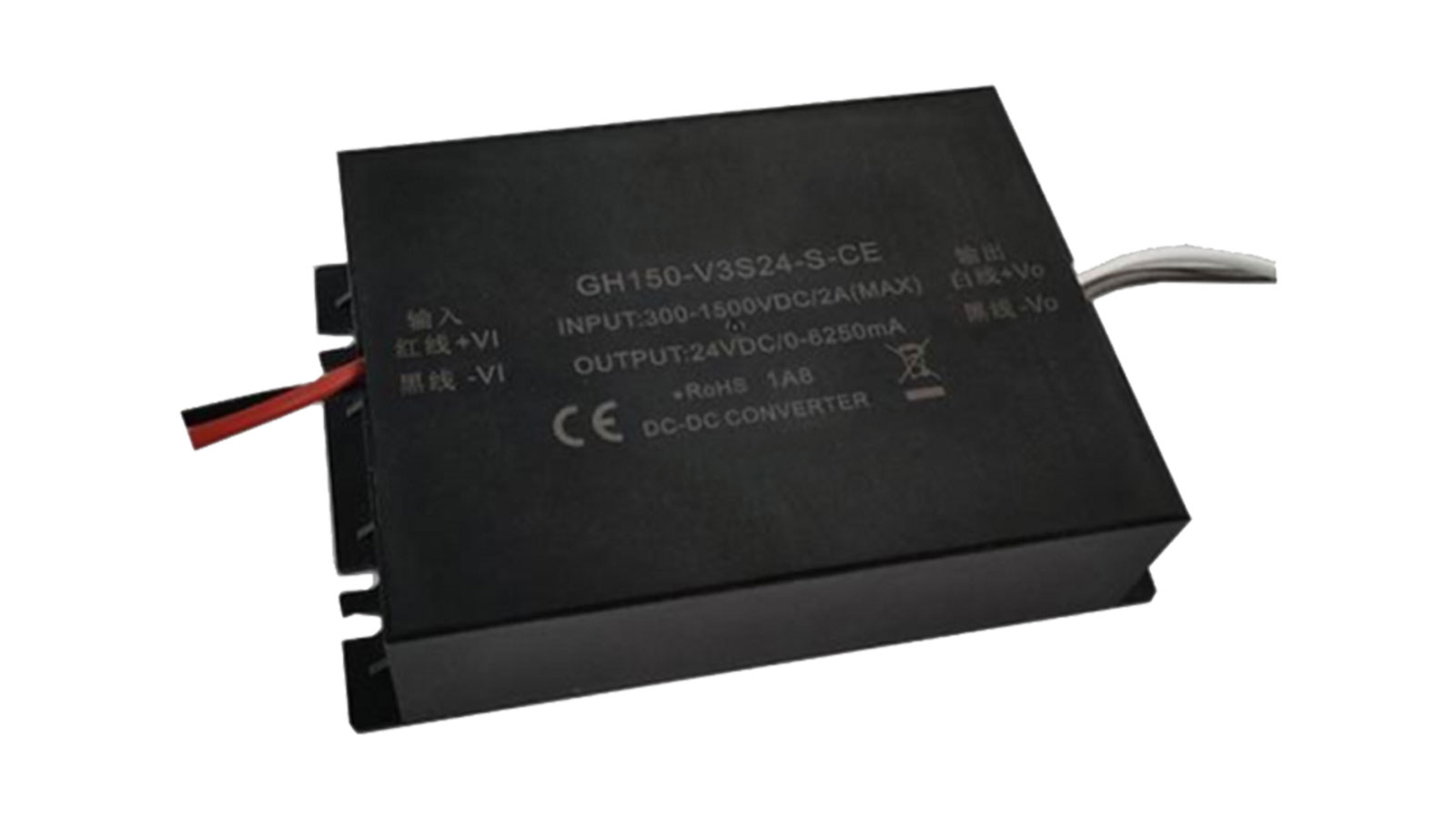
DC-DC converter, 150W rated power
Company: Beijing V-Young Tech Development Co. Ltd
Rated at 150W, Beijing V-Young’s GH150-V3S32-S DC-DC converter has 300 to 1,500VDC input and 24, 32 or 48VDC output voltage ratings. It meets CE, UL and FCC requirements.
MOQ: 100 units
Lead time: 25 days
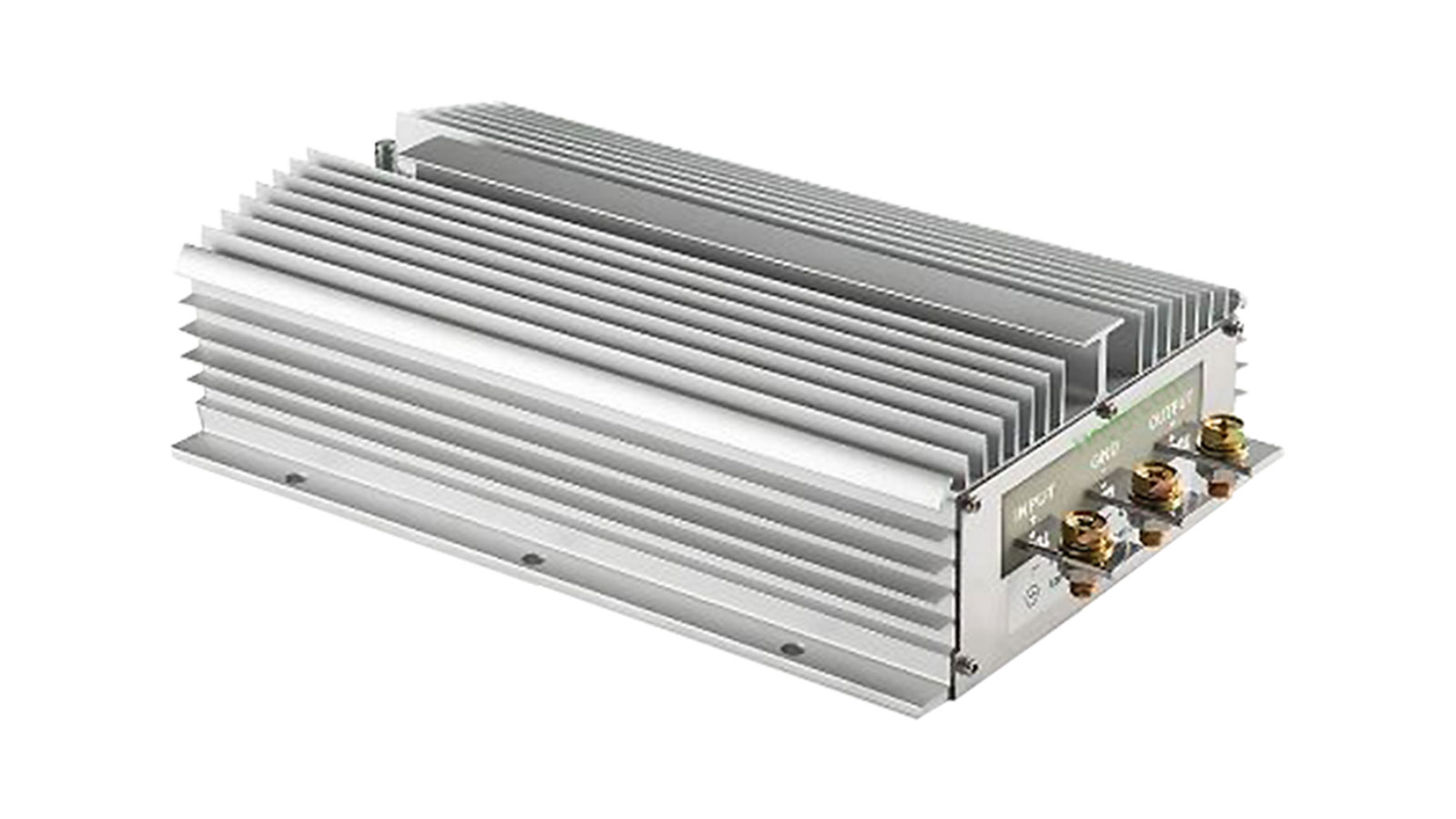
IP68-rated DC-DC converter
Company: Guangzhou Chengz Industrial Co. Ltd
The A1U4830 from Guangzhou Chengz is an IP68-rated DC-DC converter with 12V input voltage and 48V, 50kHz, 30A output ratings.
MOQ: Negotiable
Lead time: 7 days
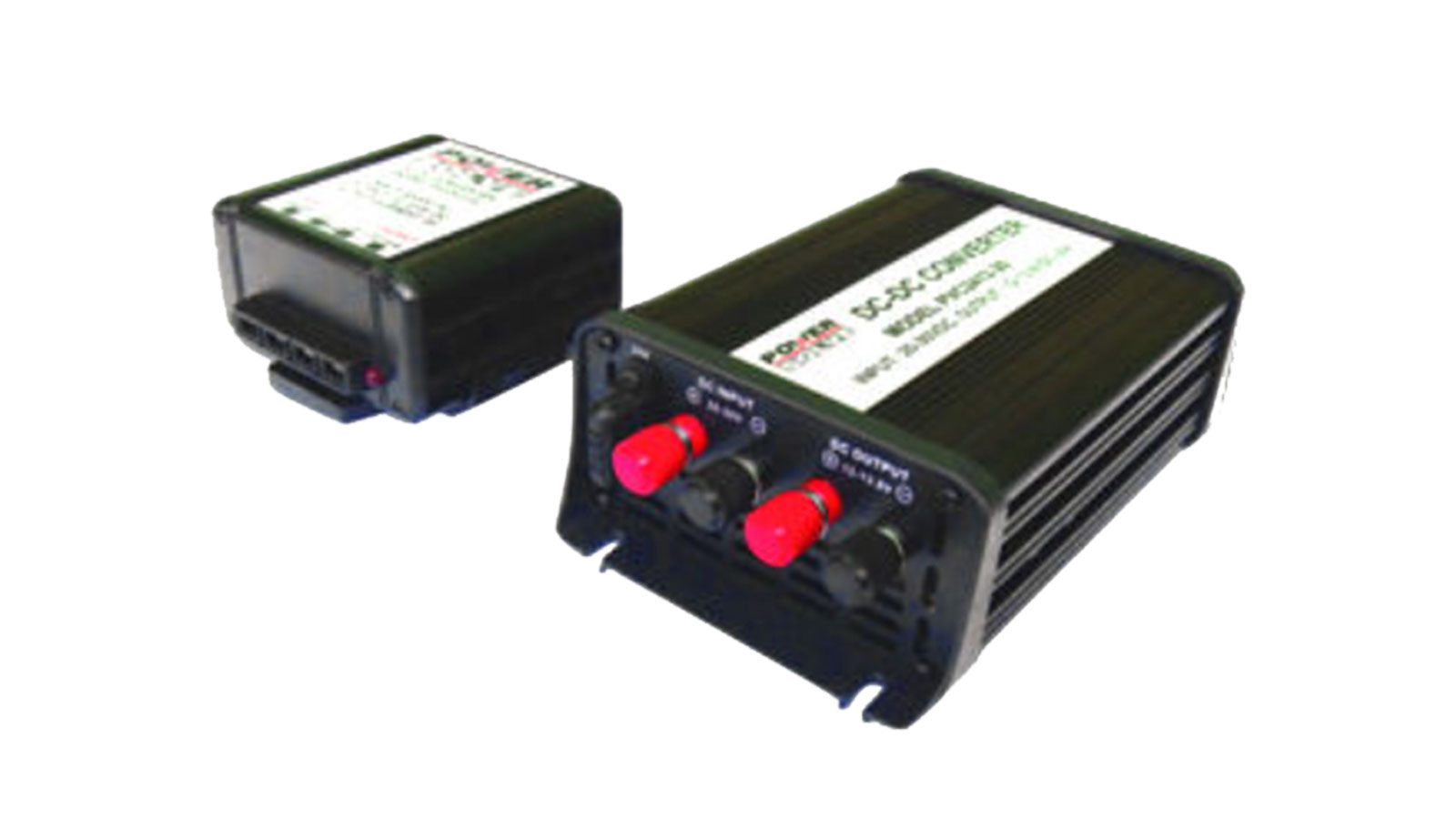
Nonisolated DC-DC converter, 12 to 13.8VDC, 6 to 40A output
Company: Powersolve Electronics Ltd
The PVC2412 Series nonisolated-type DC-DC converter from Powersolve has 20 to 30VDC input voltage and 12 to 13.8VDC, 6 to 40A output.
MOQ: Negotiable
Lead time: 7 days
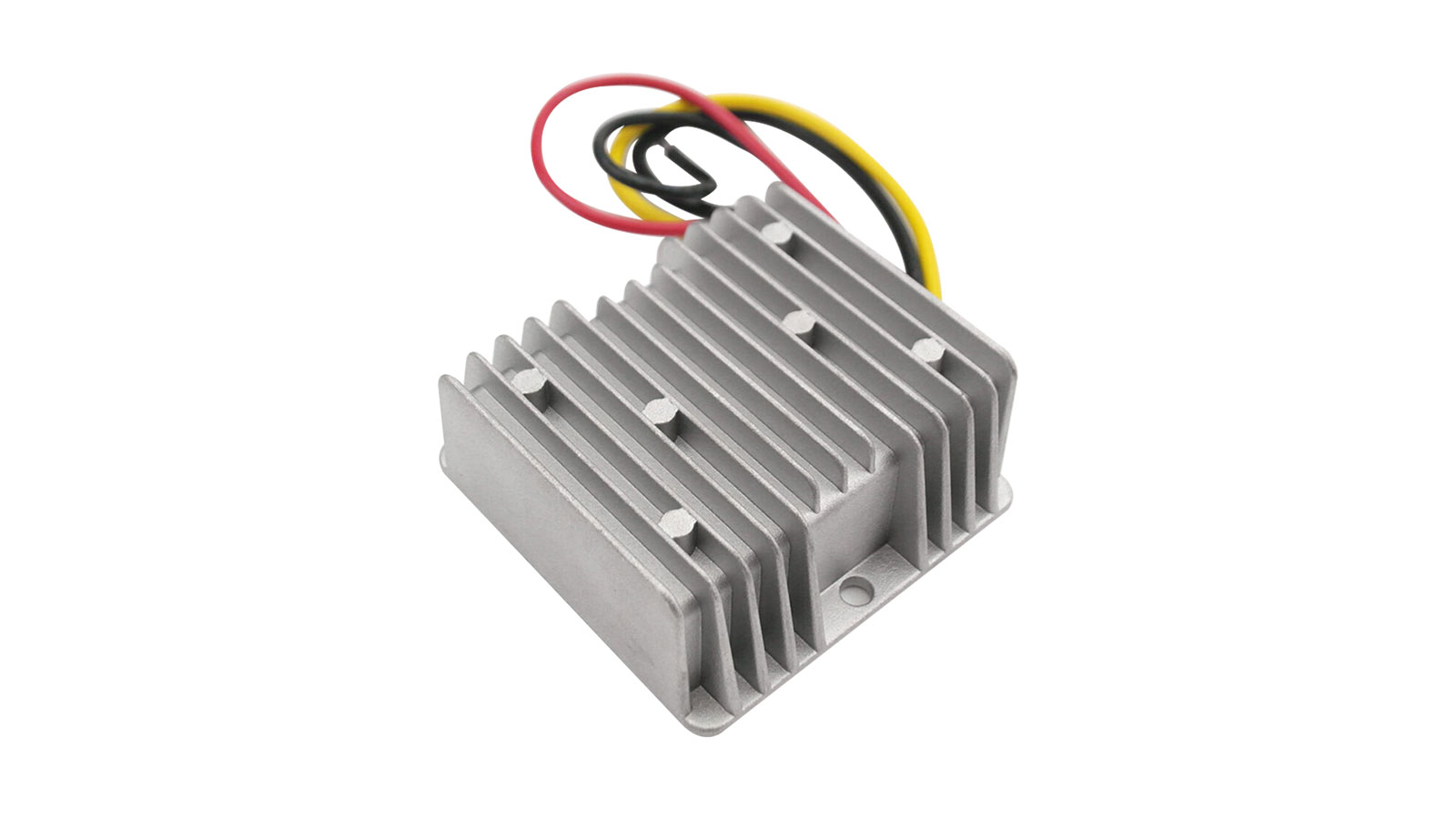
DC-DC converter, 180W rated power
Company: Zhongshan Kingrong Electronics Co. Ltd
The KRE-DD24S1215 nonisolated-type DC-DC converter from Zhongshan Kingrong has 12VAC and 15A rated voltage and current, and 180W rated power. It conforms to UL, BS and RoHS standards.
MOQ: 500 units
Lead time: 25 days

