




Advancements in technology have been changing the automotive industry, resulting in the sustained release of both conventional and electric vehicles with modern conveniences from connectivity and infotainment to safety features. These dynamic trends, in turn, have been driving demand in the upstream supply chain, including the manufacturing sector for DC motors.
DC motors find wide use in automotive applications for their simple and compact design, high starting torque and precise speed control.
They are deployed as starter motors in most vehicles instead of traction motors. “With the advent of start-stop technology and mild hybrid vehicles, the starter motor is morphing into the starter-generator, and taking on more functions,” according to a TI technical article. “In some designs, an enhanced starter motor can be used to “creep” forward in stop-and-go traffic, blurring the lines between a starter motor and an electric traction motor.”
Traction motors can have a DC or an AC design, but EVs usually employ either AC induction or permanent-magnet synchronous units. But in two- and three-wheel electric vehicles, DC motors are a key component in the propulsion system. They determine performance in terms of top speed, acceleration, hill climbing ability and power consumption.
Overall, whether in conventional or electric vehicles, DC motors are the go-to solution for powering various on-board systems and accessories. Windshield wipers, washer fluid pumps, window regulators, heater and air-conditioner blowers, sunroofs, mirrors, seats, locks and extendable running boards use them.
So, in a typical modern car, there could be at least 40 electric motors, according to TI, with the number likely to increase with the addition of convenience and safety features in new vehicle models.
Full market recovery?
Industry analysts are generally positive about the automotive industry in 2025 despite challenges. The Economist Intelligence Unit is predicting a full recovery, expecting the EV market’s nearly 16 percent expansion to be a major turnaround factor. But it is not ruling out that trade tensions, strong competition from Chinese EV makers and decarbonization disputes “will pose risks.”
S&P Global Mobility, meanwhile, has a more modest outlook of “cautious recovery growth,” forecasting a 1.7 percent increase in new vehicle sales year on year. The expected volume in 2025 is 89.6 million units. The estimated total for 2024 was 88.2 million units, also posting a 1.7 percent rise from the previous year.
As for the electrification trend, it will remain the long-term goal of the automotive industry despite continuing consumer uncertainty about it as well as preference for hybrid over full electric vehicles. Just the same, S&P Global Mobility’s outlook for 2025 is upbeat, with battery electric passenger vehicle sales anticipated to hit 15.1 million units or realize a 30 percent year-on-year increase. This will represent about 16.7 percent of light vehicle sales.
“China's NEV program and Europe's ‘Fit for 55’ initiative remain intact to support a sustainable mobility future,” according to the same source.
In fact, China is expected to top the EV market in terms of revenue, with Statista projecting it to hit $377.9 billion in 2025 and $419 billion by 2029.
EV sales in Europe, meanwhile, will “resume strong upward momentum” in 2025, according to Neil Winton in a Forbes article. However, the projected growth path will not be enough for the EU to meet its target of 80 percent market share for EVs by 2030. Even so, this is still welcome news. It means that 2024 is the final year of stagnation, according to Matthias Schmidt of Schmidt Automotive Research.
Enough impetus
So, despite potential headwinds in the global automotive market, manufacturers of automotive motors are confident of healthy demand. Some foreign and homegrown companies in China are pursuing production expansion in anticipation.
Nidec of Japan invested $300 million in a new factory in Pinghu, Zhejiang. The facility, with a total area of 60,000sqm, will be able to turn out 1 million automotive motors and realize an annual production value of about $1.38 billion once running fully.
Ningbo Hengshuai (HMC), a key automotive DC motor manufacturer in China, has set aside $15 million for a new facility in the US, while its subsidiaries in Thailand were scheduled to have started operating in late 2024 and will have an annual capacity of 19.54 million micromotors for automotive applications.
Automotive micromotors generated a total sales value of $16.602 billion in 2024, according to QYResearch. This figure is expected to reach $19.885 billion in 2030, posting a CAGR of 3.05 percent from 2024.
In 2023, the same source said that China realized $4.341 billion from this market, accounting for 26.84 percent. By 2030, its share will be 28.53 percent based on a forecast value of $5.672 billion.
China’s DC motor sector
Most DC motor manufacturers in China are small and midsize operations and are joined by top industry players.
In addition to HMC, the first-tier Chinese companies include SHB, Shanghai SIIC and Zhejiang Founder Motor. Besides Nidec, Johnson Electric and Brose are some of their foreign counterparts with factories in China.
Many suppliers are found in Ningbo, Jinhua, Changzhou, Suzhou, Shenzhen, Dongguan, Foshan and Zhongshan.
The widely available automotive DC motors from Chinese manufacturers have a rated voltage of 9 to 48V, rated current of 1.5 to 4.8A and rated power of 20 to 150W. These have a rotating speed ranging from 1,500 to 15,000rpm and an operating temperature of -25 to 40 C. Standard and water-resistant variants, with the latter having an over IP65 rating, can be sourced. These motors comply with UL, CE and RoHS requirements.
Chinese companies continue to leverage flexibility to customization to attract more orders, with such products accounting for 30 to 60 percent of their shipments.
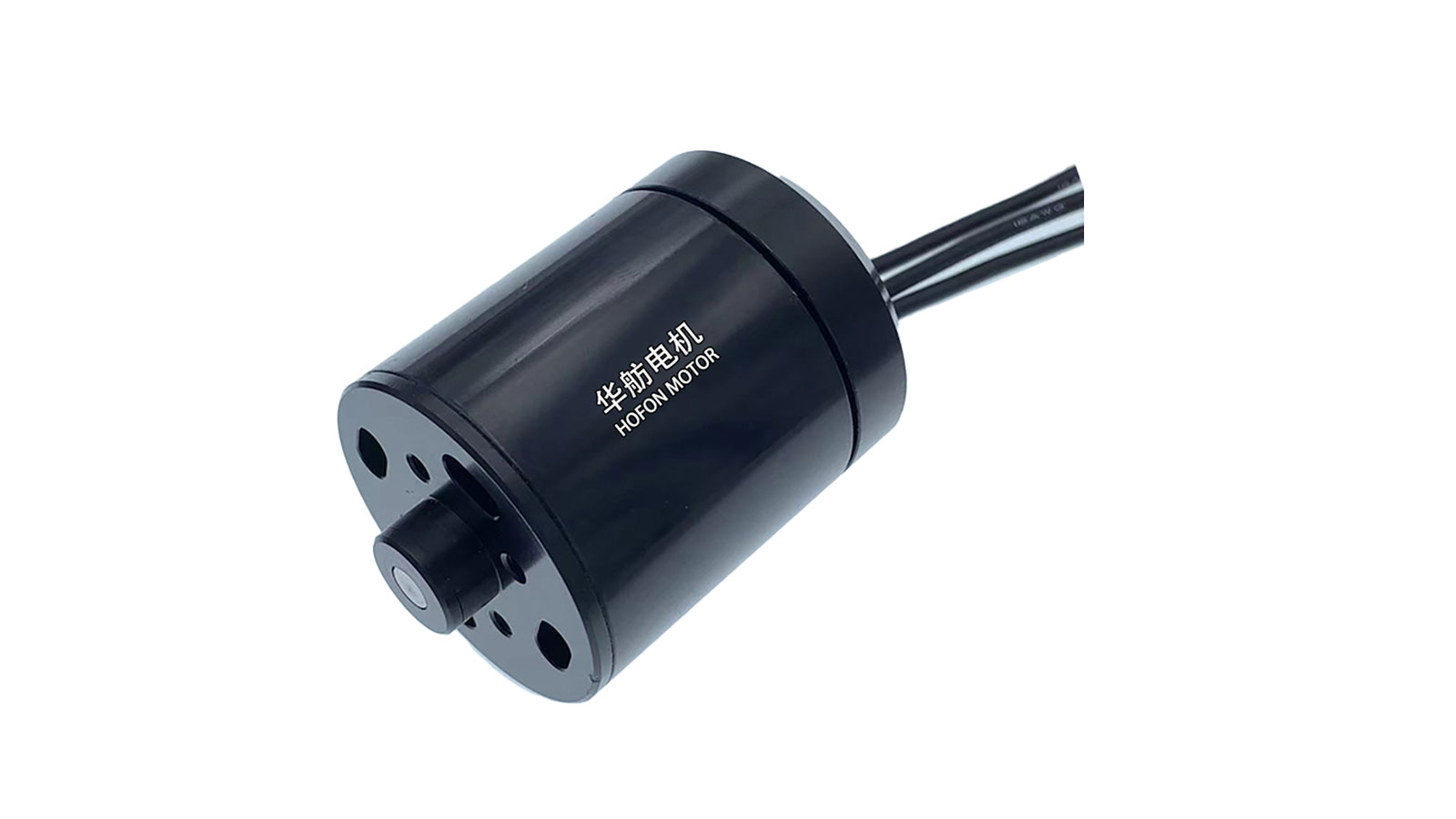
DC motor, up to 31,900rpm with load
Company: Shenzhen Hofon Electronic Technology Co. Ltd
Shenzhen Hofon’s HF2821BL DC motor has 12, 24, 36 or 48V voltage, 0.18, 0.69, 1.1 or 2A no-load current and 1.16, 5.57, 7.5 or 14.5A rated current with load. Its speed is 6,450, 9,000, 18,000 or 36,000rpm with no load and rated at 5,586, 7,989, 15,978 or 31,900rpm with load. This 150g unit has an output power of 30.78, 52.04, 208 or 832W.
MOQ: Negotiable
Lead time: 7 days
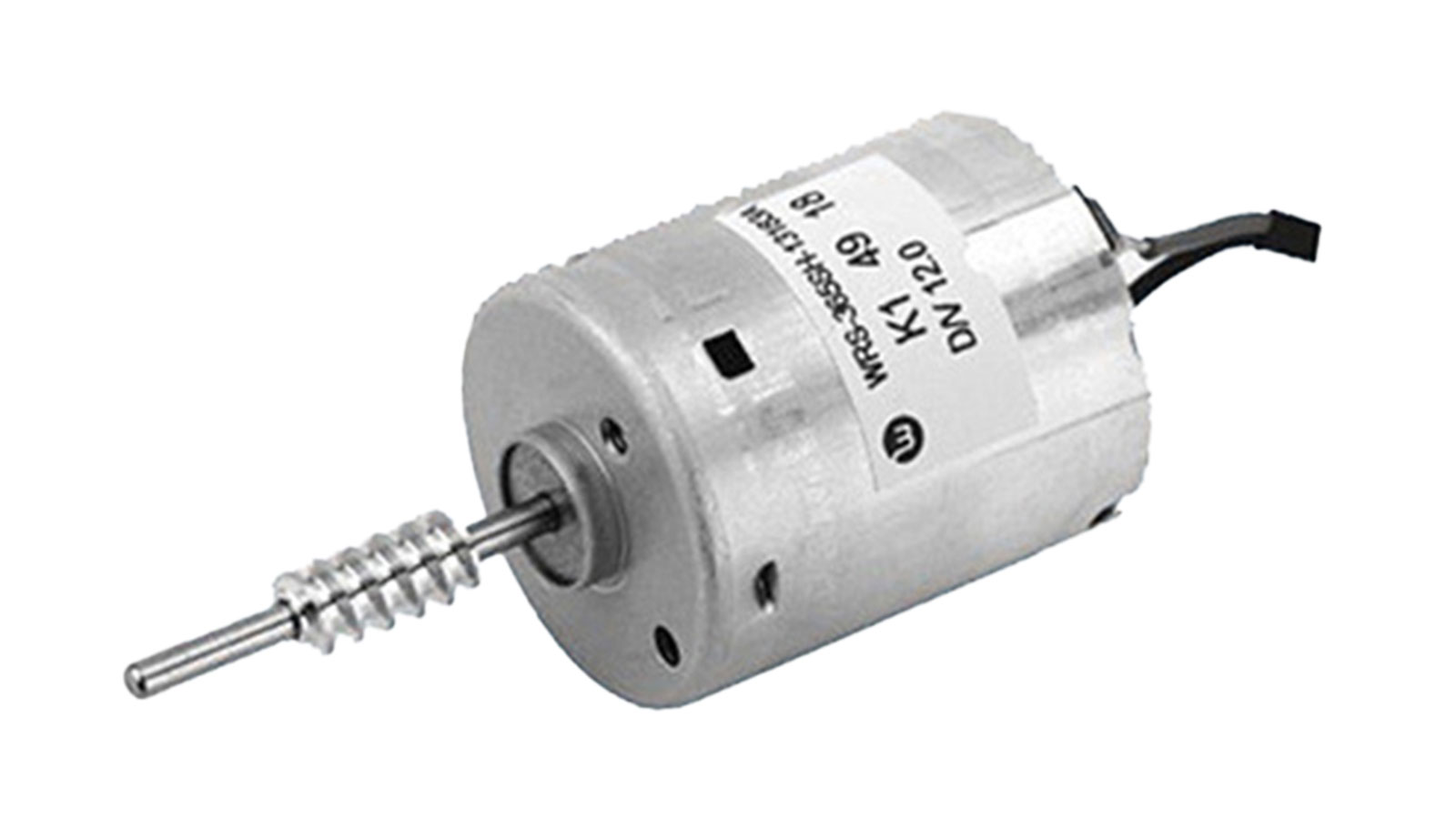
DC motor, 11,200rpm with load
Company: Shenzhen Weizhen Motor Development Co. Ltd
From Shenzhen Weizhen, the WRS-365SH-14124 is a 24VDC motor. It has 0.14A current and 13,700rpm speed with no load, and 0.06A and 11,200rpm with load. The starting current is 2.63A, starting torque 408g.cm and maximum power 8.99W.
MOQ: 5,000 units
Lead time: 30 days
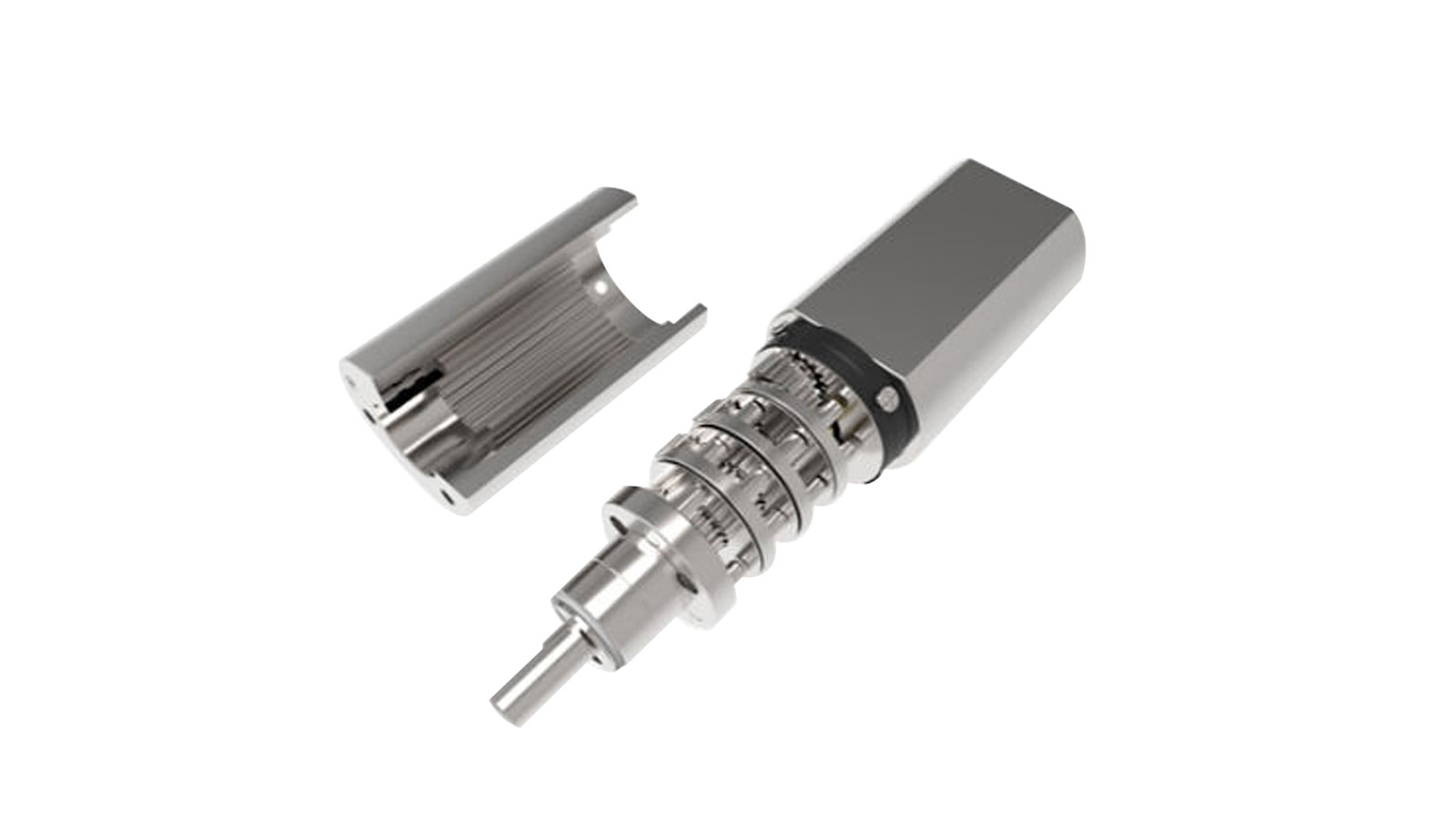
DC motor for automotive electric suction doors
Company: Shenzhen Zhaowei Machinery & Electronics Co. Ltd
For automotive electric suction doors, this DC motor from Shenzhen Zhaowei, the ZWMD020020-1446, has 3 to 12V voltage range, 9V rated voltage, 135mA no-load current and 345mA with load, 50rpm no-load speed and 43rpm with load, and 1,397g.cm torque with load. The output power is 0.5 to 1W.
MOQ: 500 units
Lead time: 15 days
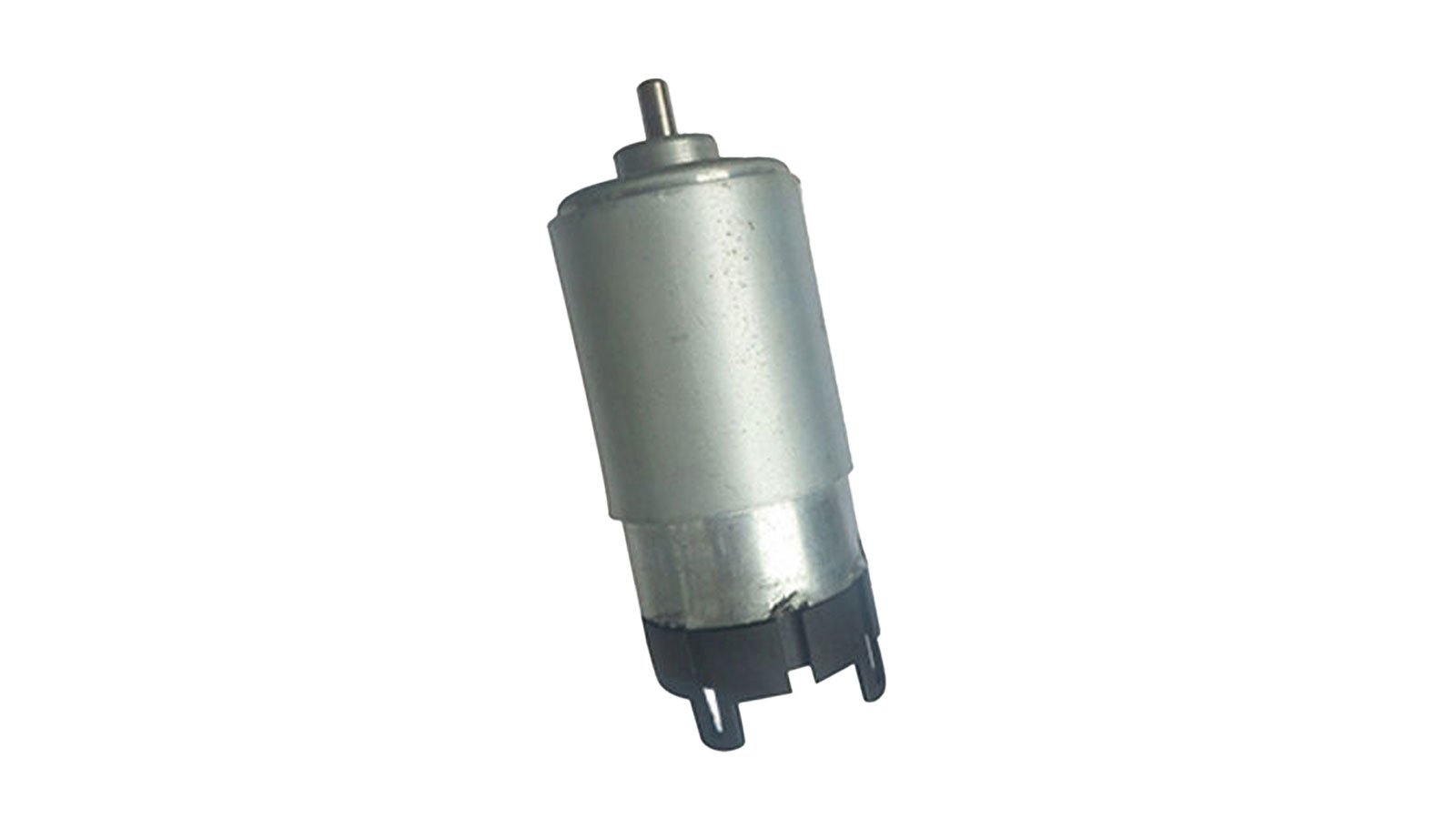
DC motor, 20mNm torque at 3,600±400rpm
Company: Xiamen Huan-Tai Technology & Development Corp. Ltd
The HT-173 from Xiamen Huan-Tai is an RoHS-compliant DC motor with 13.5±0.2VDC voltage, 0.2±0.1A no-load current, 5,200±500rpm no-load speed, 20mNm torque at 3,600±400rpm and 90±10mA and 60±30Nm stall torque at 2.8±0.5A.
MOQ: 1,000 units
Lead time: 7 days

