Download App
Better Online and Trade Show Sourcing Experiences.Scan the QR code to download.
Learn More
Hot Topics
E Fun's new laptops, priced at $200 and $270, bring new value to budget consumers.
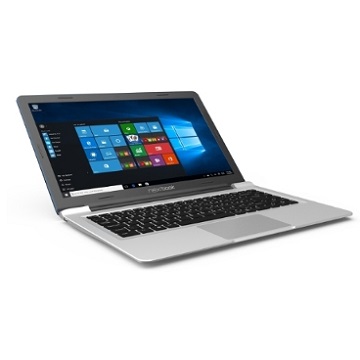
E Fun debuted two new ultra-affordable laptops at CES 2016, showing netbook-like devices are much better than they once were (Image from E Fun)
E Fun is redefining the inexpensive Windows laptop with two new products unveiled at the Consumer Electronics Show 2016. The first is a $270 11.6in unit running Windows 10 with 64GB of internal storage, 2GB of RAM and an Intel Atom x5-Z8300 processor. It also has a 360-degree hinge that allows the laptop to become a tablet. The second is priced at $200 and has the same RAM and processor but only offers 32GB of internal storage and does not convert into a tablet. Both have a 1366x768-pixel resolution, and one port each for micro HDMI, USB 2.0 and USB 3.0.
Anyone sourcing Windows products from China might notice that these specifications look familiar. Some combination of similar specs can be found in many different Windows tablets today coming out of China. In some cases, there are tablets from Shenzhen companies such as the Chuwi Hi10 that have almost the same exact specs. This tablet and others like it include keyboard docking stations or covers that effectively turn them into laptops, although it’s not quite as functional as a work machine E Fun is offering.
Other manufacturers do, of course, offer these specs in similar form function. This laptop from Shenzhen Sysway Technology includes almost all the same specs as the $270 E Fun laptop, but prices for bulk purchases start at $168 per unit with a minimum order quantity of 500. Other manufacturers have chosen to go with Intel Celeron processors, which are known to have better performance but are more power-hungry. These processors are popular in Chromebooks, which have sold well among those looking for affordable computers because of good performance the Chrome OS offers on low-end hardware.
However, Windows 10 also performs well on new Atom and Celeron processors. Microsoft is trying to compete with Google in the low-end computer market as PC sales struggle. Windows can run more native software that doesn’t require an Internet connection and Microsoft doesn’t have the stringent standards Google requires for manufacturers to make Chromebooks. This means for many China manufacturers, Windows and Android are the only practical yet increasingly good options.
More Sourcing News
Read Also

关注 “环球资源外贸” 官方微信,获取实时外贸资讯
iOS & Android
iOS & Android(Mainland China)
Copyright © 2026 Publishers Representatives Limited. All rights reserved.