Download App
Better Online and Trade Show Sourcing Experiences.Scan the QR code to download.
Learn More
Hot Topics
by Vianie Li & Cecile de Veyra
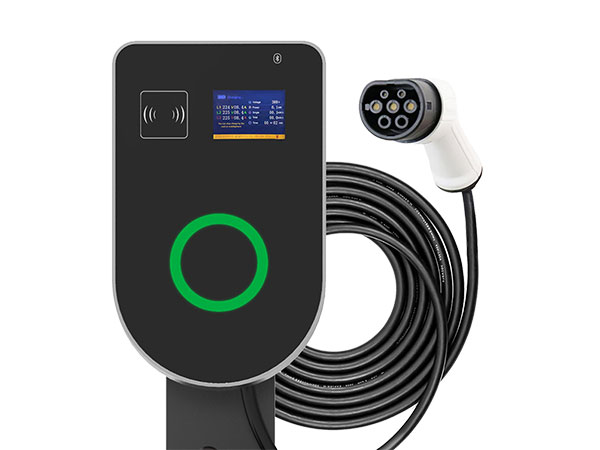
The electric vehicle market has witnessed explosive development worldwide, driven by governments’ pledges to reduce carbon emissions and consumers’ greater environmental awareness. Sales of electric cars, including hybrids, reached 6.6 million units in 2021, according to the International Energy Agency’s “Global EV Outlook 2022” report. By the end of the same year, the number of electric cars on the road was about 16.5 million or triple the total in 2018. And despite ongoing supply chain issues, there were already 2 million electric cars sold in 1Q 2022.
While these figures are all heading north, there are still obstacles to wider EV adoption, one of them being charging infrastructure. There is currently a wide gap based on the huge demand for it. According to projections made by market research firm BlueWeave, the global market for EV charging stations will have a CAGR exceeding 40 percent between 2022 and 2028.
Alongside this massive need for charging infrastructure, continuous development has led to upgrades in EV batteries, upping the ante for charging technology. There is also the speed challenge as filling a gas tank only takes about five minutes. To close the gap, the current trend is toward higher power to realize quick charging in less than 30 minutes. The Terra 360 charger, said to be the world’s fastest electric car charger produced by Shell and ABB, can deliver up to 360kW. This means “a car capable of accepting such speeds could be charged in less than 15 minutes,” said e-mobility platform Move Electric.
In China, the world’s largest EV market, widely manufactured charging stations have output ranging from 60 to 100kW. To shorten the typical charging time of 1 to 1.5 hours and bring it down to 10 minutes, companies have a future target of reaching 350kW for civil and commercial needs. Shanghai Sunpass has introduced a unit packing up to 360kW. For airports, highway service areas and industrial parks, this charger has smart control and app management features, and is available in IP54 and IP32 variants respectively for outdoor and indoor use.
In the coming years, power can go higher to 400kW based on CCS and CHAdeMO standards, with the latter aiming for 900kW down the line. In 2020, CHAdeMo worked with the China Electricity Council and released the CHAdeMO 3.0. This protocol requires chargers “using the brand-new, identical plug with China’s GB/T protocol, allowing for maximum current of 600A,” according to the Japan-based association.
Bidirectional or vehicle-to-grid (V2G) or -home (V2H) charging is also a developing trend, which could boost EV acceptance further. This technology enables power stored in batteries to be sold for transfer back to the grid or used in homes, both to help stabilize supply when necessary.
In the area of wireless charging, there have been breakthroughs from global players such as Volvo, BMW and Genesis. Due to the high technology level and costs involved, only a few Chinese manufacturers have followed their lead.
Up to 2.617 million EV charging stations were installed in China in 2021, rising by 224.3 percent YoY, according to Global Info Research. This is expected to ramp up to 6.543 million units by 2025 or at 25.7 percent CAGR from 2021.
In terms of public EV stations, there are a total of 1.419 million as of May 2022, as reported by the China Electric Vehicle Charging Infrastructure Promotion Alliance. They are 613,000 DC, 806,000 AC and 485 AC-DC integrated types. Most of them (72.3 percent) are found in the provinces of Guangdong, Jiangsu, Zhejiang, Hubei, Shandong, Anhui, Henan and Fujian, and the municipalities of Shanghai and Beijing. Based on this, China’s ratio of charging stations to EVs is 1:2.1 and will likely improve further as installations continue.
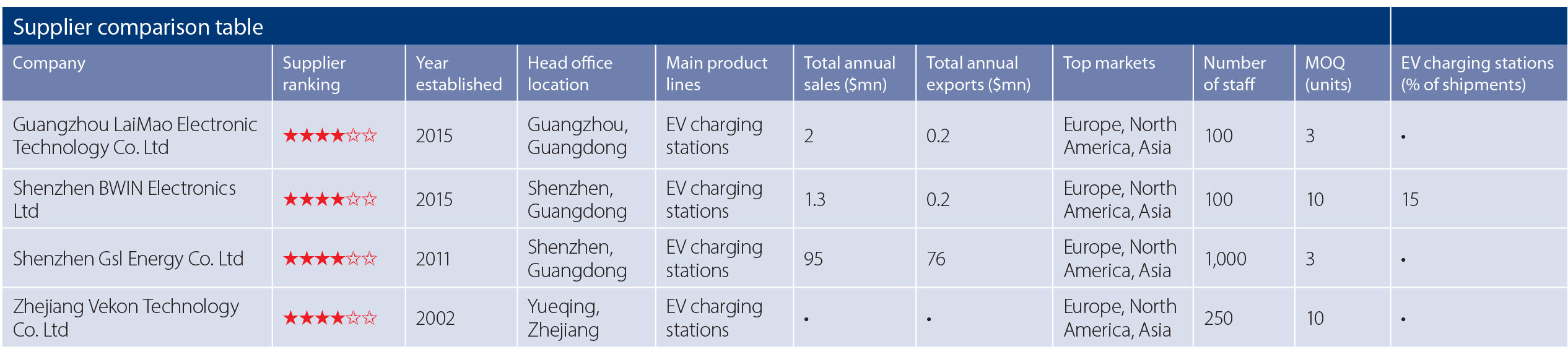
Manufacturers of EV charging stations in China number in the hundreds, including foreign-invested companies. More than 40 percent of these suppliers are located in Guangdong, with the rest in Zhejiang, Jiangsu, Shanghai, Anhui, Shandong and Beijing. Major Chinese players include TGOOD, Star Charge, Xuji, Potevio and Titans.
Typical vertical- and wall-mount charging stations include AC and DC types for standard and fast charging of cars and commercial vehicles. These have a rated voltage range of 200 to 500V, 350 to 700V and 500 to 950V and output current of 80, 100, 125, 160, 200 and 240A. Options based on charging power are 3, 7, 11 and 22kW in AC units and 30, 60, 120 and 240kW in DC versions, but the most widely available are 7kW AC and 60kW DC.
These products have built-in protection against overload, -current, -voltage, -temperature and lightning. Water-resistant types have an IP54 or IP65 rating. There are also variants that support smart charging via app for power monitoring, remote refilling, meter reading, automatic fault detection and payment.
Most Chinese suppliers secure CE, FCC and TÜV product safety certifications.
Components such as smart meters, control modules, charging plugs, LEDs and circuit breakers used in the production of these EV charging stations may be sourced domestically or imported.
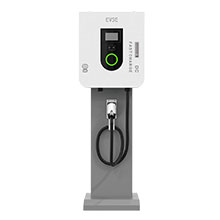
For wall or pedestal mounting, this three-phase EV charging station from Guangzhou LaiMao Electronic Technology Co. Ltd, the LMEV40K-D3, has 400VAC±10 percent, 50/60Hz input, 250 to 1,000VDC CCS and 0 to 53Ax2 output range, up to 40kW power, more than 93 percent efficiency and -20 to 50 C operating temperature. Noise level is less than 55dB. Communication protocols include Ethernet, Wi-Fi, 4G, Bluetooth and OCPP 1.6 or 2.0. This unit has over- and undervoltage, overload, current leakage, grounding and lightning surge protection. It meets EN/IEC 61851-1:2019 and 61851-23:2014 standards. The minimum order is three units. Lead time is seven days.
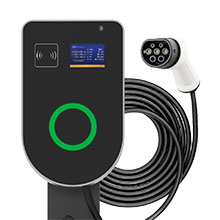
The Y3 model from Shenzhen BWIN Electronics Ltd is a three-phase EV charging station with 400VAC±20 percent, 50/60Hz, 32A input, up to 22kW charging capacity, less than 3W standby power, 1 percent measuring accuracy and -30 to 55 C operating temperature. It has overcurrent, residual current, ground, surge, and over- and undervoltage, frequency and temperature protection. This IP54-rated unit, with optional Bluetooth and Wi-Fi connectivity, can be wall- or pole-mount. The 10-unit minimum order has a lead time of 30 days.
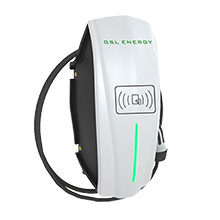
Shenzhen Gsl Energy Co. Ltd offers the GSL-EV Charger-019 with 1.3 to 7.4kW or 4.1 to 22kW charging capacity. This IP65-rated unit has a single- or three-phase output at 230 to 400V, 50/60Hz, 16 to 32A. It has an emergency stop switch, built-in Type B RCD and protection against overcharging, -heating and -voltage. Standards met are IEC 61851-1, 61851-21-2, 61000-4, EMC Directive 2014/EU, LVD 2014/35/EU, CE, UKCA, CB and RCM. The minimum order of three units is for delivery within 10 days.
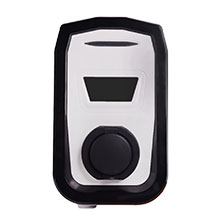
Available in white and black, the EST2434-4964 EV charging station from Zhejiang Vekon Technology Co. Ltd has 230 or 400V voltage, 50/60Hz frequency, 10 to 32A rated current and -40 to 45 C operating temperature. It weighs 3.45 to 6.8kg, has a 5m-long cable, and meets CB, CE, IEC 61851 and SAEJ 1772 standards. An order of at least 10 units is required and has a 10-day lead time.
More Sourcing News
Read Also

关注 “环球资源外贸” 官方微信,获取实时外贸资讯
iOS & Android
iOS & Android(Mainland China)
Copyright © 2026 Publishers Representatives Limited. All rights reserved.




