Download App
Better Online and Trade Show Sourcing Experiences.Scan the QR code to download.
Learn More
Hot Topics
By Vianie Li & Cecile de Veyra
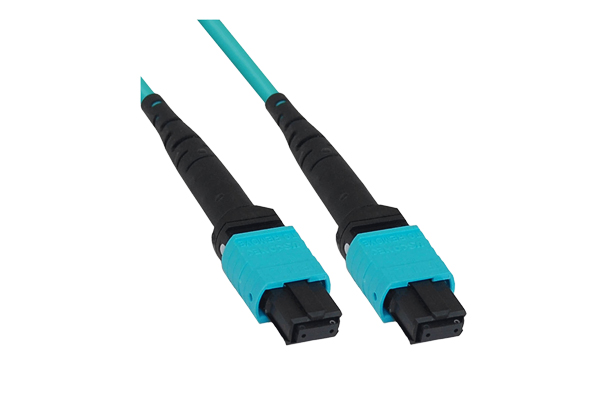
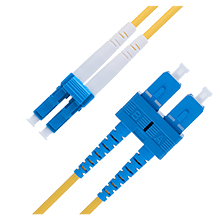
An essential part of fiber optic internet, patch cords enable ready and direct connectivity for devices. Although short in length, usually in the range of 0.5 to 50m, and designed for indoor use only, they perform the same task of transmitting data signals, linking switches, modems, hubs, computers and telecom equipment. As such, these cables need to be up to par to ensure no downtime.
As 400G deployment is underway, Chinese manufacturers have began considering upgrading their fiber-optic patch cords from 12-core MPO types mainly used in 40G networks and 24-core variants in 100G. The shift will be toward 16- and 32-core products, in anticipation of the general availability of this next-generation Ethernet connection.
Signaling this direction is the release of 16- and 32-core MPO connectors for high-density fiber optic cabling in data centers and telecom systems by HYC, a Chinese company specializing in passive optical components. These plugs, which sport ferrules imported from Furukawa, can support 400G transmission speed. They have low insertion loss and are compliant with IEC 61754-7 and GR-1435 standards.
Building and expansion of infrastructure, spurred by skyrocketing data consumption amplified by increased use of devices during COVID-19 lockdowns, is driving optical fiber networking. Based on Market Reports World’s forecast, the global market for fiber-optic cables will reach $12.04 billion in 2022 and $17.07 billion by 2028.
In China, this growing market is attracting new investment, especially as the country plans to accelerate 5G deployment. “China expects local carriers to install nearly 600,000 5G base stations during 2022 to end the year with 2 million installed 5G base stations,” according to RCR Wireless News. By the end of 2025, this is projected to reach 3.64 million based on the Ministry of Industry and Information Technology’s plan.
Hangzhou Zhongxin, a company set up in mid-2021, has allocated $1.47 million to be able to mass-produce fiber-optic patch cords in the months ahead. Its target annual output is 200,000 units.
Other suppliers will keep boosting production in anticipation of high demand. Shenzhen Yilianwang Technology Co. Ltd, which already increased its output by 35 percent in 2021, looks to do so again in the coming months.
In addition to the captive domestic market, Chinese manufacturers are looking to increase their exports in their main destinations such as Europe, North America and the Asia-Pacific region. They currently allot between 30 and 80 percent of output for shipments overseas.
China has hundreds of suppliers of this product, which accounts for 30 to 60 percent of their shipments. FiberHome, Hengtong, Yangtze Optic Fiber and Cable, ZTT and AMP are some of the leading homegrown suppliers, with the first among the biggest producers of fiber-optic cables in the world.
Many factories are found in Guangdong, Zhejiang, Jiangsu and Hubei, with Wuhan the main production base where two-thirds of China’s shipments for this category come from.
Mainstream selection
Single- and multimode fiber-optic patch cords widely available from Chinese suppliers have core counts of one, two, four, six, eight and 12, and connectors of SC, ST, LC, FC, MT-RJ, MPO, SMA and E2000 with end faces of PC, UPC and APC. Commonly used optical fibers are G652B, G652D, G655, G657A1, G657A2, 50.125, 62.5/125, OM3 and OM4.
These fiber-optic cables offer fast transmission speed, low insertion loss, high return loss, and enhanced repeatability, temperature stability and mechanical strength for telecom, FFTH, CATV, railroad and military applications. They comply with CE, IEC and RoHS requirements.
Suppliers accept modifications on cable length, outer diameter and color.
There are manufacturers that have the capability to produce optical fiber and connectors in-house. Some obtain them, including ferrules, jackets and other materials, from domestic providers.
All accommodate requests for key components such as MPO connectors and ferrules from companies in the Taiwan region and Japan.
Most Chinese suppliers kept their product prices unchanged in 2021 despite the higher costs of materials and components. They hope outlay for these inputs will stabilize in the coming months.
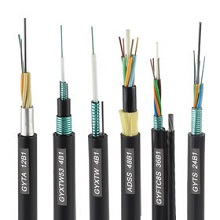
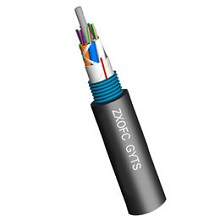
Here are ready-to-source fiber-optic patch cords and cables from Global Sources suppliers.
More Sourcing News
Read Also

关注 “环球资源外贸” 官方微信,获取实时外贸资讯
iOS & Android
iOS & Android(Mainland China)
Copyright © 2026 Publishers Representatives Limited. All rights reserved.




