Download App
Better Online and Trade Show Sourcing Experiences.Scan the QR code to download.
Learn More
Hot Topics
Unstable weather conditions and decreasing acreage are causing global cotton production to slow down.
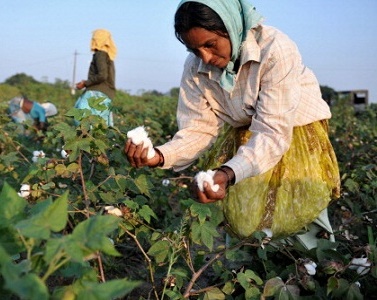
Cotton growers from India|Image source: Noah Seelam, Getty Images
A drop in production in key cotton-growing nations has pushed up prices of cotton in the international market in the past few months.
After staying within the 60 to 65 cents range in the last two years, cotton prices climbed to between 70 and 72 cents per pound, registering a 16 percent rise. In the US, upland variants began selling for 80 to 85 cents per pound after hovering to around 60 cents and below.
Climate change is among the key factors for contributing to the decline. In Pakistan, the fourth-largest cotton producer worldwide, heavy rains followed by severe temperature and major pest outbreaks have taken a heavy toll on farmers. The country's production decreased by 5 million metric tons or 2 million bales, forcing mills to export cotton from neighboring India to fill the gap. But India's aggressive shipments have resulted in the shortage in its own supply, prompting cotton mills in the country to source overseas. This pushed up cotton prices further.
Meanwhile, China farmers began to prioritize food crops because of low cotton prices in previous years. This resulted in a 3 to 4 percent decrease in cotton acreage in the country. Traditionally the largest cotton-producing nation in the world, China's output fell below 5 million metric tons this year, placing it behind India, which produced 5.8 million metric tons. The US ranked third churning out 2.8 million metric tons.
The US Department of Agriculture predicts that global stockpiles of cotton to drop by 9 million bales to about 91 million bales in July 2017, 3.4 million bales below the agency's previous estimates. This is due to increasing demand in China, which is also the world's biggest cotton consumer and fabric manufacturer.
Experts, however, are uncertain if cotton prices will continue to go up or dip down. Pakistan is expected to recover and produce about 2 million metric tons this year while seasonal rains in India are expected to affect its yield.
In the US, growers in West Texas, where 60 percent of the country's output comes from, are concerned about a possible dry spell as most cotton fields there do not have proper irrigation channels.
Interestingly, analysts believe that cotton prices will not go sky high as it did in early 2011, when it sold for $2.27 per pound. The figure is the highest cotton prices have reached since the US Civil War.
More Sourcing News
Read Also

关注 “环球资源外贸” 官方微信,获取实时外贸资讯
iOS & Android
iOS & Android(Mainland China)
Copyright © 2026 Publishers Representatives Limited. All rights reserved.




