Download App
Better Online and Trade Show Sourcing Experiences.Scan the QR code to download.
Learn More
Hot Topics
The thin line between a tablet and a 2-in-1 becomes even more blurry.
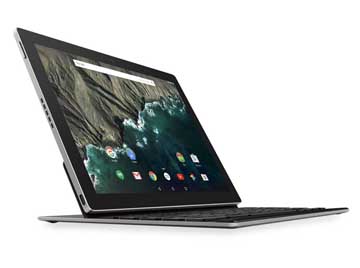
Image source: Google
Is Microsoft’s Surface line of Windows devices a tablet or a 2-in-1?
Similar to Apple’s strategy for the iPad Pro, the company was clearly positioning the device as a competitor for lower-end laptops and netbooks. Now, Google has released its own device, the 10.2in Pixel C, intended to compete with Microsoft’s Surface tablets. Pixel C seems like a tablet or a 2-in-1, depending on how you look at it.
While Apple positioned the iPad Pro to compete with the Surface Pro line of high-end, large-screen tablets, Google has taken a lower-price approach. The $499 large-screen tablet, along with the optional $149 keyboard, is meant to address the same kind of user that the Surface line does—a semi-laptop replacement for users on a budget.
There are a couple of interesting aspects to the tablet that set it apart from both Chromebooks and the company’s other Pixel devices. First, it runs on Android, not Google Chrome. The NVIDIA Tegra processor is designed to be a powerhouse at the cost of device size. Pixel C is reported to be fairly heavy, not typical for a device designed exclusively as a tablet.
The real question is whether or not Android is ready for business users. While Windows tablets are of course compatible with Microsoft’s Office and Apple’s iOS has its own set of productivity tools, Android has never been quite as focused on the enterprise.
More Sourcing News
Read Also

关注 “环球资源外贸” 官方微信,获取实时外贸资讯
iOS & Android
iOS & Android(Mainland China)
Copyright © 2026 Publishers Representatives Limited. All rights reserved.