Download App
Better Online and Trade Show Sourcing Experiences.Scan the QR code to download.
Learn More
Hot Topics
The phone from Google’s Project Ara will be ready for developers later this year.
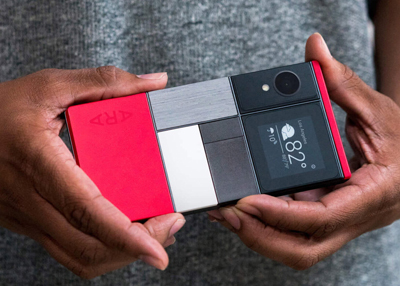
In a demo video, Google showed off modules for a kickstand, a camera,
an E Ink screen and additional speakers (Source: Google)
Google's Project Ara was originally meant to bring the upgradeable PC to the mobile world. When Google announced recently that the first Ara smartphone would be available to developers this year and to consumers in 2017, many thought the product was a bit different than expected. The good news for other companies, however, is that Google's modular phone looks surprisingly similar to other phones and cases that have come out already.
The modular handset idea started becoming popular thanks to a campaign by Dave Hakkens, a designer based in the Netherlands, for Phonebloks. He later collaborated with Google on Project Ara. The phone was meant to be completely modular, meaning everything could be swapped out, including the processor, RAM, speakers and others. Google found this difficult and expensive to implement, however, so the Ara phone now has the processor, RAM and speakers built into the base, which includes the screen. Modules that can be swapped out are the secondary E Ink screen, camera, kickstand and bigger speakers, among others.
These are all interesting things to be able to add and remove to and from a smartphone, but the concept betrays the original mission of Phonebloks, which was to reduce electronic waste. Google said it did research and found most consumers did not care about the processor and RAM and had no idea what those things did for the phone. However, with the rate at which mobile software evolves, it does mean many consumers may find that they have to update their module phone within two or three years, like any other smartphone.
Other companies have already put out module smartphone products. The LG G5 includes swappable modules that slide into the bottom of the phone. This is not as modular as the Project Ara phone, but it serves the same purpose of giving consumers switchable options for a limited number of features.
Some makers have developed cases to give existing popular smartphones the ability to add functions. OtterBox is the latest company to go this route. The supplier is best known for its durable, protective smartphone cases. Its new product gives users the option to add two modules. Another company, Nexpaq, offers users the ability to addup to six modules. Nexpaq raised more than $280,000 during its Kickstarter last year and it showed off its case at the Global Sources Mobile Electronics show. A completely modular phone may no longer be on the table for the near future, but it seems Google’s new vision for the handset is relatively easy to replicate.
More Sourcing News
Read Also

关注 “环球资源外贸” 官方微信,获取实时外贸资讯
iOS & Android
iOS & Android(Mainland China)
Copyright © 2026 Publishers Representatives Limited. All rights reserved.