




Image from istockphoto.com
As cities embrace greener infrastructure, solar streetlights have emerged as a key element of energy-efficient urban planning. Valued at $5 billion in 2024, data from Global Market Insights indicate that the global solar streetlighting market is expected to increase at a 7.4 percent CAGR, reaching $10.1 billion by 2034 driven by innovation, policy support and demand for sustainable solutions.
Why solar streetlights are surging
Solar streetlighting is gaining momentum globally, thanks to a mix of financial, environmental and infrastructural advantages:
Incentives: Governments worldwide are accelerating solar adoption through tax breaks, grants and public-private partnerships. Thailand’s Smart City Program and Malaysia’s Green Technology Master Plan, for example, offer subsidies and financing for solar infrastructure. In the US, the Investment Tax Credit allows businesses to claim 30 percent of solar installation costs.
Cost efficiency: Solar streetlighting can cut project costs by up to 40 percent by eliminating trenching and grid fees. A study of 20 US cities found potential savings of over $50 million, reducing public lighting expenses by 60 percent. In the ASEAN region, about 70 percent of cities have adopted solar to lower costs.
Off-grid viability: In regions with unreliable or nonexistent grid infrastructure – especially in Southeast Asia, Africa and South America – solar streetlights offer a scalable, self-sustaining solution.
Environmental mandates: Municipalities and corporations are under increasing pressure to meet climate goals. Solar lighting helps meet these goals, with each streetlight offsetting up to 2.5 tons of CO2 annually, according to the US Department of Energy.
Core components of performance
Regardless of tier, every solar streetlight relies on a carefully integrated set of components that determine its efficiency, durability and adaptability.
Panel: At the heart of the system is the solar panel, harvesting sunlight and converting it into usable energy. Entry-level models typically use polycrystalline panels, while midrange and premium systems favor monocrystalline variants for higher efficiency and better low-light performance.
Battery: Batteries store energy for nighttime use, with capacity affecting lighting duration and backup autonomy. Lower-tier lights often rely on lead-acid or basic Li-ion batteries, but newer deployments increasingly adopt LiFePO4 technology for its longer life span, thermal stability and deeper discharge capabilities. In midrange and high-end categories, LiFePO4 units with a battery management system (BMS) are becoming standard due to longer life cycle and safety concerns.
LED fixtures: These provide the actual illumination, and their wattage, optics and heat dissipation design influence both brightness and energy consumption. Premium models often feature high-lumen LEDs with adaptive optics to maximize coverage while minimizing glare.
Control systems: These range from basic dusk-to-dawn sensors to controllers that use pulse width modulation (PWM) or maximum power point tracking (MPPT) technique, as well as IoT-enabled smart modules. PWM controllers are common in entry-level models, offering simple and cost-effective charge regulation. MPPT devices extract more power from solar panels under varying conditions, improving efficiency. IoT modules add remote monitoring, adaptive dimming and diagnostics – especially valuable for large-scale deployments.
Pole and housing: Materials like galvanized steel, anti-corrosion coatings and IP-rated enclosures ensure resilience against wind, rain and vandalism.
Together, these components form the backbone of solar streetlight performance, shaping how well each unit meets its intended use
case.
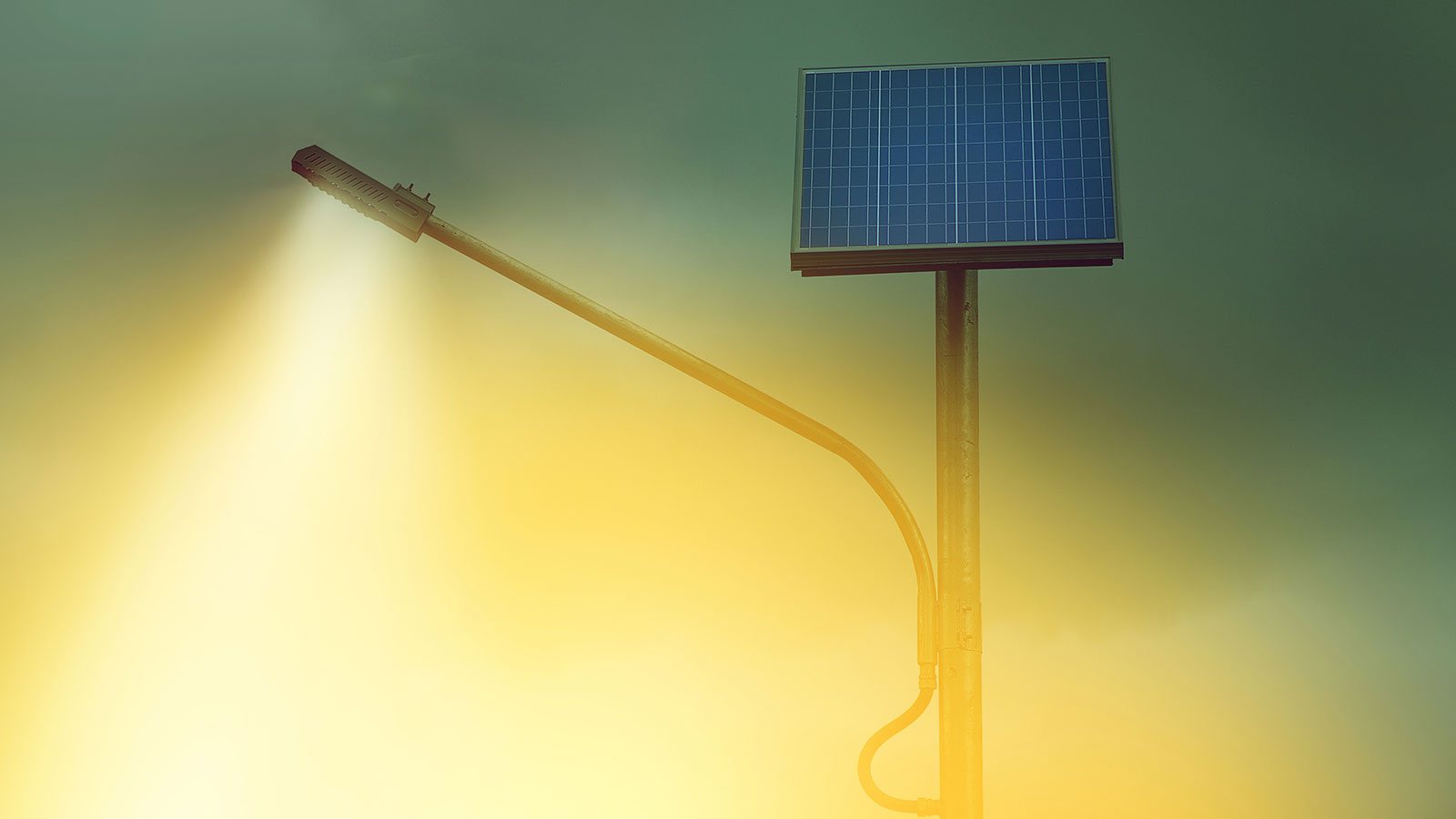
Image from istockphoto.com
What’s available in 2025
Solar streetlights span three tiers, each designed to meet specific performance, budget and deployment needs.
Entry level: Affordable and functional
Ideal for rural roads, residential pathways and small commercial compounds, entry-level units prioritize affordability and simplicity. Typical specifications are:
· LED power: 20 to 60W
· Efficiency: 100 to 130 lm/W
· Solar panel: 60 to 120W polycrystalline
· Battery: 30 to 60Ah, 12V lead-acid or basic Li-ion
· Lighting duration: 8 to 10 hours
· Control: Basic dusk-to-dawn sensors
· IP rating: IP65
Midrange: Smart and scalable
Designed for municipalities, gated communities and commercial zones, mid-tier models balance performance with intelligent features:
· LED power: 60 to 100W
· Efficiency: 130 to 160 lm/W
· Solar panel: 120 to 200W monocrystalline
· Battery: 60 to 100Ah, 24V Li-ion or LiFePO4
· Lighting duration: 10 to 12 hours + 2 to 3 days backup
· Control: MPPT controller, motion sensors, dimming modes
· IP rating: IP65 to IP67
Premium: Intelligent and high-performance
Engineered for highways, industrial parks and smart city grids, top-of-class models integrate advanced control and durability features:
· LED power: 100 to 200W
· Efficiency: 180 to 230 lm/W
· Solar panel: 200 to 400W high-efficiency monocrystalline
· Battery: Advanced 100 to 200Ah, 24V LiFePO4 with BMS
· Lighting duration: 12 to 14 hours + 3 to 5 days backup
· Control: IoT-enabled, remote monitoring, adaptive dimming
· IP rating: IP67+, hail-resistant, anti-theft design
Design innovations: beyond the rectangle
There is a departure from the rigid, rectangular solar panels that once dominated the solar streetlight market. Manufacturers are now blending form and function to meet the demands of modern urban aesthetics and technical versatility.
Split-panel systems: Split designs separate the solar panel from the lamp head, allowing flexible orientation and optimal sun exposure. This is particularly useful in shaded environments or complex urban layouts.
Curved and aesthetic panels: Curved panels offer aerodynamic benefits, improved rain runoff and a sleek urban profile. These are increasingly favored in smart city deployments.
Emerging flexible panels: Still in pilot phases, semiflexible panels – made from perovskite or organic materials – are being tested for unconventional installations. These are lightweight, impact-resistant and adaptable to curved surfaces like poles, facades and even
windows.
Global adoption and regional trends
Solar streetlighting has transitioned from a specialized application in remote settings to a globally adopted infrastructure solution, shaped by distinct regional priorities and development strategies:
Asia-Pacific: Leading the charge with aggressive smart city rollouts and rural electrification programs
Africa and Latin America: Strong demand for off-grid solutions, especially in remote communities
Europe and North America: Focused on smart infrastructure, emission reduction and urban beautification. Municipalities are adopting IoT-enabled systems with features such as adaptive dimming, remote monitoring and predictive maintenance. Projects are focused on green corridors, pedestrian zones and public parks that blend functionality and visual appeal.
Lighting for smarter, greener cities
Solar streetlights are now central to modern infrastructure, driven by cost savings, off-grid reliability and policy support. With smarter controls, longer-lasting batteries and sleek designs, they meet the needs of urban centers and climate-conscious planning.
As the market approaches $10.1 billion by 2034, solar streetlighting is becoming integral to smart cities – powering resilient grids, data-driven services and greener public spaces.
Here is a gallery of solar streetlights chosen by our analysts as representing the range of products on offer from verified suppliers in China:
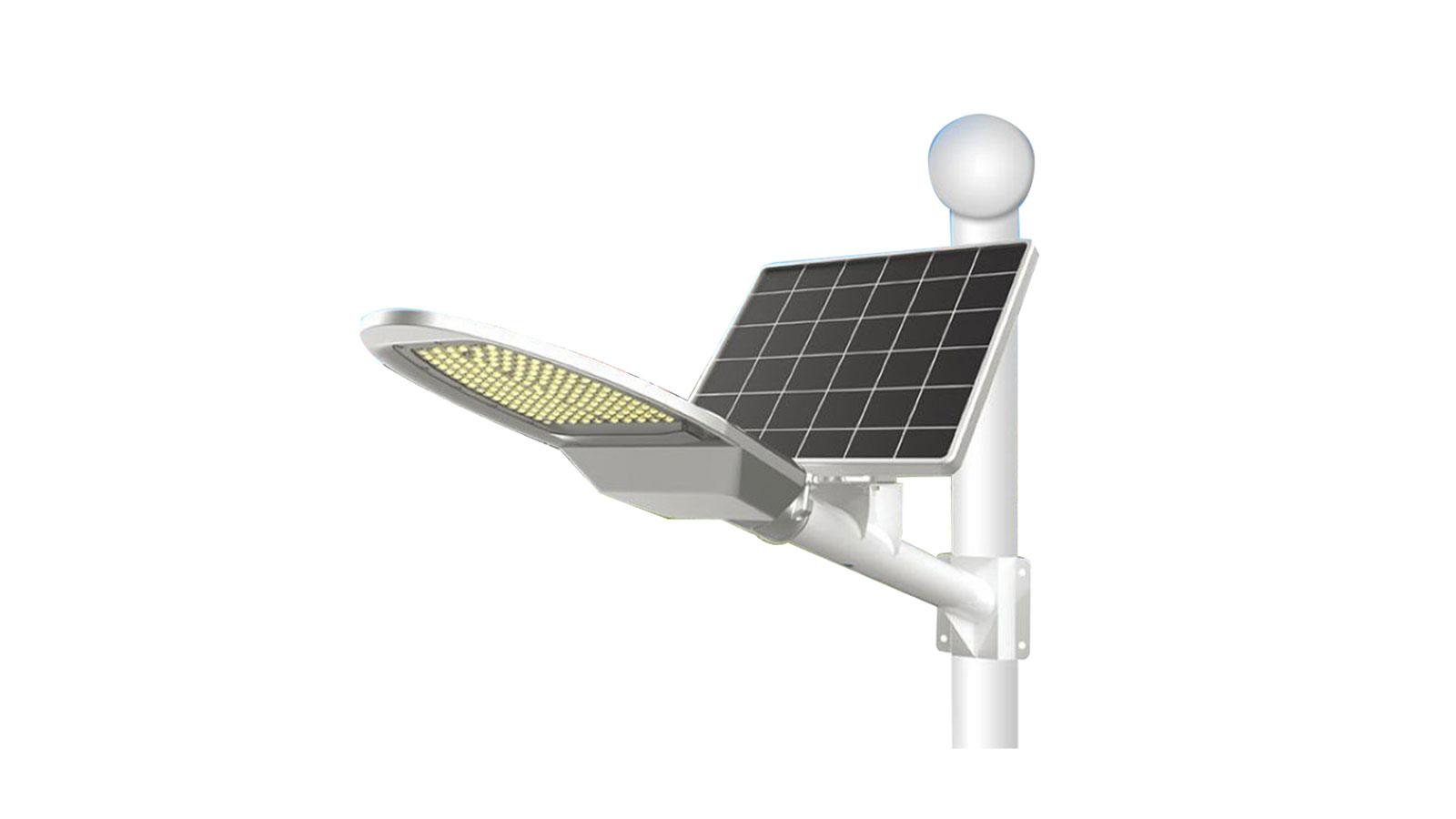
40W integrated solar streetlight
Company: Foshan Shunde Yaogong Electronic Technology Co. Ltd
Model 2025 from Foshan Shunde Yaogong is a 40W integrated solar streetlight with an 18V, 65W monocrystalline solar panel and 40W Bridgelux-branded LED rated at 4,000 to 4,300 lumens. It has a 12V, 30Ah lithium battery and supports mounting heights of 6 to 7.5m. Designed for 22 to 26-meter installation spacing, this aluminum and steel-glass unit features infrared motion sensing with adaptive brightness modes. It charges fully in seven hours under optimal sunlight. The operating temperature is -30 to 60 C.
MOQ: 100 units
Lead time: On direct inquiry
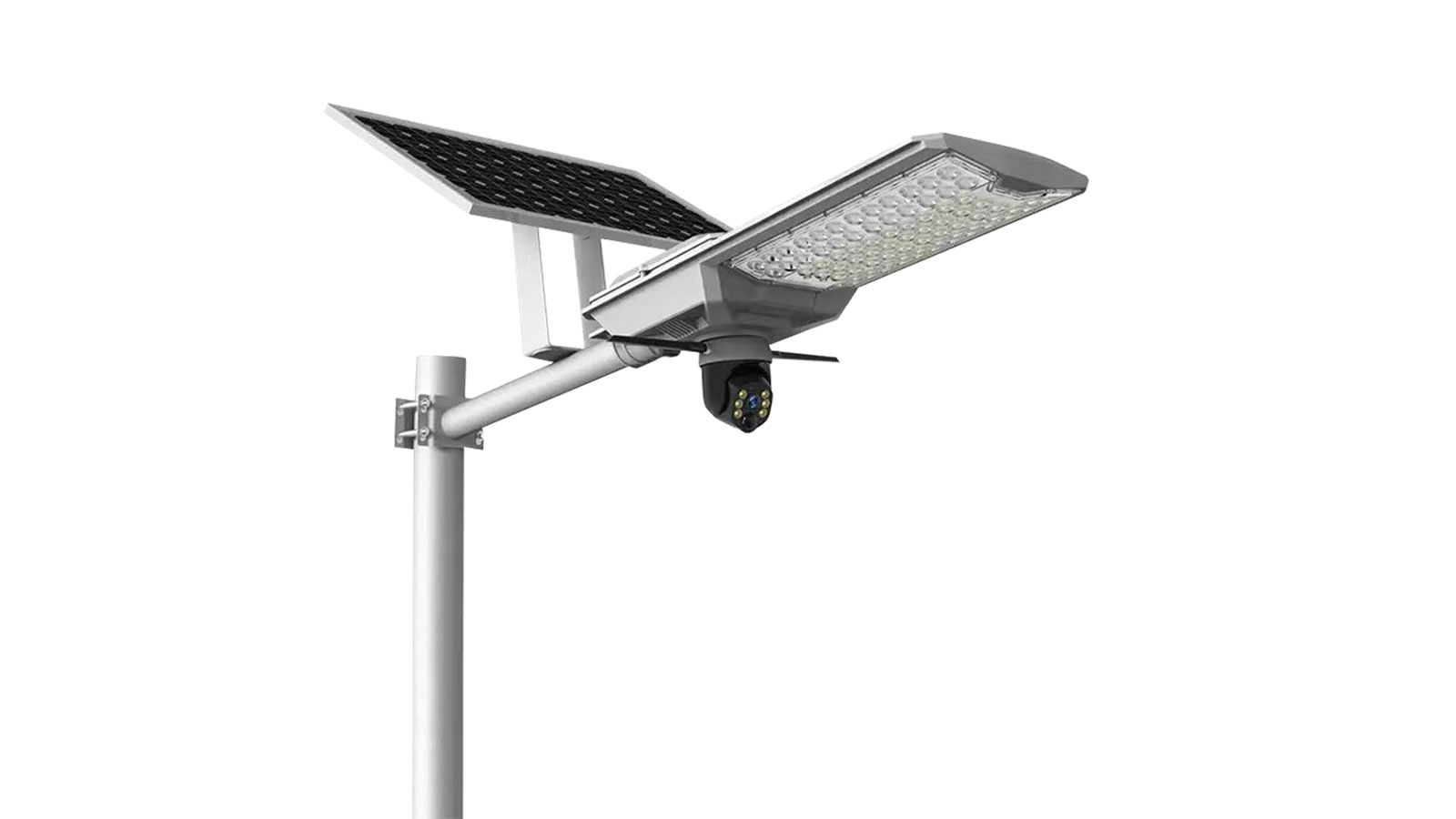
Solar streetlight-surveillance camera in one
Company: Huaxin Technology Co. Ltd
Model ESHX-SL001-RF from Huaxin combines a solar-powered surveillance system and a 600W 78-LED streetlight with a 48W monocrystalline solar panel, a 6V, 9W solar charging module and a 42,000mAh battery for 12-hour continuous illumination. The HD camera features 4MP resolution, F2.3 aperture with 4mm focal length, and has two-way intercom, human detection and vigilance mode, with a recording capacity of 15 days per full charge. Connectivity is via Wi-Fi or 4G.
MOQ: 100 units
Lead time: 15 to 45 days
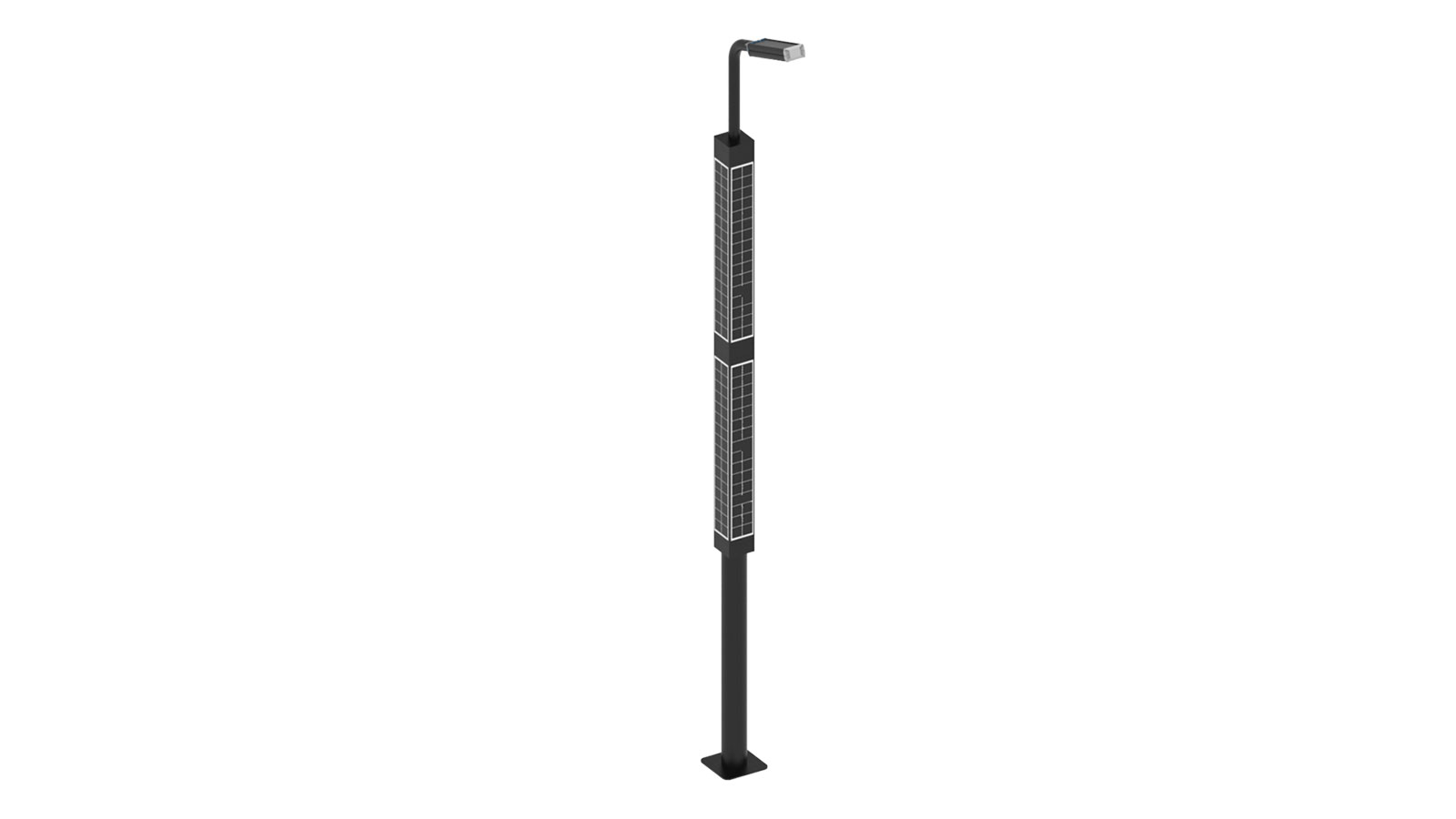
360-degree charging with polygonal panels
Company: Ryan (Zhuhai) Intelligent Technology Co. Ltd
Ryan’s model LCP-18030 is a solar-powered modular streetlight featuring a foldable polygonal panel design that supports 360-degree charging. It integrates an MPPT controller, LiFePO4 battery and Cree-branded 5050 or 7070 SMD LEDs with 210 lm/W luminous efficacy. This unit features intelligent lighting modes and timed controls to optimize power usage and supports continuous operation for three to five rainy days.
MOQ: 10 units
Lead time: 15 to 30 days
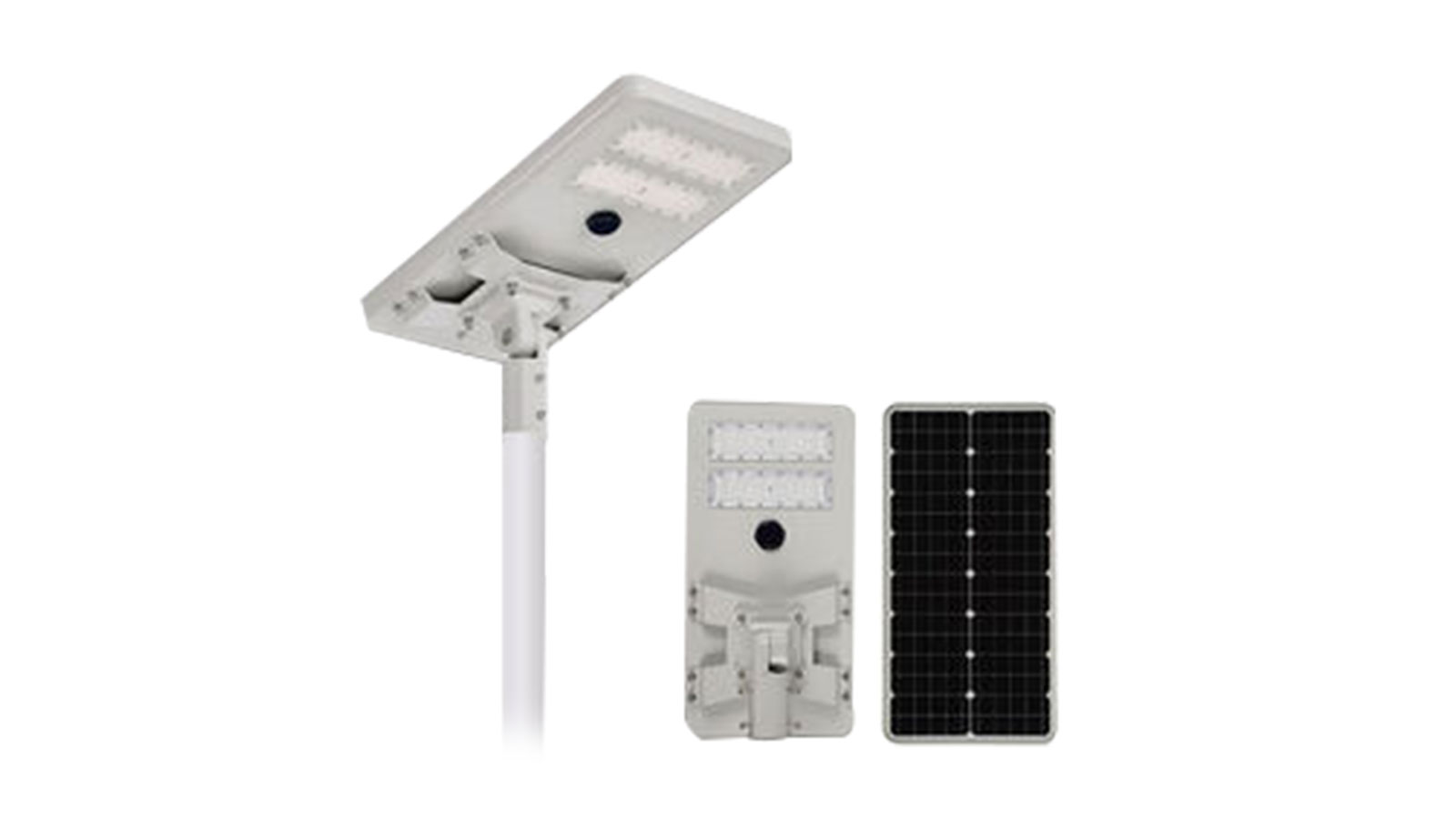
All-in-one unit with up to 180 lm/W
Company: Zhongshan YiHe Photoelectric Co. Ltd
From Zhongshan YiHe, model STF-8 offers options from 40 to 100W and integrates a high-efficiency monocrystalline solar panel with a LiFePO4 battery. LED chips used deliver up to 180 lm/W, with overall lamp efficiency rated at least 160 lm/W. The solar cells each exceed 22 percent conversion efficiency and the MPPT or PWM controllers improve charging efficiency by 15 to 30 percent. Functions include light sensing, time control, optional motion detection and remote operation. This unit has an IP65-rated aluminum housing.
MOQ: 1 unit
Lead time: 10 to 30 days

