Download App
Better Online and Trade Show Sourcing Experiences.Scan the QR code to download.
Learn More
Hot Topics
China makers playing to their strengths have done well in the US, a market Huawei has yet to crack.
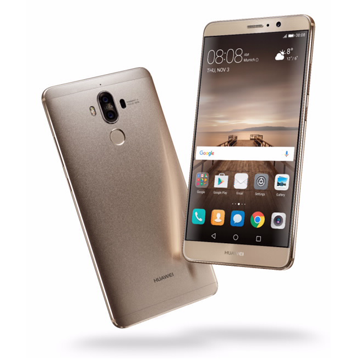
The Mate 9 was designed to be a high-end phone to help
Huawei capture the upscale Western markets (Source: Huawei)
As Huawei has managed to grow its presence worldwide, it still struggles in the US, its most coveted new market. The march of China smartphones is still growing unabated, but competition has made it hard for brands to move to the premium side of the market. The US now has two China brands in the top five as TCL, which owns Alcatel, surpasses ZTE in market share there. Huawei, on the other hand, finds itself effectively blacklisted from US telecom carriers because of the company's reputation of working with the China government in the past. Huawei seemed to admit this was a hurdle when the head of Huawei’s smartphone business Richard Yu told the Wall Street Journal, “It takes time to build trust in the US."
The Journal reported that ZTE and TCL were able to gain a foothold in the US by focusing on smartphones that cost less than half of those from high-end brands such as Apple, Samsung and Google. Another China brand, OnePlus, has followed a similar strategy. It does not have the market share of other larger companies, but the maker has built up considerable buzz around its products. In addition, the OnePlus 3 and recently released 3T are regarded as two of the best Android phones released this year. It is unlikely these handsets and brands would be as well received if trying to sell at the same price of a Galaxy S7. However, that is Huawei's strategy.
Huawei has unveiled recently the Mate 9 smartphone, which it intends to release in the US, but the specifications do not make the phone stand out among more recognizable brands in the US. While the phone does have an octa-core processor, the chip is Huawei's own Kirin 960, which is not as well-known as the Qualcomm Snapdragon processors found in most other high-end Android handsets
The phone uses a similar dual-camera setup as the P9, which has one sensor each for monochrome and RBG. However, reviews of the P9 did not note significantly better photos, and many reviewers preferred photos from the Galaxy S7 or iPhone 7. Huawei still wants users to spend about $750 in Europe for the 64GB version. The same amount of money will get people the $128GB version in China, but either way, this would be a hard sell in the US. The 128GB version of the OnePlus 3T sells for $480 and it comes with the Snapdragon 821, Qualcomm's latest chip.
The other hurdle when selling in the US is meeting the technical requirements for the different carriers. Huawei noted that including the radios necessary to work with US CDMA networks from Verizon and Sprint is costly. As Mate 9 exists now, it can only work on AT&T and T-Mobile. The company is currently in a patent dispute with T-Mobile, which means the only company it could really work with is AT&T, assuming the telecom conglomerate is even amicable to working with a company that the US congress warned back in 2012 could be selling compromised equipment that could be used to spy on users. By most accounts, Huawei is the most successful smartphone maker in China, but its smaller competitors know how to make the most of the advantages afforded to China manufacturing. For now, this means not trying to go head-to-head with the likes of Apple, which took home 91 percent of smartphone profits in the third quarter.
More Sourcing News
Read Also

关注 “环球资源外贸” 官方微信,获取实时外贸资讯
iOS & Android
iOS & Android(Mainland China)
Copyright © 2026 Publishers Representatives Limited. All rights reserved.