




Industrial fans are high-performance air-moving devices designed to move large volumes of air or other gases efficiently and effectively. They are typically larger, more powerful and more durable than the standard units found in homes and offices. These fans are engineered to handle the demands of industrial and commercial environments, including exposure to harsh conditions, high temperatures and heavy-duty use.
Types and applications of industrial fans
Industrial fans are essential equipment in a wide range of applications, including ventilation and exhaust systems, cooling and temperature control, process air handling, dust and fume extraction, combustion air supply, pneumatic conveying and aeration and drying processes. Selecting the right industrial fan for a particular application is crucial, as it can have a significant impact on the efficiency, performance and overall cost of the system.
Centrifugal fans have an impeller to draw air into the center and then expel it radially outward. They are used in HVAC systems, industrial processes and material handling applications. A subtype, radial blade fans have blades that extend radially from the hub and produce a high-pressure, low-volume airflow useful in dust collection systems, industrial processes and material handling applications. There are also fans with a radial tip design for higher efficiency and reduced noise levels and these are used in HVAC systems, industrial processes and power generation facilities.
Axial fans use propeller-like blades to produce a high-volume, low-pressure airflow and are usually found in cooling towers, ventilation systems and air-handling units. There are units that are designed to operate in high-temperature environments, such as power plants and industrial furnaces. Tube axial versions have a cylindrical housing that surrounds the impeller, which helps to improve airflow and pressure. Vane axial units, meanwhile, feature a combination of an axial impeller and a set of downstream guide vanes to improve airflow and pressure. Both fans suit HVAC
systems, industrial processes and power generation facilities.
Air foil fans feature blades with an airfoil design, which allows for higher efficiency and reduced noise levels. Most are used in HVAC systems, industrial processes and power generation facilities.
Backward curved or inclined fans have blades that curve backward, which allows for higher efficiency and lower noise levels. Forward curved fans, on the other hand, have blades that curve forward, a design that enables higher airflow at lower speeds. Both types are used in HVAC systems, industrial processes and material handling applications.
Paddle wheel fans use a series of flat blades arranged in a circular pattern to move air and are found in material handling applications, such as pneumatic conveying and dust collection.
Variable pitch fans have blades that can be adjusted to change the angle of attack, allowing for greater flexibility and control over airflow. They are common in HVAC systems, industrial processes and power generation facilities.
Wind tunnel fans produce the high-velocity airflow necessary for testing and research, especially in the aerospace, automotive and industrial fields.
Industrial cooling fans are specifically designed for cooling industrial equipment, such as motors, transformers and other heat-generating machinery used in manufacturing, power generation and other industrial facilities.
Duct fans, which are installed directly in the ductwork, ensure efficient air movement without the need for additional housing. They are used in HVAC
systems, industrial processes and material handling applications.
Industrial exhaust fans are designed to remove contaminated or hot air from industrial environments, such as manufacturing plants, warehouses and processing facilities.
Components of industrial fans
The components used in the construction of industrial fans play a crucial role in their performance, durability and suitability for various applications.
Motor: AC or DC motors, including brushless, induction and permanent-magnet types, provide the power necessary to drive the impeller and move the air or gas. It is important that the motor is compatible with the fan and meets the specific requirements of the application.
Fan impeller: It is responsible for generating the airflow and may be made of aluminum, steel, stainless steel, fiberglass-reinforced polymer (FRP) or composite materials.
Fan blades and housing: The blades are designed to move the air or gas efficiently and the housing provides structural support and protection for the internal components. The materials used can impact weight, strength and corrosion resistance. The options are aluminum, steel, stainless steel, fiberglass-reinforced polymer (FRP) and composite materials.
Fan mount: This must be sturdy to secure the fan to the supporting structure, and may be made of steel, stainless steel or aluminum.
Generally, in applications where corrosion resistance is a priority, stainless steel or FRP are the preferred materials, while those with weight constraints are better with aluminum or composite materials.
Difference between industrial and regular fans
Industrial and regular fans may appear similar but have several key differences that set them apart.
Industrial units are larger and more powerful than regular fans as they need to move greater volumes of air or gas. This makes them more suitable for commercial and industrial applications requiring high-pressure airflow.
These fans are designed to withstand continuous, heavy-duty use in harsh environments with high temperatures, corrosive atmospheres, or exposure to dust and debris. As such, they have a more robust construction and use higher-quality materials and components for long-lasting performance and reliability.
Industrial fans are engineered to optimize airflow and pressure and achieve higher energy efficiency and better overall performance compared to regular fans, which are often designed for personal or small-scale commercial use. They are also optimized to operate with lower noise and vibration levels compared to regular fans, which is important in many industrial and commercial environments. This is achieved through
aerodynamic blade designs, sound-dampening materials, and advanced balancing and mounting systems.
Understanding the key differences between industrial fans and regular fans is crucial when sourcing the appropriate air-moving solution for your market’s specific application.
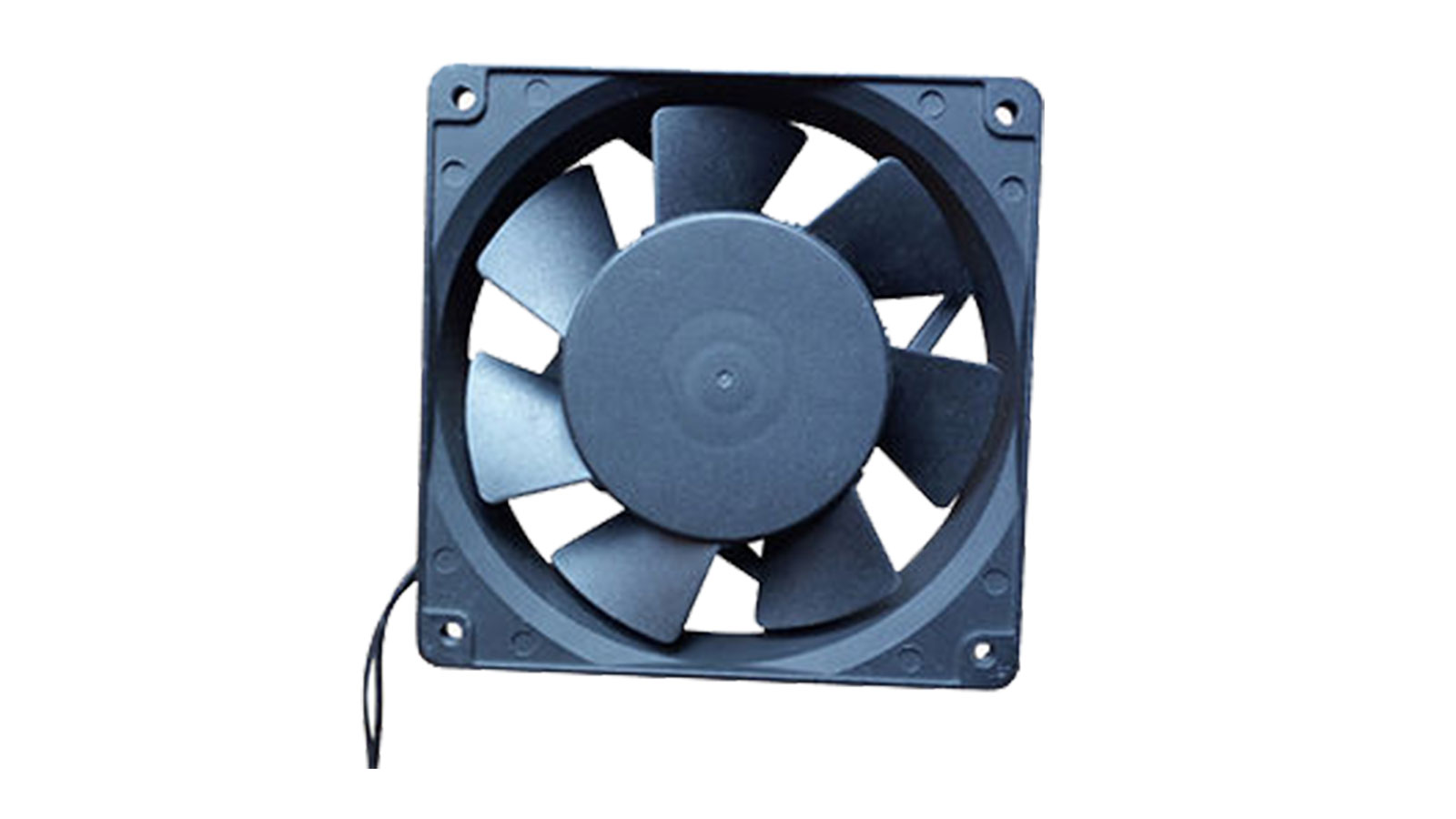
Axial duct fan
Company: Dongguan Dihui Electronics Co. Ltd
Dongguan Dihui’s model EA12025B2L#1935-4511 is an axial duct fan measuring 120x120x25mm and weighing 335g. It has a ULV94V-0-rated glass fiber reinforced impeller and a die-cast aluminum housing. The speed is 2,300rpm, airflow 60CFM, static pressure 0.14inH20 and noise level 38dB. This impedance-protected unit has 220VAC rated voltage, 0.08A rated current and 14W rated input power. It lasts 20,000 or 50,000 hours at 25 C and meets CE and RoHS requirements.
MOQ: 50 units
Lead time: 7 to 15 days
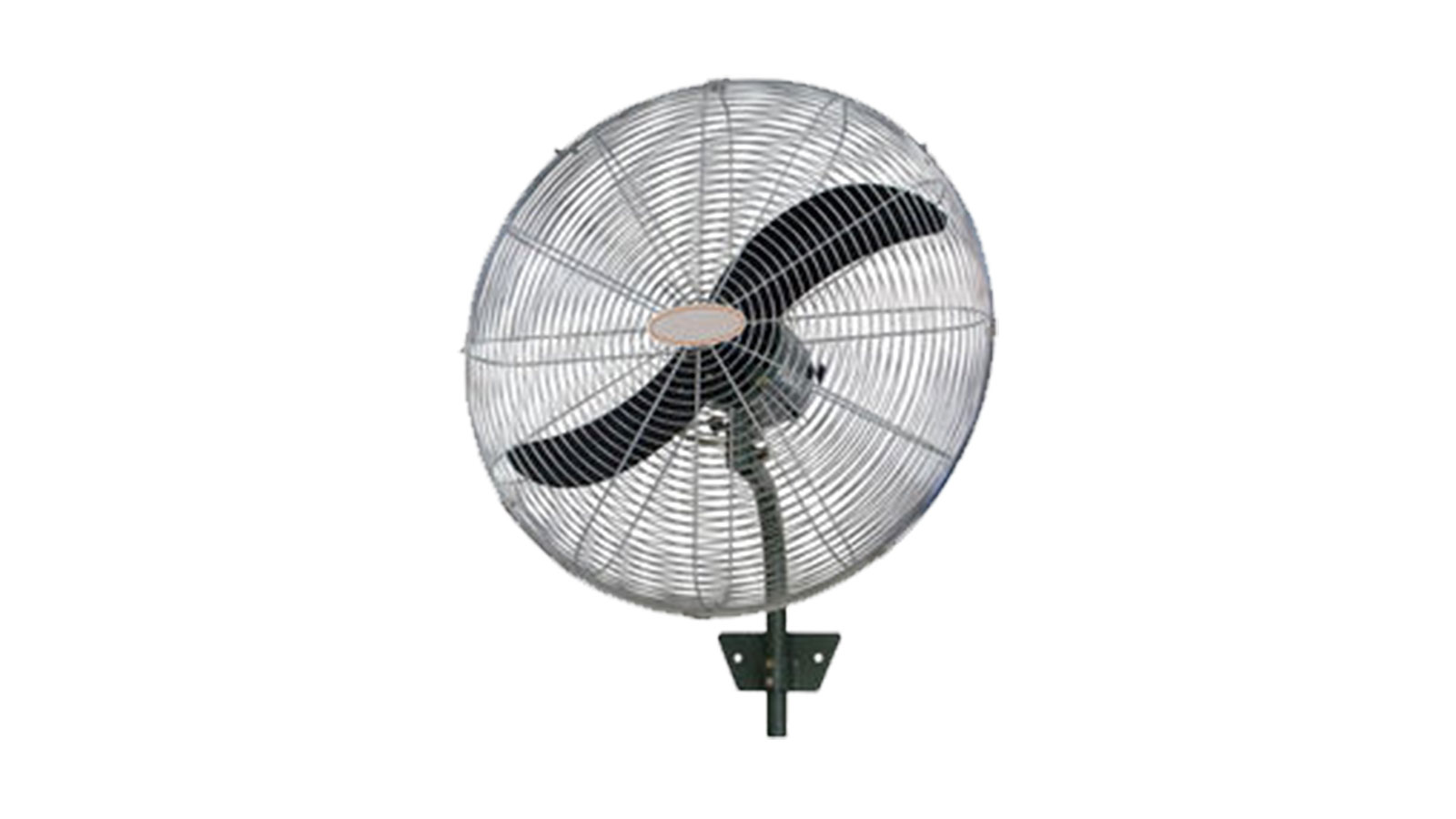
Industrial wall fan with copper motor
Company: Foshan Probreeze Electrical Technology Co. Ltd
The FW-75 from Foshan Probreeze is a 30in industrial wall fan equipped with a full-copper 115x25mm motor, three aluminum blades, metal helix grille, three-pin plug and 1.5m power cord. It has three speed settings, 90-degree oscillation and 1.5 to 1.9m height. The electrical properties are 110 or 230V, 50/60Hz and 250W. This black unit complies with GS, CE, CB, RoHS, SAA, ETL and NOM standards.
MOQ: 1,000 units
Lead time: 35 to 40 days
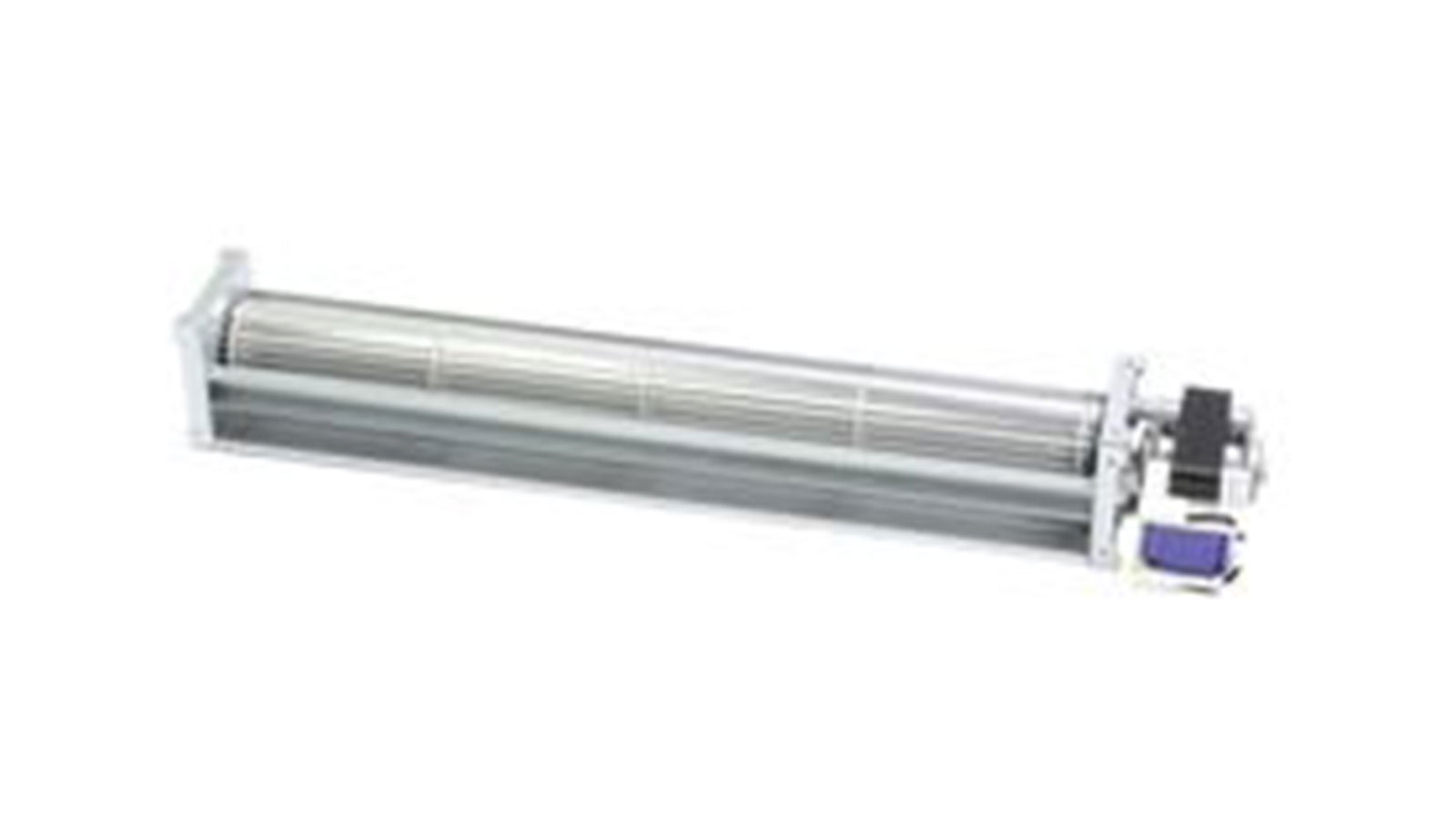
Crossflow fan, 2,500 or 2,600rpm
Company: Xian Huan-Tai Technology & Development Corp. Ltd
Xian Huan-Tai’s HT-Z-2181 is a dual-wheel crossflow or tangential fan with a speed of 2,500 or 2,600rpm. This low-noise unit has 230VAC, 50Hz input and 11, 12 or 13W input power.
MOQ: 1 unit
Lead time: 15 to 40 days
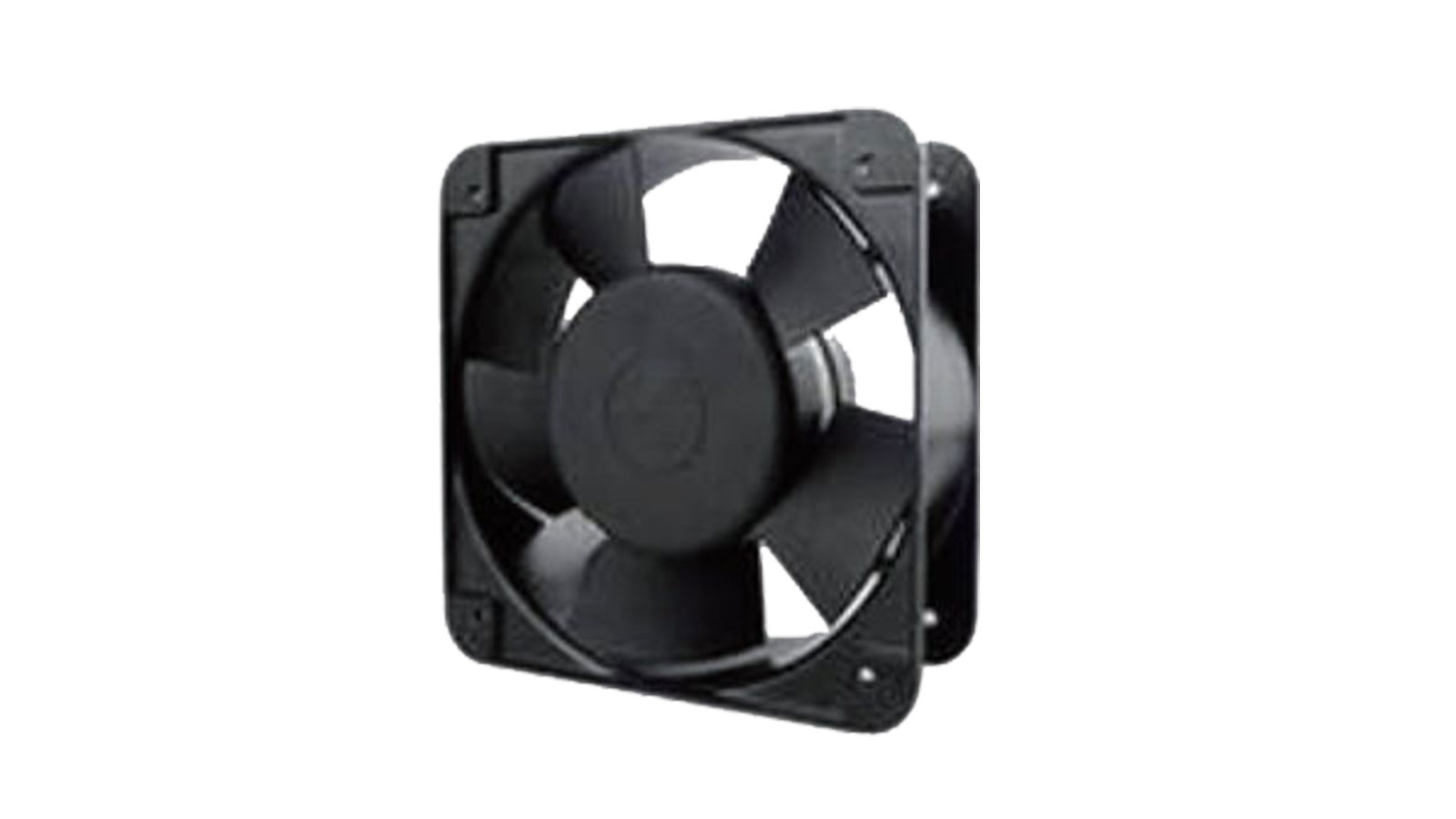
Shaded-pole motor
Company: Yum Tin Box (Mfy) Co. Ltd
Model Fan-821 from Yum Tin Box is an axial duct fan with a shaded-pole motor, ball and sleeve bearing, five PBT blades, UL94V-0-rated PBT impeller and a die-cast aluminum frame. This impedance-protected unit is rated at 110 or 220V and has an operating temperature of -20 to 80 C.
MOQ: 50 units
Lead time: 5 to 20 days
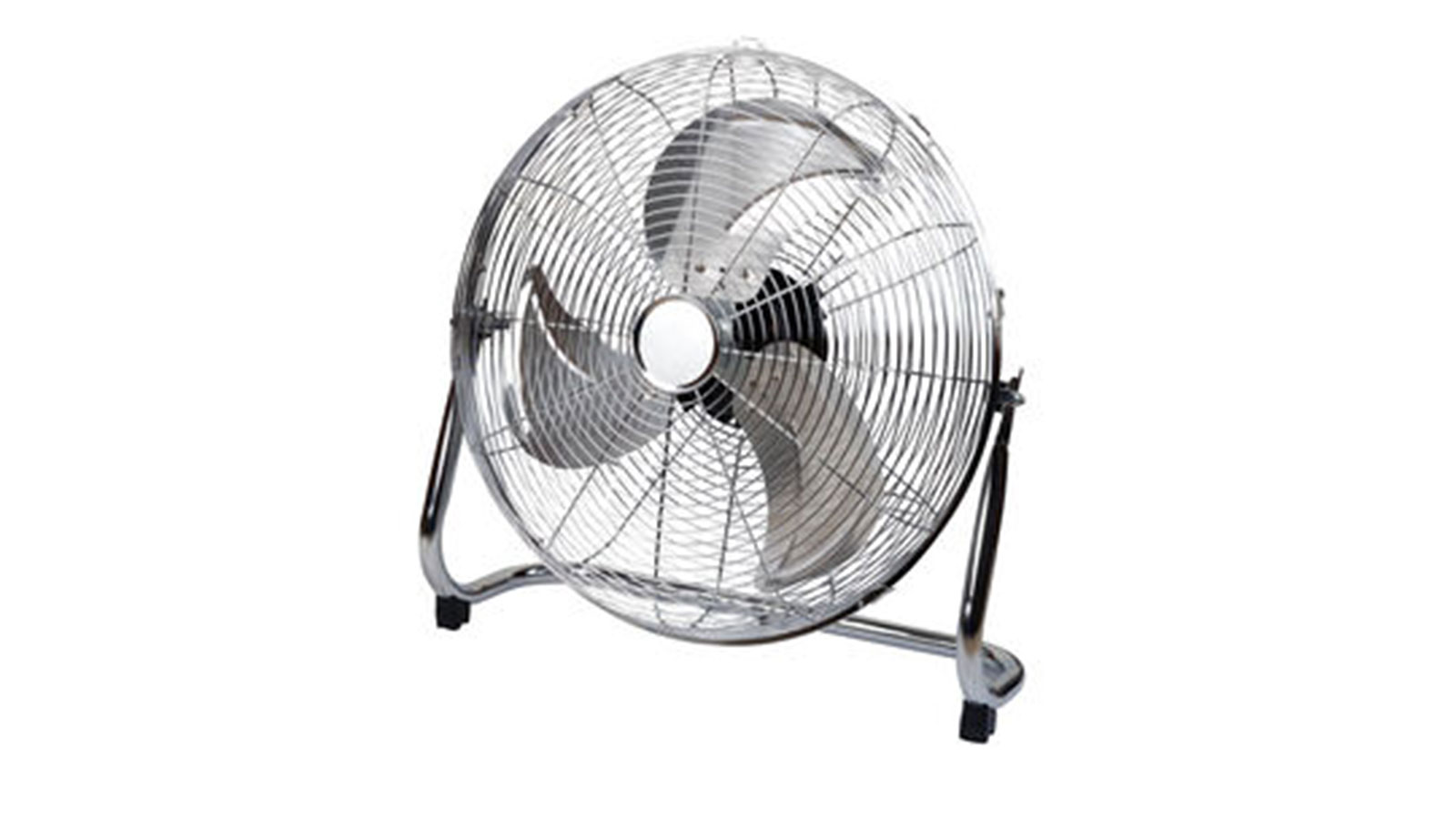
Industrial floor fan with five speed settings
Company: Zhongshan Baogao Electrical Co. Ltd
Zhongshan Baogao offers the USBF-1008-4687, an industrial floor fan in sizes of 9, 14 and 20in. This 220V black unit has five speed settings and can have a custom plug.
MOQ: 1,000 units
Lead time: 30 to 40 days
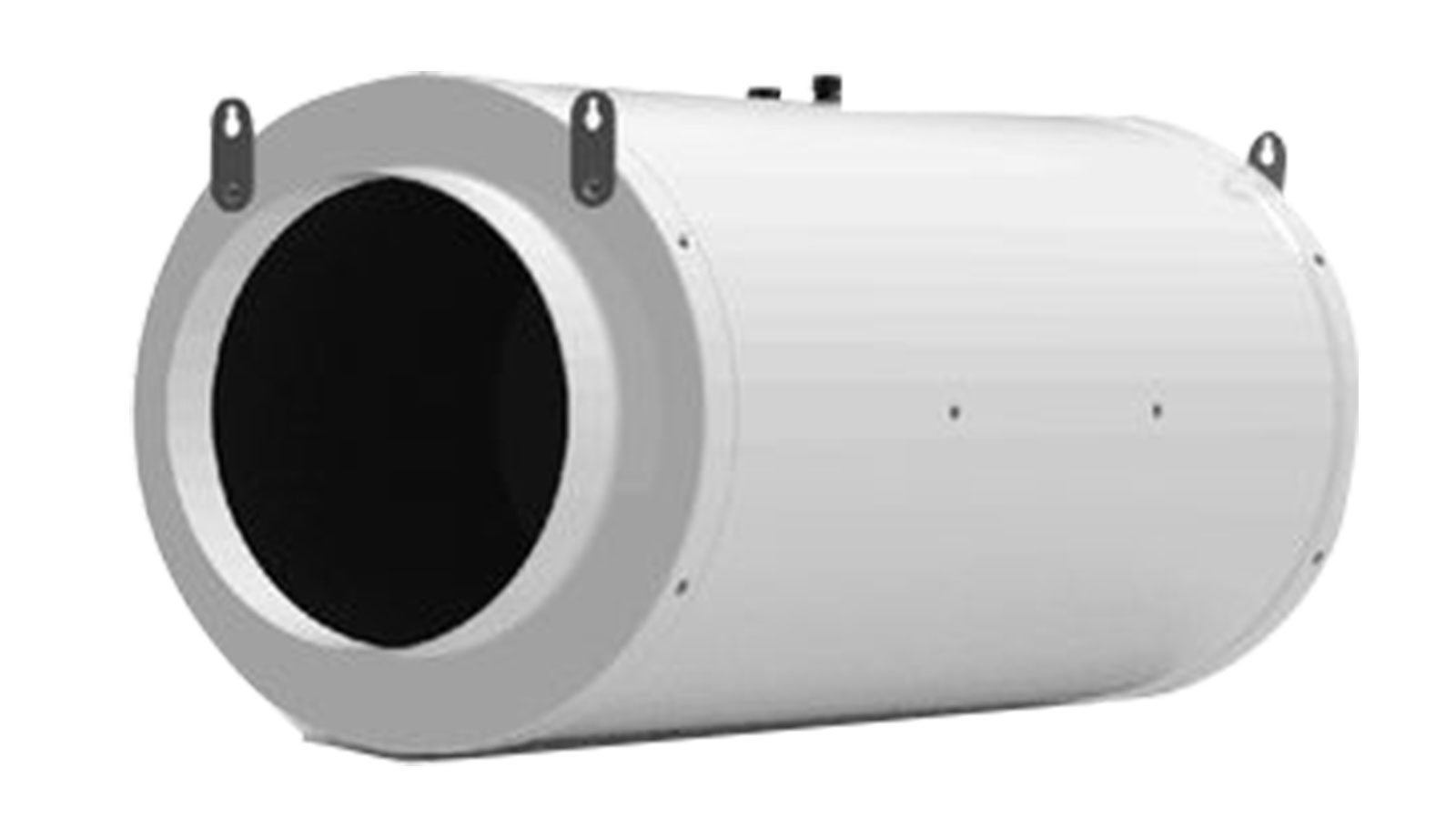
Mixed-flow inline duct fan with EC motor
Company: ZJTEX Electric Group Co. Ltd
ZJTEX’s ZJMF25010IN is a mixed-flow inline duct fan with an electronically commutated motor enabling 3,200rpm speed, and plastic blades. Its voltage range is 110 to 120V or 220 to 240V and the power rating is up to 150W. This white unit comes with a three- year warranty and meets CE, CCC, RoHS and ETL standards.
MOQ: 10 units
Lead time: 30 to 45 days

