Download App
Better Online and Trade Show Sourcing Experiences.Scan the QR code to download.
Learn More
Hot Topics
Researchers use an upward tilted propeller to pull a fixed-wing drone out of the water and into the air.
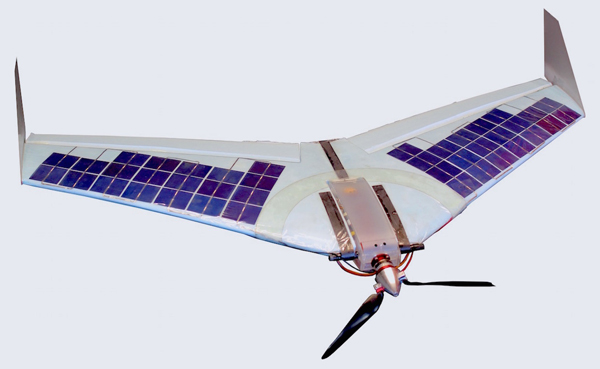
Solar panels on the wings recharge SUWAVE’s battery.
Source: University of Sherbrooke via IEEE Spectrum
Inspired by footage of a mallard duck taking flight in slow motion, the SUWAVE works by using an upward pointing propeller on its nose. Once thrust is applied, it rotates up. At this point, a latch realigns the body and the wings, connecting them tightly together on liftoff. On landing, the drone crashes into the water and if it does so upside down, the propeller can be used to flip the aircraft over.
If SUWAVE force-lands due to low power, the solar panels on the wings will charge the battery in the back so the UAV can take off again. With this, the drone can fly long distances by lake hopping, the researchers said, since Canada's lakes are an average of 20km apart.
In its current form, SUWAVE will not change the world. For practical applications, it could be used for surveying with a waterproof camera attached to it.
Ultimately, the market will determine what applications will benefit from this innovation. Anyone who needs a fixed-wing drone, though, can be excited that it can now take off without a runway or any kind of catapult.
More Sourcing News
Read Also

关注 “环球资源外贸” 官方微信,获取实时外贸资讯
iOS & Android
iOS & Android(Mainland China)
Copyright © 2026 Publishers Representatives Limited. All rights reserved.




