




Image from iStock
Accelerometers, a key component enabling accurate tracking of motion and orientation in AR/VR devices, are expected to continue benefiting from this application.
The AR/VR market will be on the scale of $46.6 billion by the end of 2025 and is projected to reach $64 billion by 2029, according to Statista. Its user count will be 3.7 billion, with penetration increasing to 56.5 percent from 54.1 percent in 2025.
This growth was stoked by the launch of Meta’s Quest 3 in late 2023 and Apple’s Vision Pro in early 2024, reversing a slump in device sales the previous year. IDC said that these product launches contributed significantly to the increase in global shipments, which was a 46.4 percent jump from 2023.
MEMS technology
Widely favored in AR/VR devices are MEMS accelerometers. This is because the technology allows miniaturization and integration on a microscopic scale while ensuring high precision and accuracy, low latency and high-frequency data. In addition, it offers advantages of reduced power consumption, enhanced stability and reliability, and support for sensor fusion or when combined with gyroscopes and magnetometers. Some types are capable of step detection, pedometer functions and motion classification as well.
Largest market
China is the largest consumer of MEMS technology and is striving to become an independent player, as its market remains dominated by foreign companies. Particularly in the high-end segment, these international suppliers have an estimated share exceeding 90 percent.
To reduce dependence on foreign sources and boost domestic capability, the national government included MEMS in its Made in China 2025 initiative and saw considerable growth in pursuit of its ambitious 70 percent domestic production target.
While the majority of Chinese manufacturers continue to focus on the entry-level segment and some large companies on midrange products, first-tier suppliers have been trying to catch up with their foreign counterparts.
Based on information from Beijing-based CCID Consulting, the top 10 accelerometer suppliers in the country in 2023 were MEMSIC Semiconductor, MEMSensing, QST, Senodia, MTMicrosystems, NUMEMS, MiraMEMS, ZITN Microelectronics, Silan and Aceinna. Only MEMSIC Semiconductor and Aceinna are foreign-owned companies. As for MiraMEMS, the maker said that it accounted for 2.11 percent of the global MEMS accelerometer market and ranked seventh as early as 2021.
More research underway
Meanwhile, technological breakthroughs are being pursued. Research by Yifeng Wang and Yi Zhao of the Harbin Institute of Technology yielded honed-energy regularized and optimal supervised GAN (HEROS-GAN). This technology improves the accuracy and range of low-cost accelerometers mainly used in consumer electronics, medical and industrial automation applications.
The researchers published their paper in February 2025, finding: “Integrating both OTS [Optimal Transport Supervision] and MLE [Modulated Laplace Energy], the HEROS-GAN achieves remarkable results, which doubles the accelerometer range while reducing signal noise by two orders of magnitude, establishing a benchmark in the accelerometer signal processing.”
Essentially, such components, generally priced at $0.50 each, can deliver performance equivalent to a high-end model tagged at $200.
Captive AR/VR base
China has a large AR/VR market, which is projected to keep growing in the coming years. Qianzhan Industrial Research Institute reported that it reached $15.3 billion in 2023, rising by 22.8 percent year on year and would almost double to $29.52 billion in 2028.
This has been benefiting the country’s accelerometer sector, which has been steadily expanding since 2022. This component category posted $3.05 billion in 2023 and $3.64 billion the following year, according to Huajing Intelligence Network. The key drivers were automotive applications, consumer electronics, drones, and medical and wearable products. In the years ahead, AR/VR devices, drones and robotics will be popular applications.
Anticipating increasing demand in the AR/VR sphere, both domestically and overseas, many accelerometer makers are planning to invest in boosting production capacity.
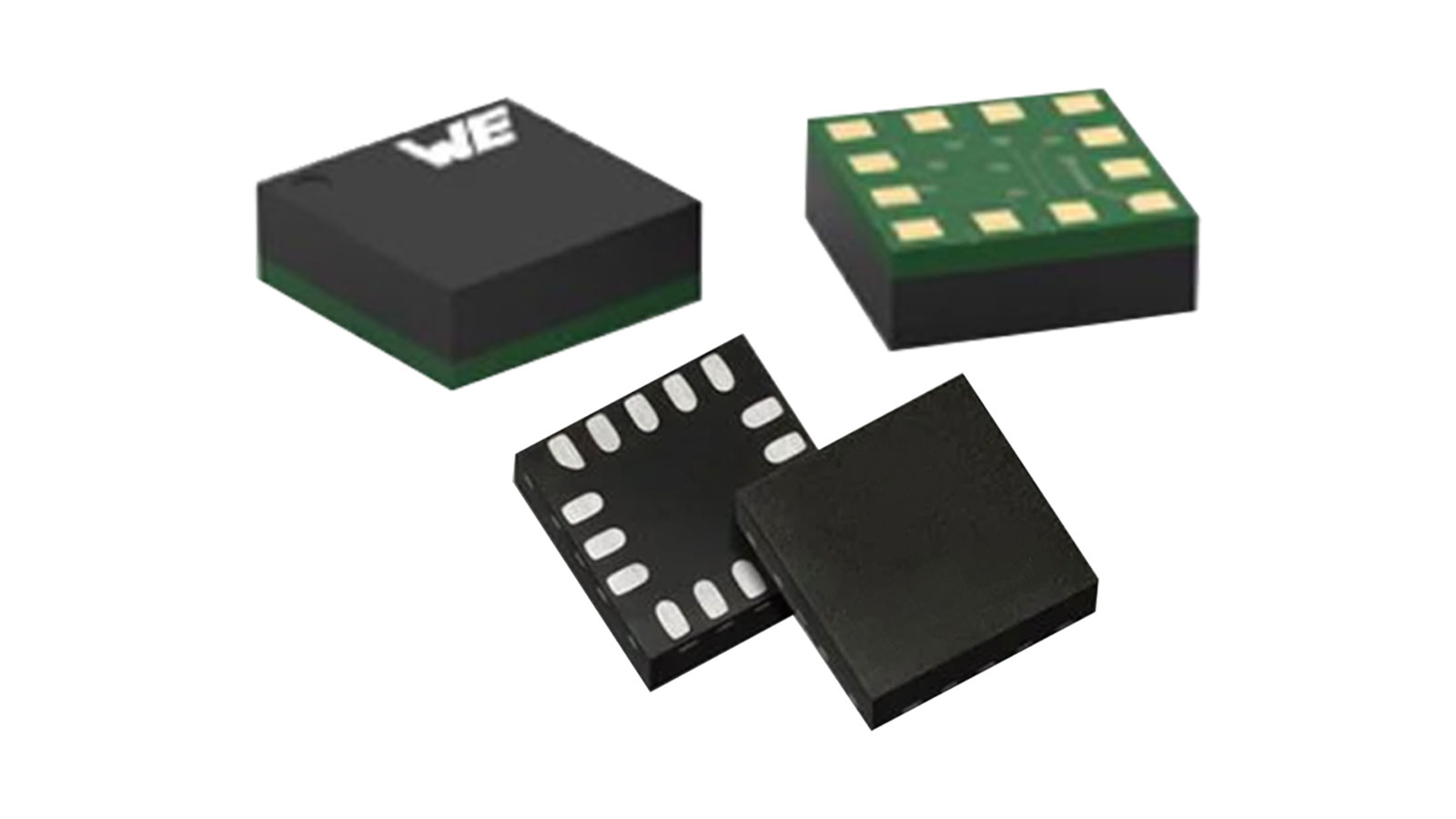
Accelerometers from Hotai International Co. Ltd and Yes International Co. Ltd
China-made accelerometers
Many factories producing accelerometers are found in the cities of Suzhou, Shanghai, Wuxi, Hangzhou, Shenzhen and Qingdao, with a few others in Shaanxi and Sichuan provinces.
Products from these areas are available with a typical measurement range of ±2, ±4, ±8 or ±16g, resolution output of 8, 10, 12 or 14 bits, output data rate of 10, 100Hz or 1kHz and operating temperature of -40 to 85 C. These usually support digital interfaces such as I2C, SPI and UART.
In AR/VR devices, these accelerometers are usually integrated with gyroscopes and magnetometers to form a device called inertial measurement unit (IMU).
A Shenzhen-based supplier contacted by Global Sources, Hotai International Co. Ltd, offers a three-axis accelerometer with motion, vibration and tilt functions. Model MMA8562Q can be used in wearable devices, gaming controllers and industrial monitoring applications. Hotai requires an order of at least 100 units and ships them within seven days.
Yes International Co. Ltd, a Hong Kong SAR-based maker with a factory in Dongguan, has an accelerometer with an embedded temperature sensor. The full-scale output signal is ±2, ±4, ±8 or ±16g, depending on the requirement, and the output data rate is up to 1,600Hz. This device uses I²C or SPI and has an operating temperature of -40 to 85 C. The MOQ is negotiable and the lead time is seven days.
To meet specific design requirements, Chinese manufacturers usually accommodate requests for customization, including where to source measurement components, potentiometers, springs, dampers and cases to be used. They said that buyer-specified accelerometers account for 20 to as much as 50 percent of their shipments.
The cost of materials remains generally stable, but companies may continue to lower prices to compete for more orders.

