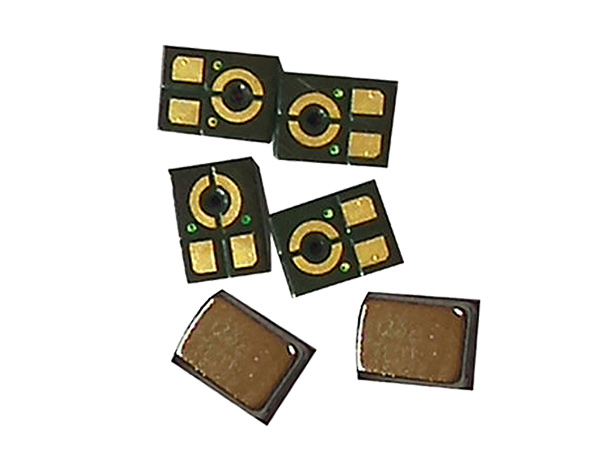
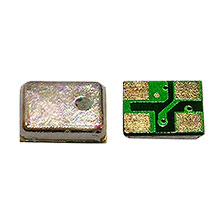
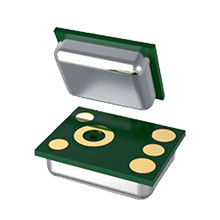
MEMS microphones have a growing presence in the market owing to their tiny configurations that allow engineers to easily fit them onto space-limited PCBs used in mobile and wearable electronics. Based on this key advantage, a number of them can be used in a given device, like earbuds and hearing aids, to achieve active noise cancellation. From the manufacturing standpoint, these devices can be fabricated and mounted like chips with automated processes. This means they are compatible with reflow soldering, which also proves their robustness.
With the ubiquity of smartphones and other mobile devices and the increasing adoption of voice user interface technology, MEMS microphones have found their niche. This is evident in their market performance. In 2022, up to 8 billion units were shipped worldwide, according to Yole Group, at a CAGR of 11 percent from 2020.
This upward trend is expected to continue in the coming years. Globally, MEMS microphones will be a $3.012 billion market by 2025, rising at 10 percent CAGR from $2.263 billion in 2022, according to data from Chinese research firm Huajing Research Institute. The major growth drivers include mobile, wearable and automotive electronics.
For the automotive industry alone, Yole estimates shipments of MEMS microphones can be as high as 185 million units by 2026 at an impressive 22.42 percent CAGR from 37 million in 2018.
Despite MEMS ascendancy, the older ECM technology will remain an option in microphones, having its own benefits and established or legacy applications.
While in larger configurations, ECMs have higher IP ratings and are therefore more appropriate for products used in harsh environments. They also have a wider operating voltage range, providing adaptability in situations with no regulated power supply. In terms of mounting, they offer more options as they can be connected using wires, pins, solder pads, spring contacts or soldered directly onto boards using SMT.
Digital MEMS microphones
MEMS microphones with a digital output are anticipated to lead over analog-output types in the future. As a newer technology, they have advantages such as support for multiple power modes and greater RFI immunity compared to their older counterparts. In addition, digital versions eliminate the need for an analog-to-digital converter, lowering cost and reducing space requirements in designs.
Piezoelectric MEMS microphones are another breed expected to drive R&D. They “offer a new low-power solution without mechanical compromises that enable device makers to add larger mic arrays into devices used in inclement environments both inside and outside of the home,” according to Dave Berol, writing on Alexa Blogs. The first such device was released by Vesper in 2017 and had full protection against water, dust, particles and shock.
China’s MEMS microphones ventures
In China, only a few manufacturers have introduced piezoelectric types, focusing their efforts on developing digital MEMS microphones in small sizes and with high SNR and sensitivity.
AAC Technologies, a top manufacturer in this category domestically and overseas, has announced a digital MEMS microphone measuring 4x2x1.1mm. This unit has 67dB SNR and 1.12 to 4.8MHz frequency range, especially suitable for laptops. Other specifications are -26dB FS sensitivity, 0.2 percent total harmonic distortion and 230dB SPL acoustic overload point.
AAC Technologies has invested $42.25 million in a MEMS microphones factory in Malaysia that will begin mass production in 2023. The construction of the 6,705sqm facility began in early 2022. Other Chinese companies are set to expand production to meet rising demand. Gettop Acoustic, for example, is allocating $71 million for its new MEMS microphones project.
The MEMS microphones market in China alone reached $704 million in 2021, realizing more than 15 percent CAGR from 2018, according to Sohu News. This is expected to expand further, driven by continued development in the spheres of 5G, IoT and AI, which will fuel upgrades in smartphones, wearable devices, smart home devices and automotive infotainment.
Homegrown industry leaders
China has over a hundred manufacturers of MEMS microphones. Although the majority are producing entry-level and midrange products, a few are now established names in the global market. The top three are Goertek, AAC Technologies and MEMSensing, collectively accounting for nearly half of China’s shipments in this category.
Goertek overtook worldwide market leader Knowles in 2020, having snared 32 percent of the global total. In the same year, Goertek, Knowles and AAC Technologies had an aggregate 57 percent share of the category, according to Yole Group.
Almost half of the suppliers in China, including foreign-invested companies, are based in Guangdong’s key cities of Shenzhen, Dongguan and Zhongshan. The rest are spread over Zhejiang and Jiangsu.
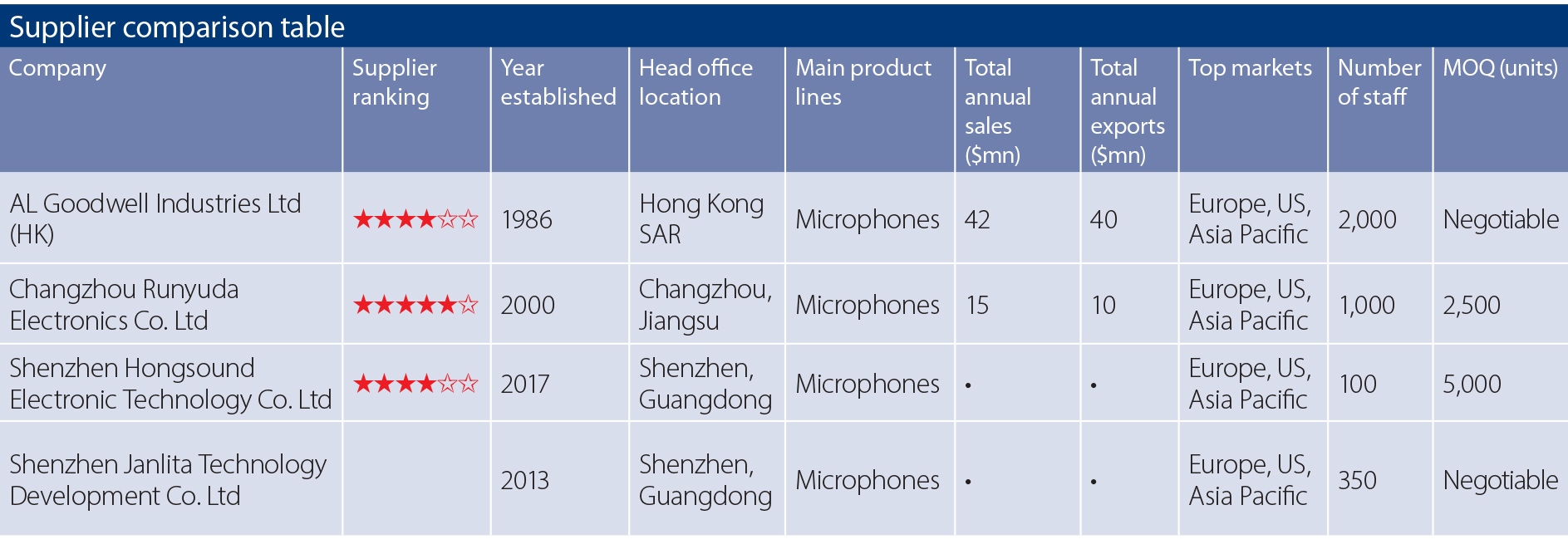
Entry-level and midrange MEMS microphones widely available in China are omnidirectional, analog and digital types for smartphones, tablets, laptops, Bluetooth headsets, earphones, wearables and automotive applications.
They have a rated voltage of 1.5 to 4V, sensitivity of -26, -38 or -42dB, sound pressure level of up to 140dB and operating temperature range of -40 to 100 C. Other specifications can be made based on customers’ requests.
These microphones are CE-approved, RoHS-compliant and UL-listed.
Chinese manufacturers generally use chips from foreign providers such as Infineon and Knowles, and source other components and materials domestically unless specified.