OLEDoS offers a full-packed solution, with native characteristics of a minimum pixel pitch or pixel density of 4,031ppi, contrast ratio of 100,000:1 and response speed of 0.01ms or less, according to the Sony Semiconductor Solutions Group.
This technology, however, is still positioned as a high-end option, with adoption limited to a few devices that include mixed reality (MR) types. Apple announced a plan for an OLEDoS AR/VR headset but the release did not happen as scheduled in 2022. The device “will be equipped with two 1.41in Micro OLED screens, each with 4,000ppi, and they’ll be able to go beyond 5,000 nits of brightness,” according to a tweet made by DSCC CEO Ross Young and quoted by The Verge. It was introduced at the Worldwide Developers Conference in June, with the launch set to take place in early 2024, according to an update from Mac Rumors.
Samsung Display and LG Display, meanwhile, are expected to manufacture such displays, respectively in the second half of 2023 and 2025 or 2026, according to The Elec. “We are developing a set for VR using OLEDoS, and it is planned to be released soon. We are developing products for major IT companies such as Apple, Google and Meta, and some prototypes have already been developed,” said Yoo Chung-geun, a senior research fellow at LG Display, in an article on OLEDNET.
Owing to its high-end positioning, cost remains a disadvantage for OLEDoS, though possibly not for long. DSCC reported that China has made significant investments to boost capacity, which could help reduce costs.
China’s Micro OLED pitch
Large Chinese companies that have embarked on Micro OLED R&D and production include Jilin OLED, Visionox, Semiconductor Integrated Display (SidTek) and Hefei SeeYA.
SidTek finished the construction of its $880 million factory in Wuhu, Anhui in 2022. This new facility will begin mass production in late 2023, and is expected to turn out 18,000 12in Micro OLEDs, mainly for AR/VR devices, every month.
BOE has a cooperation with Yunnan OLiGHTEK to establish a factory in Kunming. Arranged in three phases, the $500 million project is expected to be completed in early 2024 and to have a total annual production of 5.23 million OLEDs. At present, it is turning out 0.5in 800x600dpi and 0.41in 800x480dpi Micro OLEDs for AR/VR applications, as well as 0.39in units with 5,644ppi.
AR/VR market prospects
After an almost 21 percent slump in 2022, which saw only 8.8 million AR/VR devices shipped worldwide, the market is expected to recover and realize positive growth in the next few years. The volume will reach up to 50 million units by 2026, according to IDC’s estimate.
The situation in China was significantly better in the first half of 2022, then total sales value was $117.64 million or an 81 percent increase over the same period in the previous year, according to ChinaIRN. This means that the country will have the highest CAGR, at 43.8 percent from 2022 to 2026 worldwide.
Multinational supplier base
There are about 100 manufacturers of OLEDs for AR/VR applications in China and most are domestically owned. LG Display, Samsung Display, Sony and other foreign companies are also part of this production pool, which will continue to grow amid a projected rise in demand in this market.
Many factories are found in Shenzhen, Dongguan, Zhongshan, Kunming, Suzhou, Nanjing and Qingdao. These cities are expected to continue attracting more investment thanks to their comprehensive industry chain, convenient transportation infrastructure and abundant labor force.
China-made AR/VR displays
For AR/VR devices, Chinese display suppliers offer AMOLED and Micro OLED products in sizes ranging from 0.39 to 2.95in.
With LTPS backplane, OLEDs come with 44µm pixel density, 100,000:1 contrast ratio, 1ms response time and a direct viewing mode.
Suppliers will keep improving AMOLED display performance, especially in terms of definition, response time and refresh rate, to continue providing this option to device manufacturers who are considering transitioning from LCDs and fast-switching LCDs.
In the Micro OLED category, displays use silicon backplane, offer a magnified image viewing mode, and have 63µm pixel density, an infinite contrast ratio and 0.01ms or less response time.
Both AMOLED and Micro OLED displays can be customized according to requirements.
These are made using ITO glasses, organic materials, substrates, adhesives and driver ICs, which come from domestic or foreign providers. The usual sources of ICs include Samsung, Magnachip, Silicon Works, Synaptics and Raydium, and homegrown suppliers such as Sino Wealth and GigaDisplay.
AMOLED displays form the bulk of shipments of Chinese companies at present, but this will change in the next three or four years, according to suppliers interviewed by Global Sources.
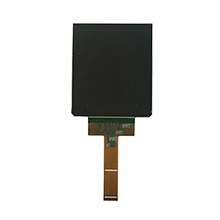
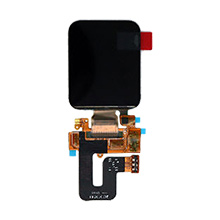
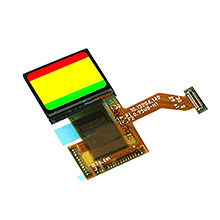
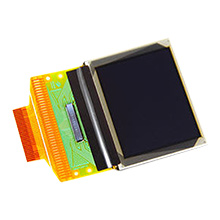
Here are OLED displays handpicked by our China-based market analyst for representing current trends in this category from Chinese manufacturers.