Download App
Better Online and Trade Show Sourcing Experiences.Scan the QR code to download.
Learn More
Hot Topics
With Windows-powered smartphones out of the way, tablets that run the operating system are gaining notice.
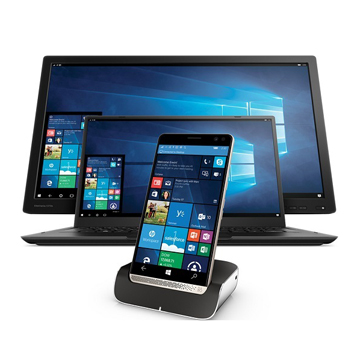
HP is discontinuing its Elite x3 plans as Microsoft abandons its mobile dreams. (Source: HP)
Mobile devices have taken the spotlight as the favorite form of computing today. Through smartphones that run iOS and Android, these handsets have revolutionized the way people stay connected. There’s one company, however, that has missed the mark on this era: Microsoft.
A recent tweet from Joe Belfiore, Corporate Vice President of Windows, stated that the company’s mobile platform will still receive updates, but the hardware and software around it will no longer be the focus. When asked why, he attributed it to poor app development and partner interest.
Microsoft tried to ride the smartphone wave by introducing Windows Phone 7 back in 2010, and partnered with companies such as Samsung, Nokia, HTC and LG to release handsets that ran the platform. A few years later, only Nokia stayed faithful, and was subsequently purchased by Microsoft. With its new acquisition, the Redmond-based software giant spawned one smartphone after another under the Lumia line. In 2015, Windows 10 Mobile was introduced as part of the company’s efforts to unify its platforms on VR/AR/MR devices, consoles, mobile phones, tablets and PCs.
Despite the aggressive push, it was difficult enough to make a dent in a market dominated by Apple and Google. The company finished 2016 with a 0.2% smartphone market share, which further dwindled to 0.1% during the first quarter of 2017.
Even with Belfiore’s statement, Microsoft still has not explicitly announced that they are dropping its mobile plans. However, partners, including HP, which released the Windows 10 Mobile-powered Elite x3 handset has announced that they are canceling their plans for the smartphone, just because Microsoft is more or less abandoning the platform. The Lumia line has also been discontinued.
Moving forward, it seems Microsoft is prioritizing itsfull-blown Windows 10 platform, not only for desktops and laptops, but also for tablets. The company has demoed running the OS on a mobile processor before, and if it pushes through, it could become a plan B for the company to create its own path on the mobile trend. Its Surface line has been doing quite well too, recording $4.3 billion and $831 million during 2016 and the first quarter of 2017, respectively. Tablet sales are faltering, but Windows-powered devices are gaining good attention as an alternative to the usual Android and Apple devices. If Microsoft can pull the right strings, it can slowly creep its way back to mobile.
More Sourcing News
Read Also

关注 “环球资源外贸” 官方微信,获取实时外贸资讯
iOS & Android
iOS & Android(Mainland China)
Copyright © 2026 Publishers Representatives Limited. All rights reserved.




