




A safety component, fuses ensure both electrical and electronic circuits are protected from excessive current or overload. As such, they find wide application in residential, commercial and industrial environments. In the automotive industry, fuses are extensively used as well, with increasing vehicle electrification providing substantial drive for technological innovations and boosting demand.
Keeping up with trends, manufacturers in China continue to ensure high fuse reliability across types while pursuing miniaturization. They are developing more chip versions to capitalize on their expanding market, both domestically and overseas. Globally, fuses in chip packaging realized $1.057 billion in 2024, according to QYResearch. The value will reach $1.812 billion by 2031 at a CAGR of 8.7 percent from 2025 to 2031.
Alongside miniaturization are efforts to enhance the protective function of fuses, in particular compact electronic types, to address increased overload risks due to dense circuitry in many devices. Compared to traditional variants, eFuses have a resettable feature, exhibit greater precision and faster response time, can transmit diagnostic data enabling remote overcurrent detection and troubleshooting and supports over-the-air upgrading. As such, they are used in servers, data storage devices like HDD and SSD arrays, industrial and network boards, external power adapters, consumer electronics and automotive applications, particularly in electric vehicles.
For these advanced features, Chinese fuse suppliers are also venturing into eFuses, anticipating them to replace conventional counterparts in vehicles in the coming years. Some have already introduced their own models. Shanghai Southchip, for instance, developed an automotive-grade eFuse, with 60V operating voltage and AEC-Q100-compliant features, that has been in mass production since the third quarter of 2024.
Healthy fuse market
Fuses have been experiencing increasing demand, driven by a mature technology offering a low-cost alternative to more advanced and complex circuit breakers typically used in larger applications. However, there have been advancements in these safety devices as well, which make them viable in a wider range of products and systems.
In recent years, there has been a steady rise, with the global market reaching $3.175 billion in 2022, $3.33 billion in 2023 and $3.416 billion in 2024 based on QYResearch’s report. The value will likely exceed $4 billion in 2026 and go up further to $4.745 billion by 2028. From the automotive industry, fuses realized $1.193 billion in 2024 and will hit $1.727 billion by 2031 at 5.5 percent CAGR between 2025 and 2031, according to the same source.
In China, fuse manufacturers are banking on a two-digit growth forecast for this product category in the next two years. Zhiyan Consulting said that the country turned out 32.3 billion fuses in 2024, nearly doubling the volume reached in 2016.
This has attracted investment, with companies funding production expansion. Zeeman, for instance, has set aside $34.72 million on a project in a 28,189sqm area. When completed, the facility will have an annual output of 1 billion automotive fuses or a yearly production value of $55.55 million. Interviewed supplier Shenzhen Victors Industrial Co. Ltd, meanwhile, spent $1.388 million on fully automatic production equipment in 2024 to boost its capacity by 30 percent in anticipation of more orders in the next one or two years.
Manufacturing hub
There are hundreds of suppliers of fuses in China, including industry leaders such as Littelfuse, Siemens, ABB, AEM and Conquer. Most are domestic companies operating on a small and medium scale, with SinoFuse, Hollyland and Betterfuse among those in the top tier.
Many manufacturers are found in Guangdong, specifically in Shenzhen, Dongguan and Zhongshan, and in Suzhou, Kunshan and Changzhou in Jiangsu. There are also factories in northern and central areas.
Intense competition might lead to the exit of some Chinese companies. In the automotive fuse segment, half of the world market remains dominated by Littelfuse, Eaton, PEC, MTA and ESKA, according to QYResearch.
China-made fuses
Based on the fuse body material, there are glass, ceramic and plastic fuses widely available in China. There are also resettable and chip kinds, which have been the focus of makers’ R&D initiatives in recent years. Smart eFuses, meanwhile, are expected to be a major future trend in this category.
Glass and ceramic types currently form the bulk of shipments. Typical units have a rated current ranging from 40mA to 30A, a rated voltage of 125, 250 or 300VAC and an operating temperature range of -55 to 155 C. They come in diameters and lengths of 3.6 and 10mm, 4.6 and 16mm, 5 and 20mm and 6.3 and 30mm.
Based on electrical properties, plastic fuses are available in 32, 125, 250 and 300V and 0.1 to 30A versions, with -55 to 150 C operating temperature.
Resettable kinds come in SMD and leaded kinds with a rated current of 0.04 to 12A, a rated voltage of 6 to 600V and an operating temperature of -40 to 85 C. Chip-type fuses are mostly in sizes of 0603, 0805, 1206, 1210, 1812, 2016 and 2920.
Chinese manufacturers ensure their fuses meet industry safety standards such as UL, cUL, CE, PSE, VDE, KC, CCC, CSA and RoHS. They usually use materials, including copper, lead, aluminum alloy, glass, ceramic and plastic, from domestic suppliers. The cost of these inputs is expected to remain stable and keep fuse prices unchanged throughout 2025.
The products in this gallery have been handpicked by our China-based market analyst for representing current trends in fuses from Chinese suppliers.
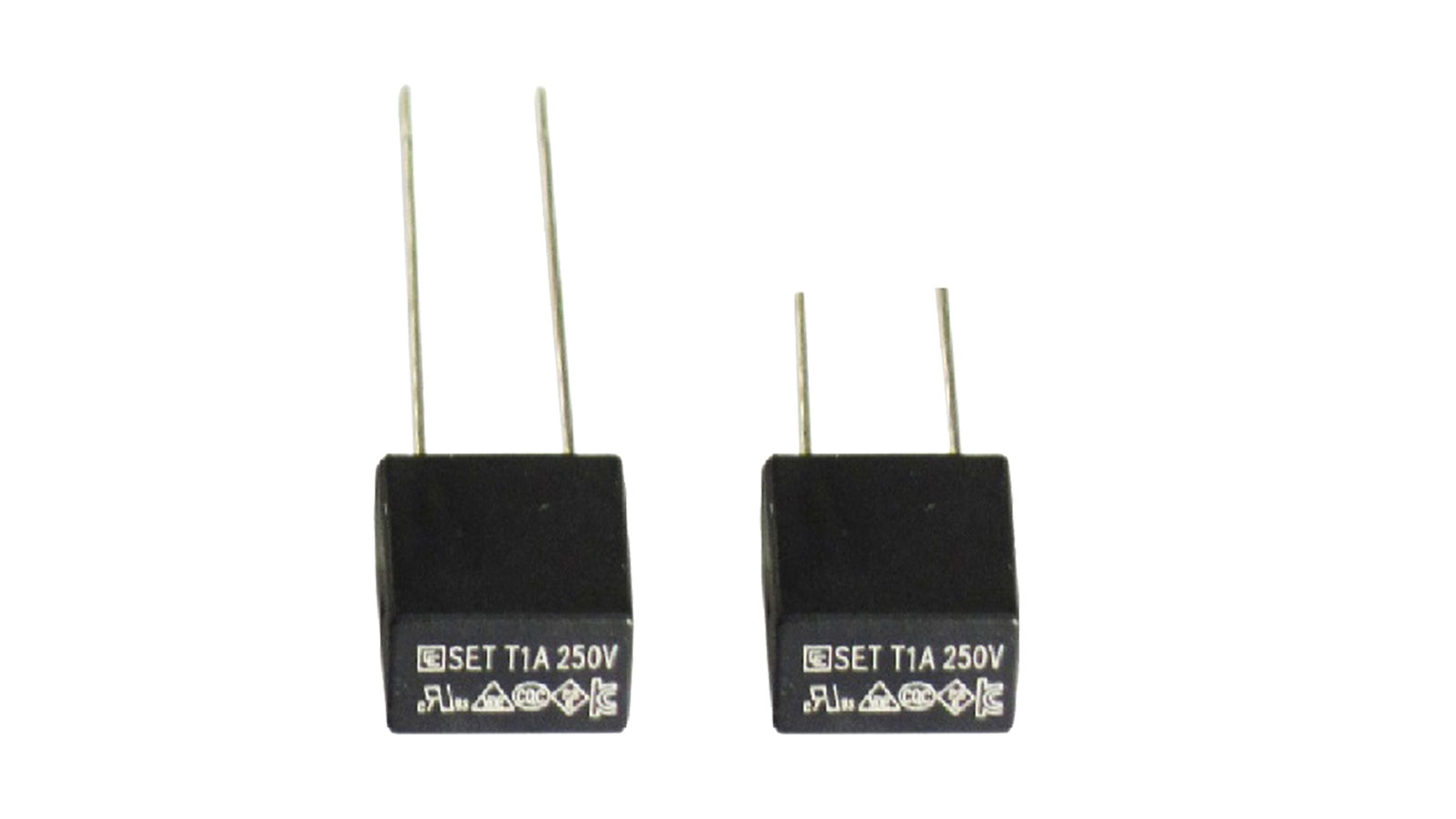
Fuse, 100mA to 10A rated current
Company: Dongguan Chevron Electronic Technology Co. Ltd
This fuse from Dongguan Chevron, the Set Series, has 250, 300, 350 or 400V rated voltage, 100mA to 10A rated current, 100A breaking capacity at 250 and 300VAC and 50A at 350 and 400VAC and -55 to 150 C operating temperature. It meets UL, VDE, PSE, TÜV and CCC standards.
MOQ: Negotiable
Lead time: 7 days
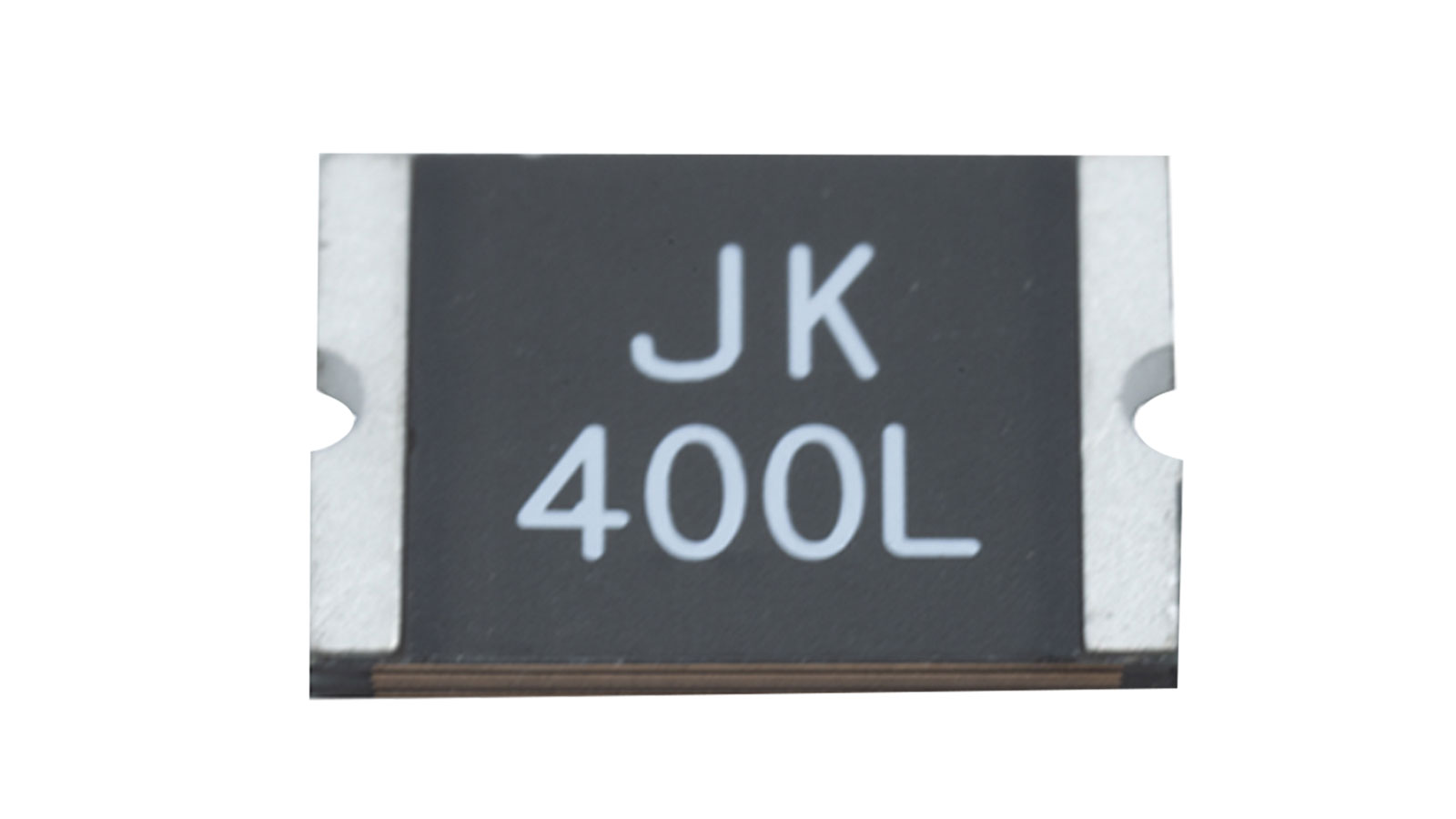
Resettable fuse, 0.35 to 3A operating current
Company: Shenzhen Topmay Electronic Co. Ltd
Available in 0603 size, this halogen-free and RoHS-compliant resettable fuse from Shenzhen Topmay, the JK-SMD0603L, has 6V maximum voltage, 0.35 to 3A operating current at 25 C and -40 to 85 C operating temperature.
MOQ: 10,000 units
Lead time: 12 days
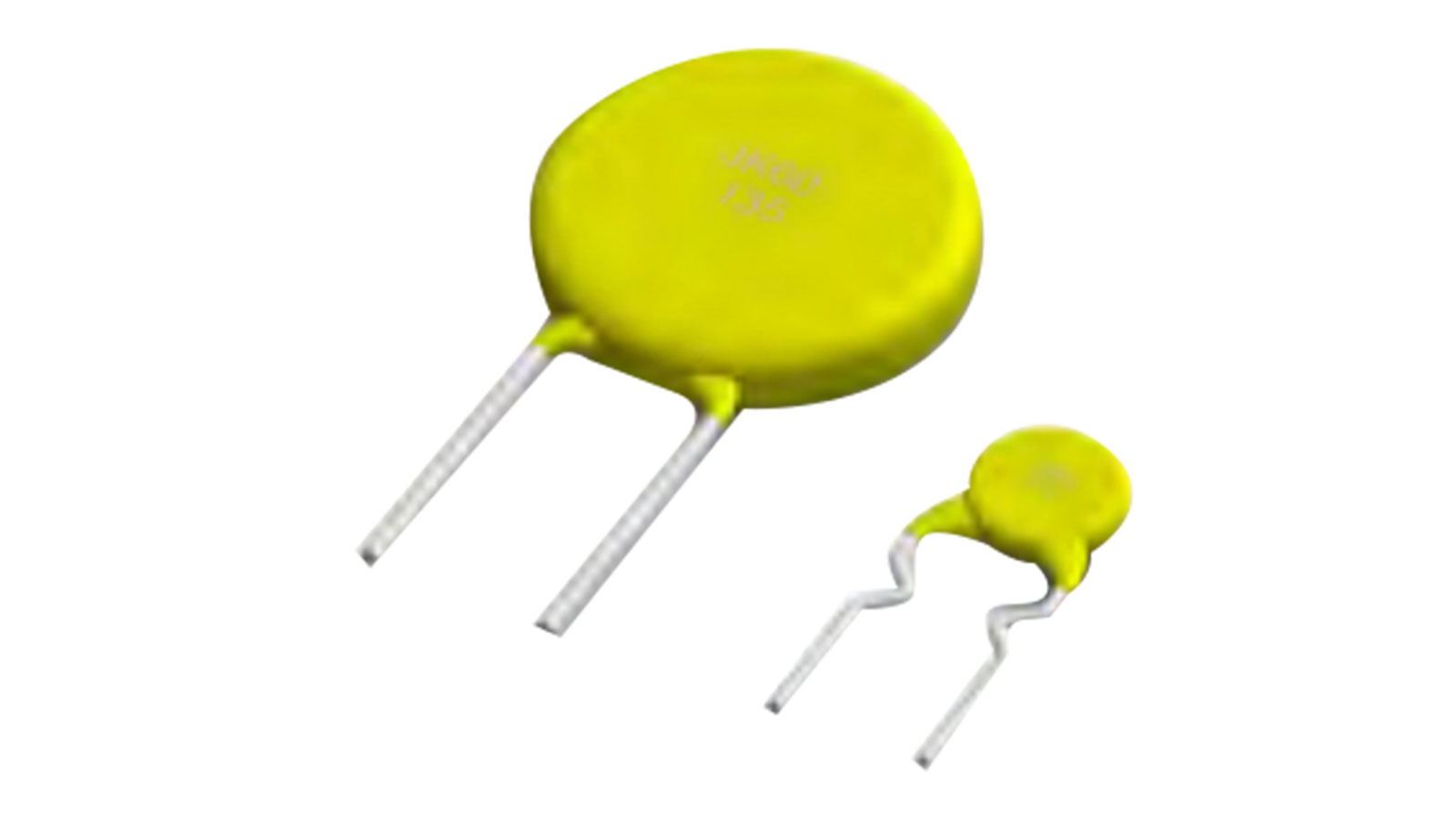
Resettable fuse, up to 60V, 40A
Company: Shenzhen UN Semiconductor Co. Ltd
Suitable for use in automotive and motor protection applications, computers and peripherals, and general electronics, Shenzhen UN’s JK60 is a RoHS-compliant resettable fuse with 60V and 40A maximum voltage and current and -40 to 85 C operating temperature. It is free from lead and halogen.
MOQ: Negotiable
Lead time: 7 days
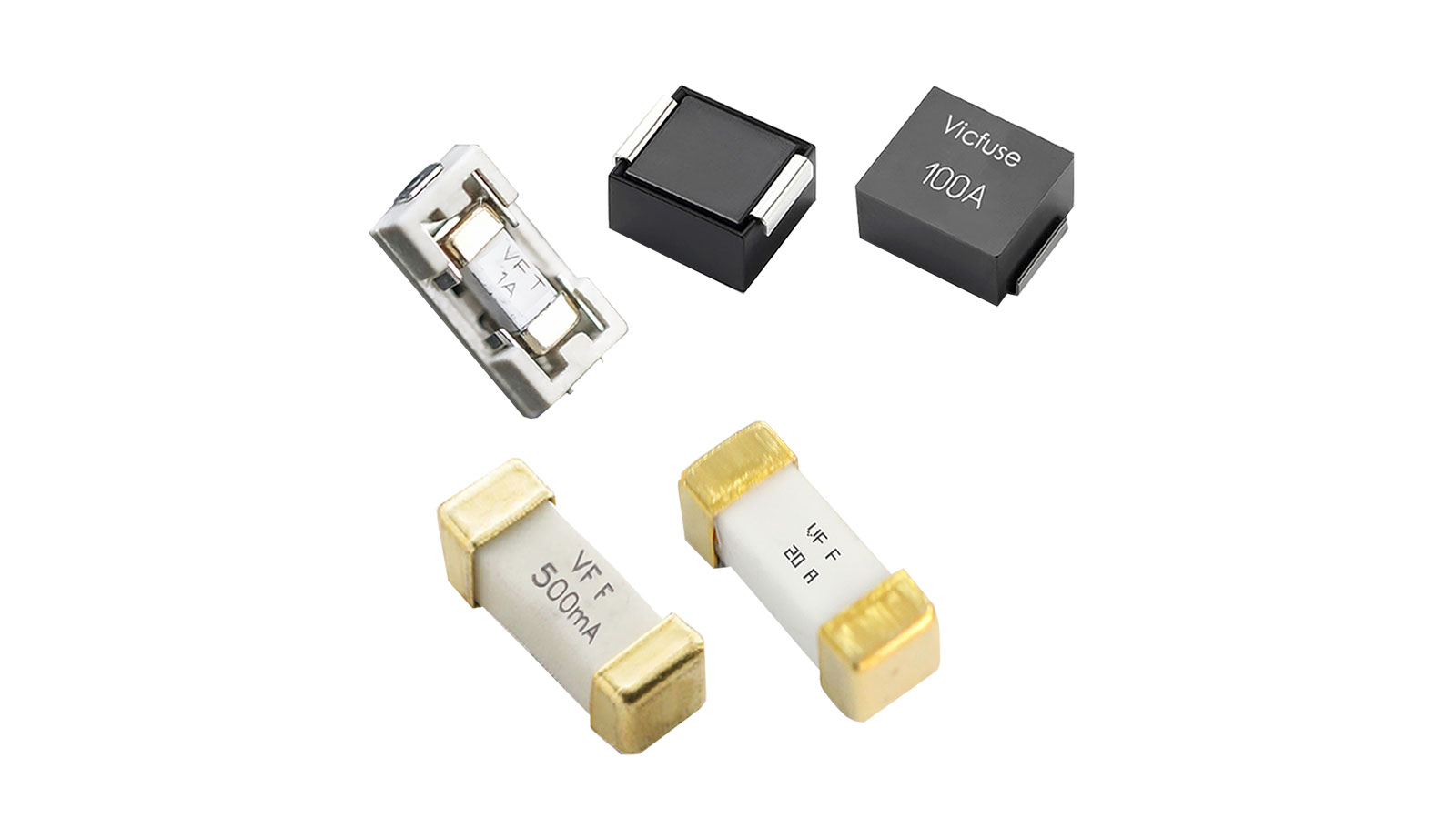
AEC-Q200-compliant fuse
Company: Shenzhen Victors Industrial Co. Ltd
Shenzhen Victors’ VF Series fuse has 125, 250 or 350V rated voltage in AC or 86 or 125V in DC, 0.04 to 125A rated current and -55 to 155 C operating temperature. It conforms to AEC-Q200 requirements.
MOQ: 1,000 units
Lead time: 21 days

