Download App
Better Online and Trade Show Sourcing Experiences.Scan the QR code to download.
Learn More
Hot Topics
by Arvi Marie Dacuba (Content Editor)
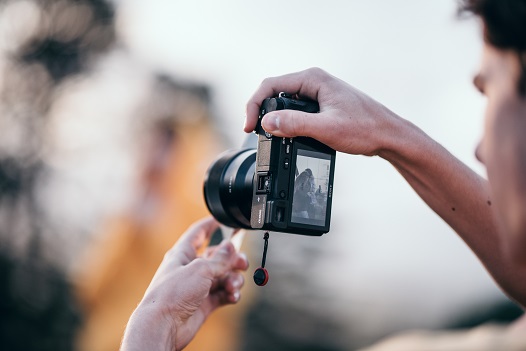 Image Source: Unsplash
When it comes to media content, there are mainly two types of people - those that create and those that consume. YouTube Content creators, film makers, vloggers, influencers, photographers and hobbyists alike invest in high-quality camera gear to produce above average to top-tier photographs, videos and films. The general public, on the other hand, like to consume media by watching videos, shows and movies on streaming sites like Netflix, Amazon Prime on their newly purchased smart TVs, in which they buy related accessories for such as TV stands or TV wall mounts. Supply both these markets with quality tech they need for by sourcing from verified suppliers at Global Sources.
Although today's smartphones can produce amazing photos and videos, they're mostly best in capturing static objects with good lighting. In terms of moving subjects and low-light scenarios, digital cameras are still unbeatable since these capture more light, have a more powerful flash and their lenses can zoom up to ten times, a capability that most smartphones don't have. The high-quality photos taken from DSLRs and digital cameras are much better for printing thanks to their higher megapixel count and resolution.
Professional photographers get more control with exposure, ISO, white balance, shutter speed and aperture adjustments using a dedicated digital camera. Digital cameras allow users to switch camera lenses, which allow them the flexibility when taking photos and shooting videos. Five popular camera lenses include a wide-angle prime lens for landscape, street and group photos, a 50mm prime lens for portraits and bokeh shots, a telephoto prime lens for outdoor portraits, a telephoto zoom lens for events, sports and performances, and finally, a wide angle zoom lens for videography and wide-angle shots.
 Image Source: Unsplash
The market is poised to grow at an annual rate of 5.6 percent from 2021 to 2028, with its value estimated to reach US$12.11 billion by 2028. Globe News Wire credits the increasing demand of mirrorless cameras, lightweight and high-quality digital cameras and innovations in this market as driving factors.
Action cameras are also highly popular nowadays. With their smaller size, which can fit in a palm of a hand, they can be mounted almost anywhere and are ideal in taking high-quality sports, action and underwater photos. YouTube vloggers and Instagram influencers who upload travel content use Wi-Fi-enabled action cameras with wide-angle lenses that can shoot 4K videos. Action cameras offer better convenience and affordability compared to a large-camera setup in digital content creation. According to Verified Market Research, the market was valued at US$3.13 Billion in 2020 and is projected to reach US$10.3 Billion by 2028, growing at a CAGR of 16.03 percent from 2021 to 2028.
Drone cameras are unmanned aerial vehicles (UAVs) that can be controlled remotely. What used to be just commonly used in military and surveillance has made its way into mainstream tech, especially in filmmaking. Drone cameras are now used in movies, shows and vlogs to help capture aerial or bird's eye view shots. These cameras are used in shooting establishing shots and have replaced the crane and are generally more efficient to operate. Emergen Research expects the drone camera to reach US$32 billion by 2028, with a CAGR of 28.4 percent.
With digital cameras come the need for tripods for better stability in shooting videos and taking photos. With tripods, photographers can produce quality low-light, long-exposure and HDR photography. Camera tripods help filmmakers with framing, prevent camera shakes from the operator and help ease the load of physical labor. This accessory is high in demand both for professionals and hobbyists.
Smart TVs are on the rise and are now found in seven out of ten homes in the United States. Homes with children under 18 and adults up to 35 years old are most likely to have a smart TV. Its market demand in 2021 is 313.1 million units, and is expected by Grand View Research to reach 1.18 billion units by 2028, with a CAGR of 20.7 percent. Users need related accessories to place their smart TVs on. As such, TV stands and TV wall mounts are being purchased by consumers left and right, along with remote controls, which allow them easy control access anywhere at home.
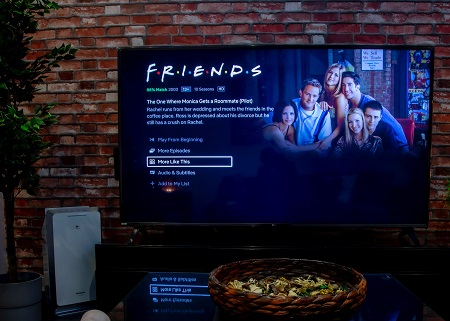
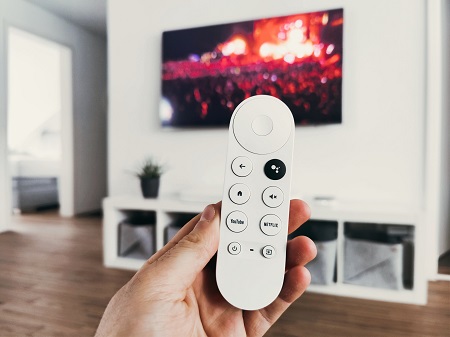 Image Source: Unsplash
Other source-worthy TV accessories include HDMI cables and sound bars. When users want to connect their laptop, sound bar, decoder or streaming box to their TV, an HDMI cable is a must-have to transmit video and audio data. Sound bars, on the other hand, are used to improve audio and virtual sound from a TV. These convenient wireless devices are compact, easy to set up, and have a much better sound quality than the built-in speakers of TVs. They allow users to have a full cinematic experience. Movie buffs with home cinemas generally invest in sound bars.
Digital entertainment is everywhere, with various types of cameras and TV accessories being some of the hottest electronics today. Now would be a good time to tap into these lucrative markets.
More Sourcing News
Read Also

关注 “环球资源外贸” 官方微信,获取实时外贸资讯
iOS & Android
iOS & Android(Mainland China)
Copyright © 2026 Publishers Representatives Limited. All rights reserved.




