Download App
Better Online and Trade Show Sourcing Experiences.Scan the QR code to download.
Learn More
Hot Topics
Companies are using separate boxes such as sound bars to contain the "brains" of TVs so the display can hang flush against the wall.
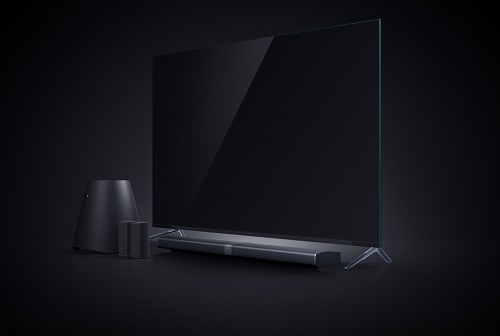
Xiaomi came out with its own flat-TV concept to compete with the likes of LG, although it greatly undercuts the competition on price (Source: Xiaomi)
This is the year TVs finally get thinner than smartphones. The idea behind super-thin TV displays relies on people wanting a sound bar that contains the "brains" of the device. Since TV bars have increased in popularity recently, there is no time like the present to try out the new TV concept, which LG and Xiaomi both showed off at the Consumer Electronics Show in Las Vegas.
That fact that the Korea electronics behemoth LG and China's smartphone startup darling Xiaomi are both launching TVs based on the same concept makes for an interesting juxtaposition. These companies are targeting two different demographics with their TVs. LG, true to form, is eyeing the high end of the market with its Signature W7, which uses a 65in, OLED display with a 4K UHD resolution of 3840x2160p. Like other high-end TVs these days, it supports Active HDR with Dolby Vision and the base has several ports, including four HDMI and three USB ports, and an Ethernet jack.
The sound bar base of the TV uses a 4.2-channel audio system. This works by projecting sound up towards the ceiling, where it bounces down and gives the impression of sound coming from above, therefore imitating surround sound. Other sound bars on the market are using this idea as well. It is the latest-and-greatest in sound bar technology, so it makes sense that LG would implement the technology in their latest high-end TV.
The technology does not have to come at such a high cost, though. Xiaomi is using the same effect in its own sound bar in the base of the Mi TV 4. Xiaomi's TV will be available with 49, 55 and 65in displays. Specific pricing has not been announced, but the company said the 65in model will sell for "well under" $2,000. This model also comes with two rear speakers and a subwoofer for Dolby Atmos sound.
The thinnest point of the Mi TV 4 measures just 4.9mm, which doesnot match LG's 2.57mm, but Xiaomi's offering is much cheaper. It is, however, still a 4K screen. That, combined with the sound system, might be enough for many to forgive the company for not using an OLED display.
LG and Samsung are not the onlycompanies to use the sound bar method of keeping TVs thin. Samsung had its own new TVs at CES that also utilized a separate base so the TV could be flush against the wall. Samsung, however, did not emphasize the thinness of its TVs. It instead focused on its Quantum Dot or QLED displays, which enhances color and allows for better viewing angles.
TV screens these days tend to look good across the board. While companies are still pushing to make displays more beautiful with technologies like OLED and QLED, the focus is clearly not on aesthetics. Major TV companies now want TVs that sit flush against the wall, putting the brains of the smart TV in a separate box, making the device easily upgradeable in the future. That allows manufacturers to keep selling TV upgrades without having to convince consumers that they need a new screen, which is increasingly difficult to sell.
More Sourcing News
Read Also

关注 “环球资源外贸” 官方微信,获取实时外贸资讯
iOS & Android
iOS & Android(Mainland China)
Copyright © 2026 Publishers Representatives Limited. All rights reserved.




