




AR and VR technologies, as well as MR and XR, now encompass many aspects of everyday life, having transitioned from niche to mainstream. They come in the form of devices used for entertainment, education and training, healthcare, retail and e-commerce, manufacturing and logistics, design and architecture.
Indeed, the AR and VR sector has a large market and is projected to expand further in the years ahead. It will reach $40.4 billion in 2024 and $62 billion by 2029, or at a CAGR of 8.97 percent, according to Statista. Based on estimates, there will be 3.728 billion users by the end of the forecast period.
Looking to benefit from this growth trend is the manufacturing sector for various electronic components. And at the core of AR and VR devices are PCBs, including rigid-flex, flexible and rigid types. Of these three, rigid-flex boards offer the best of both worlds, which include the mechanical stability and durability of rigid boards and the foldability and bendability of FPCs. In addition, these PCBs provide built-in interconnections, allowing streamlined designs with reduced EMI and failure issues.
Rising demand for rigid-flex PCBs
In China, makers of rigid-flex PCBs are already anticipating high demand from this application, citing the recent release of Apple Vision Pro as a market pitch. The device uses an RFPCB in its Micro OLED display as seen in the teardown done by iFixit and featured in an article on The Verge.
In addition, China is one of the two leaders in the AR and VR sphere in terms of innovation and adoption, according to Statista. This means a virtual captive market for suppliers in the domestic upstream segment.
Many rigid-flex PCB manufacturers, in fact, have been increasing their output and will keep doing so. Honflex, one of the top 10 flexible PCB manufacturers in China as ranked by the China Printed Circuit Association, has allocated $30.55 million for the purchase of new production equipment between 2023 and 2025. In 2019, the company spent $138 million in a rigid-flex PCB project. The first phase, covering a total area of 40,000sqm, was completed in late 2020.
Other suppliers with production facilities in the country have done the same. Compeq, a key global PCB supplier, increased its Huizhou subsidiary’s production of flexible and rigid-flex PCBs by 10 to 15 percent in the past two years. This is to meet the uptick in demand in the AR, VR and wearables markets.
China’s RFPCB market
The AR and VR sector in China witnessed a 35 percent increase in scale between 2022 and 2023, according to Chinese market research company Shangpu Consulting. This high growth is expected to be maintained in the next two years.
The majority of rigid-flex PCB manufacturers are counting on a two-digit rate of increase in total shipments for this application during the period.
Many suppliers are found in Shenzhen, Dongguan, Zhongshan, Suzhou, Kunshan and Nanjing, while there are also those operating in Shandong, Hebei and Sichuan.
Suining, a prefecture-level city in Sichuan, aims to become a major PCB production base in Western China and realize a production value of $540 million by the end of 2024 or a CAGR of 8 percent from 2019.
Leader Tech built a factory in the city in 2019, investing $160 million. The facility began mass production of high-precision flexible and rigid-flex PCBs in early 2022.
Zhen Ding, headquartered in Taoyuan, has four of its seven PCB production facilities in Shenzhen, Huai’an, Qinghuangdao and Yingkou.
Most domestic and foreign companies in China offer rigid and flexible PCBs and PCB assemblies.
RFPCBs for AR, VR
China-made rigid-flex PCBs for AR and VR applications are available in two- to 12-layer variants. These have typical specifications of 3mil minimum line width and spacing, 0.5 to 10oz copper, immersion gold, OSP and other surface finishes and 1 to 3mm board thickness.
Companies can also customize RFPCBs according to buyers’ unique requirements, with such orders accounting for more than 80 percent of their total shipments.
They usually use FR-4, polyimide, adhesive and other materials from domestic providers, including top suppliers Shengyi, Zhongying and Hangzhou First Applied Material.
Material costs and product prices are generally stable.
Here is a selection of RFPCBs from verified suppliers on GlobalSources.com.
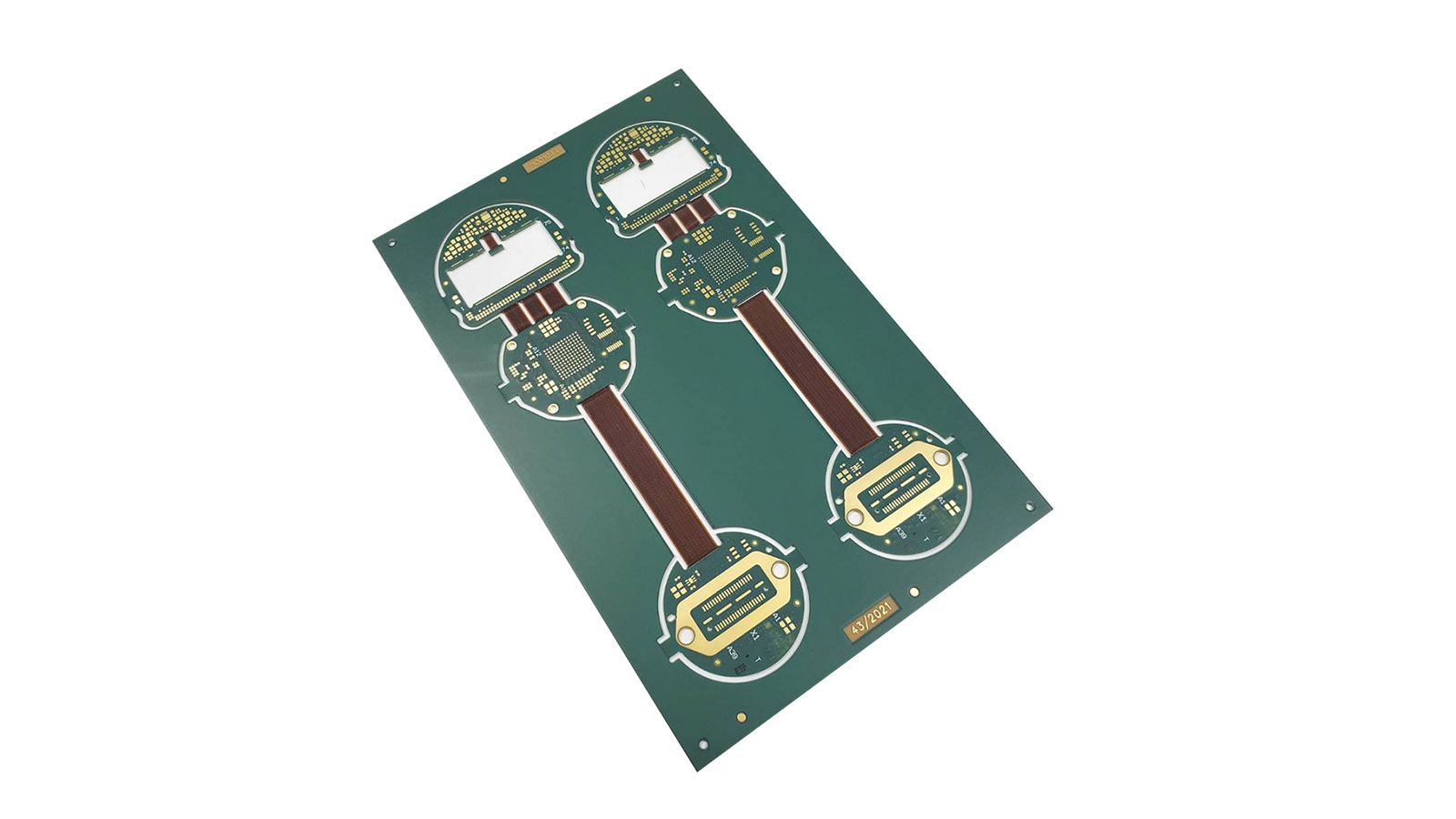
Seven-layer rigid-flex PCB
Company: Full Years Technology Co. Ltd
Full Years’ RoHS-compliant rigid-flex PCB, the RFPCB-F005, uses an FR-4 or TU-862 Tg170 base with an adhesiveless laminate. This unit, with impedance control, has seven layers, 0.5 copper on the inner and 1oz on the outer layers, immersion gold surface finish, matte green solder mask on the rigid part and a coverlay on the flexible portion. The finished board thickness is 1.1mm.
MOQ: 200 units
Lead time: 15 days
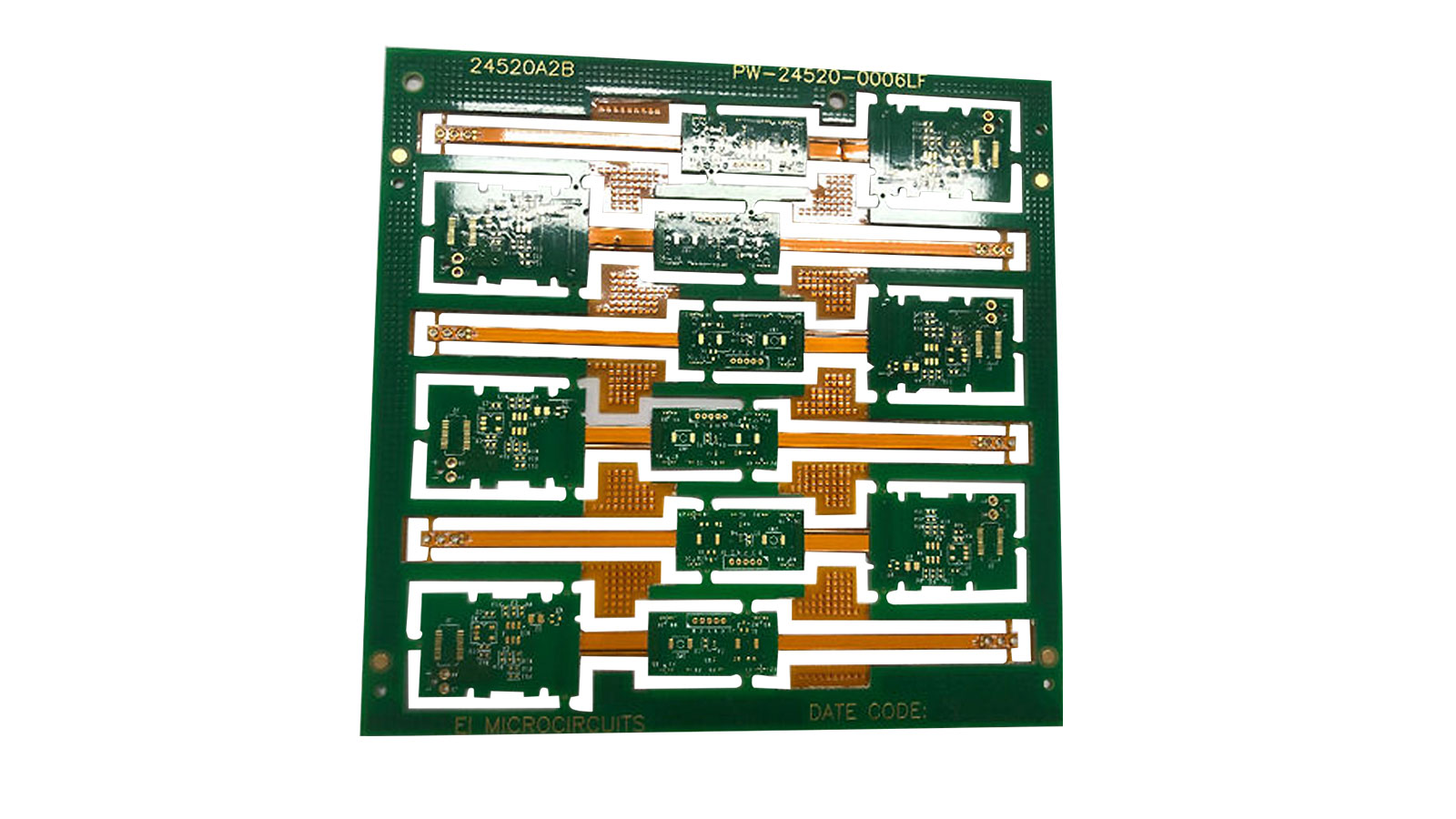
Four-layer rigid-flex PCB
Company: Guangzhou Anhua Electronic Co. Ltd
The 1-7 model from Guangzhou Anhua is a four-layer rigid-flex PCB with a polyimide and FR-4 base, immersion gold surface finish, 3.94mil minimum line width and spacing, and 1.6mm board thickness.
MOQ: 1 unit
Lead time: 7 days
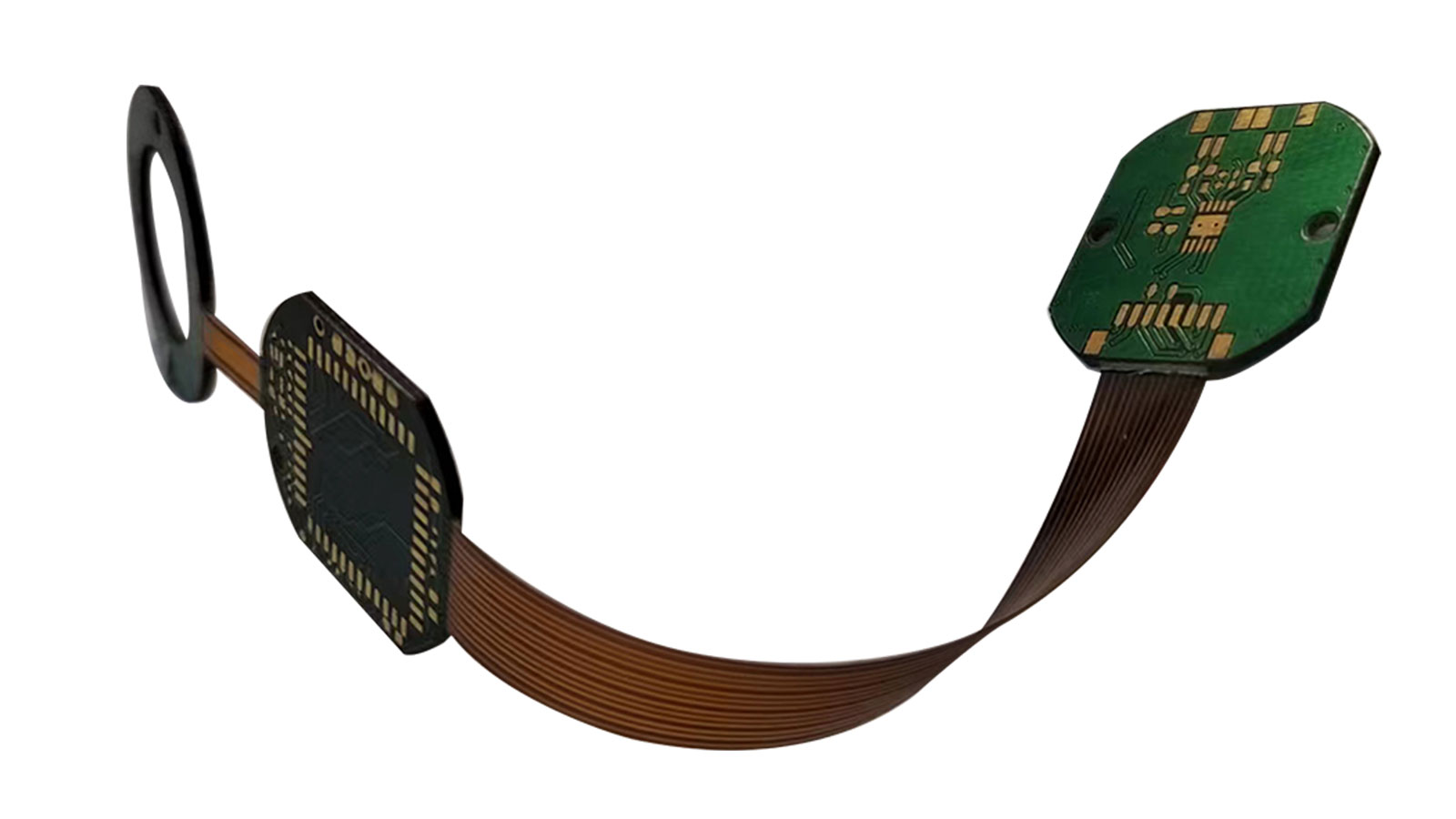
Three-layer rigid-flex PCB
Company: Huizhou Xindayuan Techology Co. Ltd
This three-layer rigid-flex PCB from Huizhou Xindayuan, the XDYRF0007C, uses FR-4 and copper materials, FR-4 stiffener, immersion gold surface finish and green solder mask. It has 3±0.03mm board thickness.
MOQ: Negotiable
Lead time: 7 days
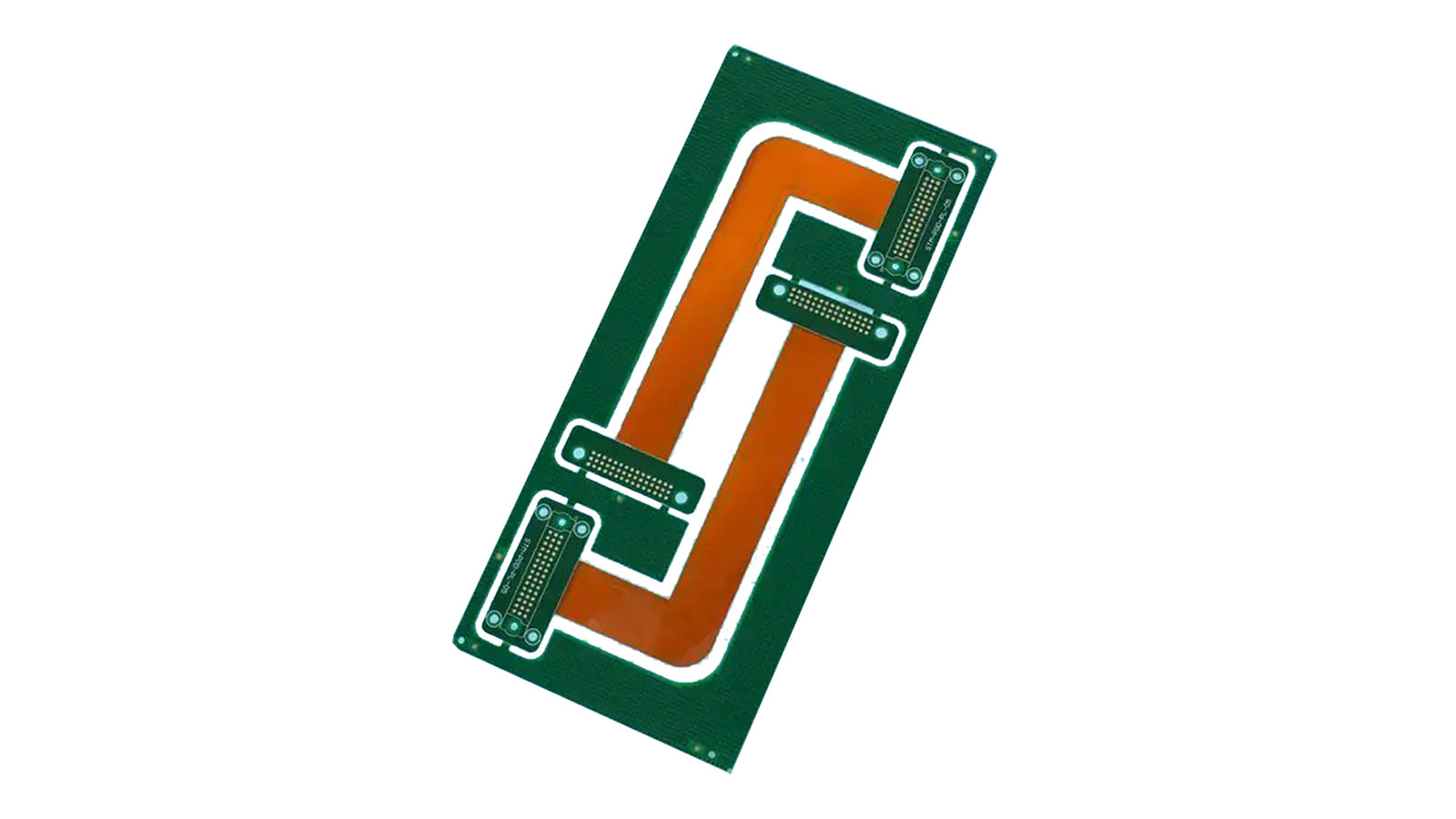
Rigid-flex PCB, 3mil minimum line width, spacing
Company: MKT Electronic Co. Ltd
The MKT-A572 model from MKT is a rigid-flex PCB with FR-4 and polyimide base, and HAL, lead-free or immersion gold, tin or silver surface finish. It has 3mil minimum line width and spacing, 0.5 to 6oz copper thickness and 0.2 to 6mm board thickness.
MOQ: 2 units
Lead time: 5 days

