




Image from iStock
Home security has transformed dramatically over the past decade. What once required professional installation and monthly monitoring fees evolved into a sophisticated ecosystem of connected devices that homeowners can install, configure and monitor themselves. Smart security systems – encompassing connected doorbells, cameras, sensors and intelligent detection technologies – now offer capabilities that were previously available only to commercial enterprises or the exceptionally wealthy.
Connected doorbells
The video doorbell has become the gateway device for many households entering the smart security market. Pioneered by Ring, which Amazon acquired in 2018 reportedly for more than $1 billion, the category has exploded to include offerings from Google Nest, Arlo, Eufy and other manufacturers.
These devices combine a doorbell button, camera, microphone, speaker and motion sensor into a single unit that mounts at the front door. When someone approaches or presses the button, the homeowner receives a notification on their smartphone and can see, hear and speak with the visitor regardless of their physical location. This capability has proven particularly valuable for managing package deliveries, a growing concern as e-commerce continues to expand.
According to research from Parks Associates, video doorbells represented one of the fastest-growing segments of the smart home market between 2020 and 2024, with household adoption in the US exceeding 20 percent by early 2025. The appeal is straightforward: the front door represents the most common point of entry for both legitimate visitors and potential intruders, making it a logical place to focus security efforts.
Modern video doorbells typically offer a resolution ranging from 1080p to 2K, with some premium models providing 4K video. Field of view varies considerably, from approximately 140 to 180 degrees, affecting how much of the porch and surrounding area the device can capture. Battery-powered models offer installation flexibility but require periodic recharging, while hardwired models connected to existing doorbell wiring provide continuous power at the cost of placement constraints.
Security cameras
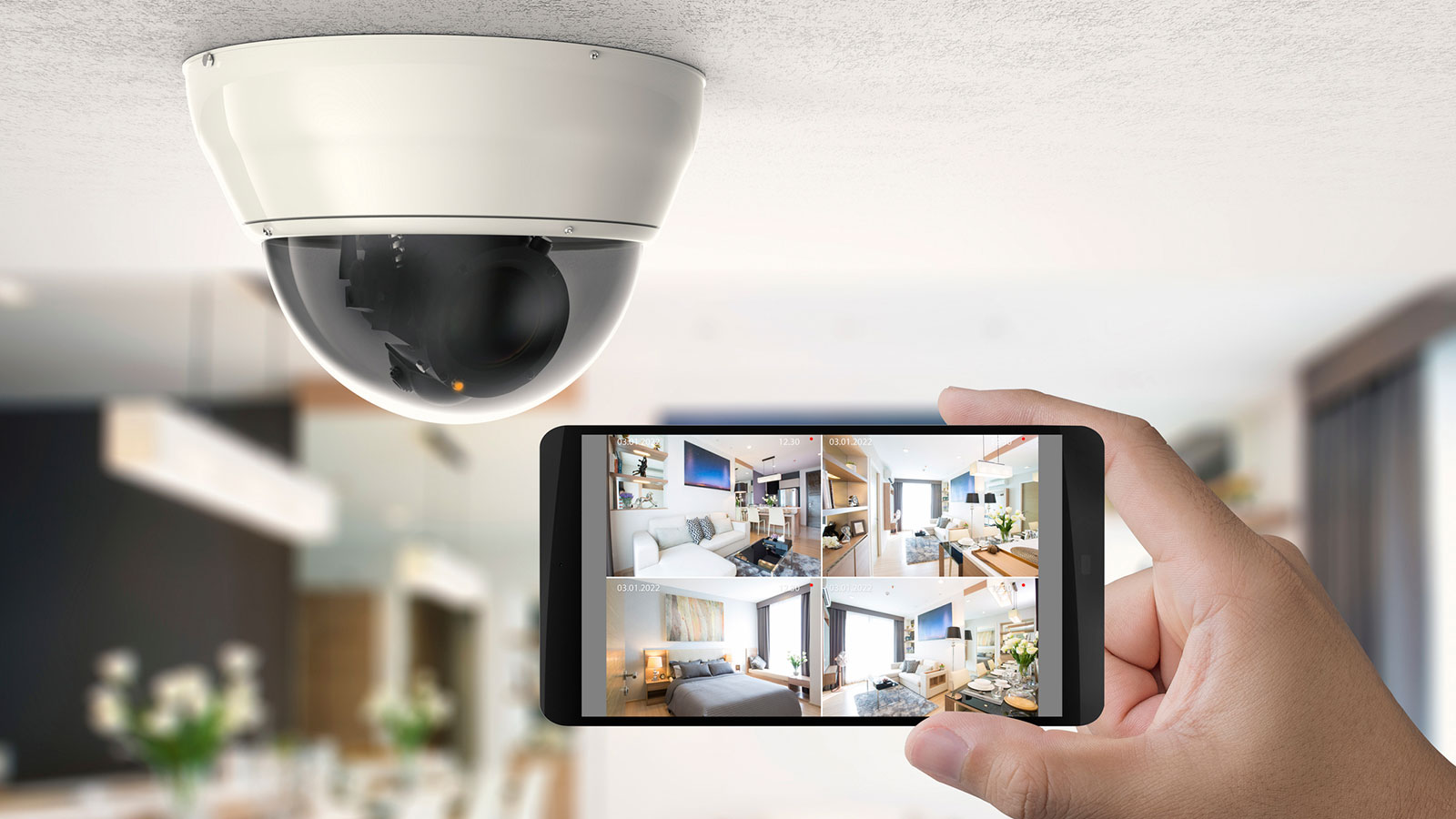
Beyond the front door, comprehensive security coverage requires additional cameras positioned throughout and around the property. The market distinguishes broadly between indoor and outdoor cameras, with the latter requiring weather resistance. An IP65 or IP66 rating indicates sufficient protection against rain and dust for most outdoor applications.
Indoor cameras serve dual purposes in many households, functioning as both security devices and tools for monitoring children, elderly family members or pets. Privacy concerns become more acute with indoor cameras, leading manufacturers to incorporate physical privacy shutters and scheduling features that automatically disable recording during certain hours.
Outdoor cameras face different challenges, including exposure to temperature extremes, precipitation and the need to capture useful footage across varying lighting conditions. Night vision capability, achieved through infrared LEDs or color night vision using ambient light amplification, has become standard across most outdoor security cameras.
The integration of floodlights with security cameras represents a notable trend in outdoor security. There are products that combine illumination with video capture, both deterring potential intruders and improving footage quality after dark. Research published by urban policy organizations has suggested that improved lighting correlates with reduced property crime rates, though isolating the specific contribution of camera-integrated lighting remains methodologically challenging.
Sensors
While cameras capture visual evidence, sensors provide the distributed detection capability that makes a security system truly comprehensive. Modern smart security systems incorporate several sensor types, each designed to detect specific events or conditions.
Door and window sensors, typically using magnetic reed switches, detect when an entry point opens. They form the backbone of traditional alarm systems and remain essential in smart security configurations. When a protected door or window opens unexpectedly, the system can trigger alerts, activate cameras or sound alarms depending on the homeowner’s configured preferences.
Motion sensors using passive infrared (PIR) technology detect heat signatures moving through their field of view. They complement camera-based motion detection by covering areas where camera installation proves impractical and by providing detection capability without continuous video recording.
Glass break sensors use acoustic analysis to identify the distinctive sound frequency pattern produced when glass shatters. These devices provide an additional layer of protection for homes with large windows or glass doors that might otherwise present vulnerable entry points.
Environmental sensors extend the smart security concept beyond intrusion detection. Water leak sensors positioned near water heaters, washing machines and under sinks can alert homeowners to potential flooding before significant damage occurs. Smoke and carbon monoxide detectors with smart connectivity, meanwhile, integrate with the broader security system and can trigger automated responses like unlocking doors to facilitate evacuation.
Facial recognition vs motion detection
The question of how security cameras should identify and categorize detected movement represents one of the more significant technological and ethical considerations in modern home security. Two primary approaches dominate the market: motion detection and facial recognition.
Motion detection in its simplest form compares consecutive video frames to identify pixel changes exceeding a defined threshold. This approach reliably detects movement but generates frequent false alerts from passing vehicles, animals, swaying trees and changing shadows. More sophisticated implementations use PIR sensors in combination with video analysis to reduce false positives by requiring both heat signatures and visual motion.
Person detection represents an intermediate step, using machine learning algorithms to distinguish human shapes from other moving objects. Most major security camera manufacturers now offer person detection, significantly reducing nuisance alerts from nonhuman motion. Some systems extend this capability to identify vehicles, packages and specific animal types.
Facial recognition takes identification further by attempting to match detected faces against a stored database of known individuals. There are systems that allow homeowners to train the recognition system by labeling faces in captured footage, after which the system can identify familiar faces and optionally suppress alerts for known individuals while highlighting unfamiliar visitors.
The accuracy of facial recognition varies considerably depending on lighting conditions, camera angle, image resolution and the sophistication of the underlying algorithms. Research from the National Institute of Standards and Technology (NIST) has documented significant variation in facial recognition accuracy across different demographic groups, with some algorithms showing higher error rates for women and individuals with darker skin tones. These findings raise important questions about the reliability of consumer-grade facial recognition for security applications.
Privacy advocates have expressed concerns about the proliferation of facial recognition technology, particularly when deployed in residential settings where visitors and passersby may be photographed and identified without their knowledge or consent. Several jurisdictions have enacted or considered legislation restricting facial recognition use, though these regulations typically focus on government and commercial applications rather than residential security systems.
The practical tradeoff between motion detection and facial recognition comes down to the homeowner’s tolerance for notifications and their specific security concerns. Motion detection casts a wider net, alerting to all detected movement, while facial recognition attempts to surface only the most relevant events. Neither approach eliminates the need for human judgment in interpreting alerts and footage.
Cloud vs local storage
Where surveillance footage resides represents another crucial decision for smart security system users, with significant implications for privacy, reliability, cost and legal considerations.
Cloud storage, offered as a subscription service by most major security camera manufacturers, uploads footage to remote servers maintained by the device manufacturer or a third-party provider. This approach offers several advantages: footage remains accessible even if the physical camera is stolen or destroyed, recordings can be accessed from anywhere with internet connectivity and the storage capacity scales without requiring hardware upgrades. However, the subscription model creates ongoing costs that can become substantial over time, particularly for systems with multiple cameras.
Cloud storage also raises privacy and security concerns. Footage stored on manufacturer servers is potentially accessible to the company, to law enforcement through legal process and to malicious actors who might compromise either the user’s account credentials or the cloud infrastructure itself.
Local storage keeps footage on hardware physically controlled by the homeowner, typically on microSD cards inserted into cameras, network-attached storage (NAS) devices or dedicated security recording appliances. This approach eliminates subscription fees after the initial hardware investment and gives the homeowner more direct control over who can access recorded footage.
Local storage carries its own risks. If the storage device is stolen along with the camera, the footage is lost. Hardware failures can destroy recordings. Remote access to locally stored footage typically requires more complex network configuration and may not work reliably from all locations.
Hybrid approaches attempt to capture advantages of both models. Some systems store footage locally while uploading only motion-triggered clips or thumbnail images to the cloud, reducing storage costs while maintaining some remote access capability.
Integration and ecosystem considerations
The value of smart security systems increases substantially when individual devices work together as a coordinated system. This integration typically occurs within manufacturer ecosystems, through smart home platforms or via third-party services.
Manufacturer ecosystems offer the most seamless integration but create vendor lock-in. But some smart home platforms provide a layer of integration above individual manufacturers. A camera from one manufacturer might trigger a light from another manufacturer when motion is detected, with the smart home platform mediating the interaction. The Matter standard, developed by the Connectivity Standards Alliance and supported by Amazon, Apple, Google and Samsung among others, aims to improve interoperability among smart home devices, though security cameras have been slower to adopt Matter than some other device categories.
Professional monitoring services represent another integration consideration. Many smart security systems offer optional professional monitoring, where a central monitoring station receives alerts from the system and can dispatch emergency services.
Practical recommendations
Selecting and configuring a smart security system requires balancing multiple factors including budget, technical comfort level, privacy preferences and specific security concerns. Several principles can guide decision-making.
Coverage planning should begin with identifying vulnerable entry points and high-value areas. The front door merits priority attention for most homes, making a video doorbell a logical starting point. Back doors, first-floor windows and garage entries represent common secondary coverage priorities.
Bandwidth and network infrastructure deserve consideration before deploying multiple cameras. HD video streams consume substantial bandwidth, and multiple cameras recording simultaneously can overwhelm typical residential internet connections, particularly those with limited upload speeds. Wi-Fi coverage may need extension to reach outdoor camera locations.
Storage decisions should reflect both budget constraints and privacy preferences. Homeowners comfortable with cloud storage and ongoing subscription costs gain convenience and reliability. Those prioritizing privacy and cost control may prefer local storage solutions despite their additional complexity.
Notification management requires ongoing attention. Systems that generate excessive false alerts train users to ignore notifications, undermining the system’s security value. Investing time in tuning motion detection zones, sensitivity levels and notification schedules improves the signal-to-noise ratio of security alerts.
Conclusion
Smart security systems have democratized capabilities previously available only through expensive professional installations. Connected doorbells, cameras and sensors now provide homeowners with real-time visibility into activities around their properties, sophisticated detection and identification features, and flexible options for storing and accessing surveillance footage.
The technology continues advancing rapidly. Improvements in artificial intelligence promise more accurate detection with fewer false alerts. Edge processing capabilities are moving more computation onto the devices themselves, reducing reliance on cloud services. New wireless standards offer improved range and battery efficiency for distributed sensors.
Yet the fundamental questions facing homeowners remain consistent: what level of coverage adequately addresses their security concerns, how much are they willing to pay in both initial investment and ongoing subscriptions, and how do they balance security benefits against privacy implications for themselves and others who may be captured in surveillance footage. Thoughtful engagement with these questions, informed by understanding of available technologies and their tradeoffs, leads to security configurations that genuinely improve safety without creating unintended consequences.

