Download App
Better Online and Trade Show Sourcing Experiences.Scan the QR code to download.
Learn More
Hot Topics
Exporters anticipate higher sales because of foreign trade agreements.
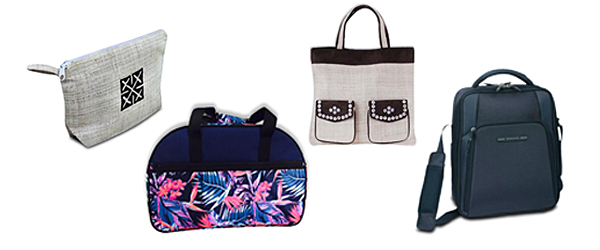
Models are mostly handmade and based on customers' designs.
Vietnam bags sector considers the country's abundant natural resource as the biggest industry advantage. Plant-based materials for traditional handbags, including hemp, silk, brocade, water hyacinth, seagrass and seashell, as well as ostrich, cow and crocodile leather for high-end fashion bags are readily available for manufacturers.
Likewise, there are also numerous suppliers of cotton, nylon and polyester fabrics, zippers, plastic parts and mesh scattered across the country.
The ready availability of raw materials, along with other factors such as strong workforce and robust export capability among suppliers, has resulted in an upward trend of Vietnam bags industry.
Because of these advantages, bag makers are able to offer competitive prices especially for bags, which are comparable to those offered by mainland China, Bangladesh, India and Pakistan counterparts. Companies that have their own fabric-making facilities can even slash production costs and prices further.
The General Statistics Office of Vietnam, which officially categorizes handbags with wallets, suitcases and umbrellas, has recorded double-digit increase between 2012 and 2015, averaging 25 percent YoY. In 2015, overseas sales reached $2.9 billion, up 16 percent from the previous year. It is estimated that bags and wallets comprise about 60 percent of these figures.
The US, Japan, the Netherlands, Germany and mainland China are the largest export markets for Vietnam bags and wallets, with cumulative overseas sales topping $2 billion.
Higher exports
The industry anticipates higher overseas sales in 2016 and in the years to come. According to a report by Vietnam's National Institute for Finance, leather handbag shipments are predicted to rise 40 percent in 2016 as more orders shift from mainland China to Vietnam.
Manufacturers anticipate strong positive impact of the Trans-Pacific Partnership, which promises preferential tariff incentive, but whether or not it pushes through, Vietnam's export sector is foreseen to grow because of its ratified foreign trade agreements and investments. In fact, many international brands have started to move their factories or place orders to Vietnam.
Having low labor costs is another plus for the Vietnam bag export industry.
Challenges
Many suppliers consider the underdevelopment of auxiliary industries as a major challenge. Until now, manufacturers need to import bag-making machines mainly from Japan, South Korea, mainland China and Taiwan due to the lack of technology within the country.
Some materials such as paper are also sourced overseas as they are not available domestically.
Another impediment for growth is the dependency on buyers' designs especially for fashion, travel and special-purpose bags. In-house designers lack the exposure to international high-fashion trends and the sufficient training to create such designs. At the moment, as much as 80 to 90 percent of Vietnam bags in this segment are OEM orders. For traditional bags, however, ODM exports comprise the bigger chunk.
This article and its contents are provided by the Hinrich Foundation, a partner of Global Sources in promoting trade across Asia. The products and the suppliers featured in this article are export assistance program beneficiaries of the Hinrich Foundation.
More Sourcing News
Read Also

关注 “环球资源外贸” 官方微信,获取实时外贸资讯
iOS & Android
iOS & Android(Mainland China)
Copyright © 2026 Publishers Representatives Limited. All rights reserved.




