Download App
Better Online and Trade Show Sourcing Experiences.Scan the QR code to download.
Learn More
Hot Topics
HTC might distinguish itself in the VR market by making the Vive upgradable.
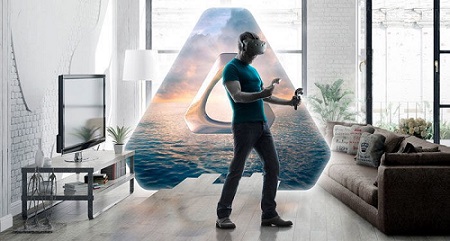
The HTC Vive ships with controllers, but the Vive Tracker unveiled at CES 2017 lets users turn anything into a Vive controller
Of the major players in virtual reality right now, Sony has a healthy lead with its PlayStation VR headset. This is largely due to the plug-and-play nature of the device, allowing anyone with a PlayStation 4 to not worry about issues with compatibility or performance.
HTC is taking a different route. The company appears to be pursuing a strategy of building a modular VR headset, according to Wearable.com. The Vive Tracker that HTC unveiled at CES 2017 is seen as the first steps in a modular VR experience, according to a writer for the website. The Vive Tracker has the ability to turn any object into a controller. By giving users this flexibility, HTC is letting users know they will have the opportunity to change aspects of their VR experience. This could possibly mean other customization choices and venues for upgrading in the future without replacing the entire Vive system.
Given that Vive is one of the more expensive headsets on the market today, this seems like a natural move for HTC. Purchasing a more expensive headset makes sense for users who think they might upgrade it in the future. The ability to upgrade a system is an important part of gaming computers, so there is definitely a market segment that is interested in this.
To back up this conclusion about HTC, Wearable reached out to Anshel Sag, an analyst at Moore Insights & Strategy. "I think they're trying to create this really modular platform where the headset is compatible with newer Lighthouse trackers and newer controllers," he told Wearable. "I think they'll launch them individually."
Sag also said the Oculus Rift was not designed to be modular because everything about it is more tightly integrated. The Rift can be run on different computers, though. People just need a system that meets the minimum requirements. Oculus, however, does sell a system with the Rift for people who do not meet those requirements.
There is also no telling out the Rift will be upgraded in the future. If Oculus expects people to buy a new headset every few years, consumers might switch. Right now, high-end VR headsets cost more than $500. For comparison, a new XBox One or PlayStation 4 can be had for $250 to $300. The newly launched Nintendo Switch costs$300. Consumers have a lot of entertainment options right now, so accessories that can be upgraded instead of replaced would be welcomed by many.
At least in one market, HTC's current strategy and marketing appears to be working. HTC is leading in China's VR headset market with 18 percent, followed by DeePoon with 17 percent, according to Canalys numbers on 2016 VR headset shipments.
More Sourcing News
Read Also

关注 “环球资源外贸” 官方微信,获取实时外贸资讯
iOS & Android
iOS & Android(Mainland China)
Copyright © 2026 Publishers Representatives Limited. All rights reserved.




