Download App
Better Online and Trade Show Sourcing Experiences.Scan the QR code to download.
Learn More
Hot Topics
Learn about this year's hottest mobile phone trends and know which smartphones to source.
Source: PocketNow
Given that it is already the second half of 2019, the first six months of this year have shaped up to be quite eventful in the smartphone market. Several interesting trends have emerged, which mainly focus on manufacturers creating bezel-less phones and producing more powerful cameras. Find out the current craze in the mobile tech world:
1. HOLE-PUNCH DISPLAYS
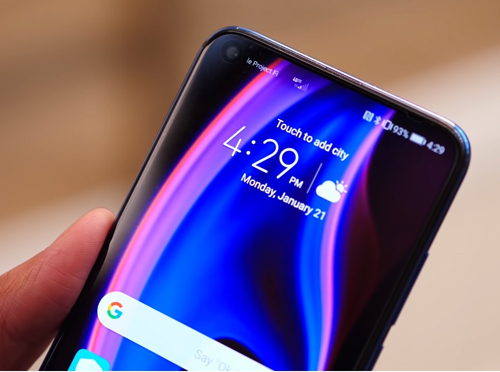
2018 was the year of the notch in different shapes and forms. But 2019 is all about the hole-punch display. Coined in reference to the hole punch used to create holes in sheets of paper, the hole-punch design looks as such. A small hole or "cut-out" is placed to house the phone's front facing camera. Compared to a having notch, this style is less obstructive as users have more screen real estate especially when watching videos full screen. This trend is popularly seen in the Samsung Galaxy S10 series and is also found in midrange phones like the Galaxy A8S, Galaxy M40, Huawei Nova 4 and the Honor 20 series. Expect more Android phones this 2019 and early 2020 to sport these in-display camera cut-outs.

Users can take selfie portrait shots with the Galaxy S10 Plus. Its front cut-out camera
includes a depth sensor that can help produce blurred background effects on photos.
Image source: MKBHD
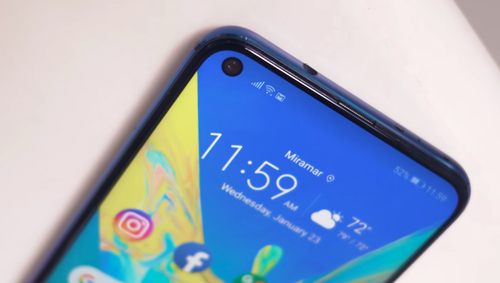
The Honor View 20 has a single camera cut-out on the upper left corner of the display.
Image source: GSMArena
2. MOTORIZED, MECHANICAL CAMERAS
Although hole-punch displays diminish a phone's screen obstruction, companies like Oppo and Vivo have explored another alternative to achieve a fully bezel-less design – by incorporating pop-up and slide-out cameras. In this design, the front camera is hidden within the phone, and it only pops up or slides out when in use.
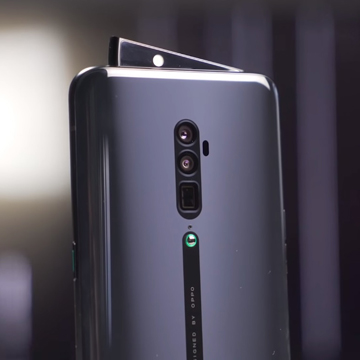
TheOppo Reno and Reno 10x Zoom both have unique
"shark fin" shaped selfie cameras that pop up at 11 degrees.
Image source: YugaTech
Consumers get to experience a complete full-screen design, with no notch and zero obstruction. Thus, watching videos on Netflix and Youtube will indeed be a better experience.
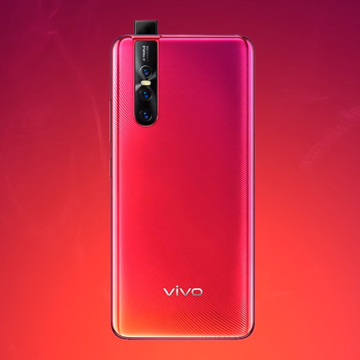
The Vivo V15 Pro has a more standard look with its
rectangular pop-up camera situated at the side of the phone.
Image source: Vivo
Having pop-up cameras can protect users against possible security threats from hackers who spy on them via the front facing camera. According to moneyinc, "hackers are capable of turning on cameras in a remote manner without turning on the light, thus enabling them to spy without alerting the user to what is happening to them." With the selfie camera being hidden away when idle, users of these phones are less vulnerable to illegal surveillance attacks.
But with the pros also come the cons. Firstly, having moving parts can make the phone susceptible to damage overtime due to wear and tear. But since this is a new trend, smartphones that sport this design still have to be observed as to how they will fair in the future. Dust and water-resistance also aren't possible given the moving mechanical parts of the phone. But with in-display selfie cameras still being in the works, having a motorized selfie camera is the "complete bezel-less phone" answer for now.
3. IN-DISPLAY FINGERPRINT SCANNERS
Fingerprint scanners have gone a long way ever since the iPhone 5s was released back in 2013. Capacitive fingerprint scanners used to be placed on phones' home buttons. To reduce bezel sizes, Android manufacturers moved these scanners at the back or the sides of phones. But today, in-display fingerprint scanning is the current trend. With this convenience, users won't need to place their fingers at the rear or side of their phones any longer as they can scan their fingerprints on the display itself.
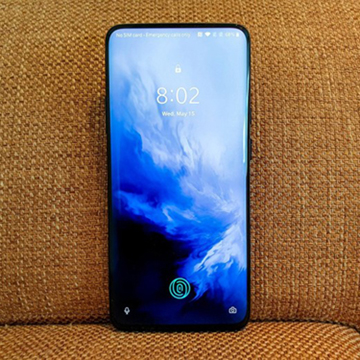
Huawei's latest flagship the P30 uses an optical in-display scanning sensor.
Image source: SmartPrix
Phones like the Huawei P30 Pro, One Plus 7 Pro and several of Samsung's mid-range phones like the Galaxy A50 and A80 incorporate an optical in-display fingerprint scanner, which uses light to capture and recognize a fingerprint.
On the other hand, a more advanced ultrasonic in-display scanning technology is incorporated in Samsung's latest flagships like the S10 family and the upcoming Galaxy Note 10. Its advantage over the former is that its 3D mapping technology allows for better speed, accuracy and security. Users can also unlock their phones despite having wet or greasy fingers.
Either way, in-display fingerprint scanning is slowly becoming the norm in mid-range and flagship phones, and it won’t be going away anytime soon.
4. TRIPLE REAR-CAMERA SYSTEMS
2019 is also the year for triple-rear camera phones, and it looks like it’s becoming a standard for flagship devices. Manufacturers are providing more opportunities for consumers to up their photography game - or Instagram game, rather. The Galaxy S10 family, the Huawei P20 and P30 series, Xiaomi Mi 9 and Sony Xperia One have begun to start this trend.
Accompanying a phone's main camera are the second and third cameras whose functions depend on the phone manufacturer's decision. These secondary lens functions include a wide-angle lens for taking wider shots, a telephoto lens for better quality for zoomed images, a depth sensor for blurring an image background or even a time of flight (ToF) camera which can be mostly used for augmented reality.
With the triple-rear camera trend gaining traction, upper midrange phones have also followed suit. This includes the Samsung Galaxy A80, Vivo V15 Pro, Xiaomi Mi 9 and many more. Rumors as cited by everythingapplepro also point out that the upcoming 2020 iPhones will be sporting three back cameras as well.
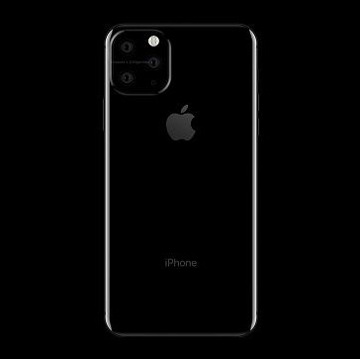
A render of the possible iPhone 11 series that will
be unveiled by Apple this September.
Image source: OnLeaks DigitIndia
5. 5G-ENABLED PHONES
Although 5G connectivity is still in its infancy, some 5G-enabled mobile phones have already rolled out. Among the list are the Samsung Galaxy S10 5G, Xiaomi 5G Mi MIX 3, Oppo Reno 5G, and the LG V50 ThinQ. But what makes 5G so special? Why the hype? Simply put, 5G equates to an increased bandwidth, which pertains to the accommodation capacity for people using data. A much larger bandwidth with bolster faster internet speeds around ten times faster compared to 4G networks since there is less "traffic" in 5G's bigger space. Delays in downloading and loading media won't be a problem anymore for consumers. 5G could really change consumers' cellular data usage experience in the future. Hence, expect more 5G phones to be released soon as the emergence of this technology grows.
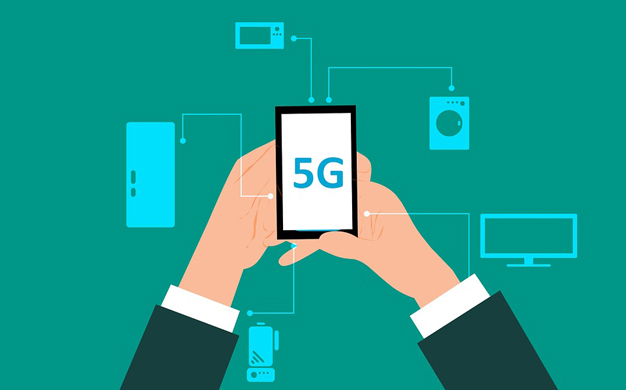
It will take a few years before 5G becomes the norm for cellular connectivity,
but progress is on the go as more cellular networks are adapting to this technology.
With the smartphone market very much alive this year, importers can source a variety of smartphones from Global Sources. Look out for upcoming bezel-less phones available that have similar features following these mobile trends.
More Sourcing News
Read Also

关注 “环球资源外贸” 官方微信,获取实时外贸资讯
iOS & Android
iOS & Android(Mainland China)
Copyright © 2026 Publishers Representatives Limited. All rights reserved.




