Download App
Better Online and Trade Show Sourcing Experiences.Scan the QR code to download.
Learn More
Hot Topics
Companies take advantage of the steady rise in requirement in mobile, automotive and home electronics applications.

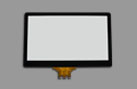
Smartphones and tablet PCs continue to drive the capacitive touch panel line, which benefits from additional spur from the car infotainment and smart TV sectors. China manufacturers of the multitouch display component are therefore increasing production further. The type, which boasts better sensitivity and shock resistance than resistive kinds, now represents more than 80 percent of their shipments.
This upward trend is reflected globally. Deliveries of touchscreens for handsets alone will post CAGR as high as 37 percent from 2015 to 2018, according to DisplaySearch projections. The volume will be greater, factoring in the shipments of tablet computers and Ultrabooks or Intel-powered laptops estimated to rise between 20 and 30 percent in the next several years. There is also the rising demand in car electronics and smart TVs. Based on total sales value, the touch panel industry worldwide will hit $31.9 billion in 2018, with 80 percent coming from the capacitive category.
Notwithstanding the popularity of capacitive units, most China suppliers still offer the resistive variant. They target remaining requirement in the industrial control, medical equipment and military segments as well as in price-sensitive markets. The output share, however, is expected to go down in coming years. At present, the earlier touch technology accounts for half of Shenzhen Tonrei Digital Technology Co. Ltd's output and 40 percent at Shenzhen Victor-Touch Technology Co. Ltd.
The latter maker has aggregate yield of 100,000 units monthly and will bolster this by 10 percent in 2016, anticipating uptick in domestic and overseas demand.
There are about 200 suppliers of capacitive touch panels in China. More than two-thirds are in Guangdong province, mainly in the cities of Shenzhen and Dongguan. The pool includes foreign-owned companies such as Microtouch and Gtouch.
The majority of makers export their output. The ratios vary from 20 to 80 percent of total production, going mainly to the US, Europe, and East and Southeast Asia. Based on the positive outlook for the line, companies are looking to realize 10 to 20 percent higher overseas shipments in 2016.
Display industry consolidating?
Product development and manufacture based on on-cell and in-cell technologies have been ongoing in China in recent years, fueled by adoption in smartphones made by Apple, Nokia, Samsung and LG. But it has yet to snowball, maintaining the status quo in the local display sector with separate segments for touch panels, and TFT LCDs and modules.
Only a few key makers of touchscreens and TFT LCDs have entered the venture due to the disparate and complex manufacturing such integrated displaysentail. Even so, it is evident they are building up own capability for what the other can do, which can lead to industry consolidation in the years ahead.
In the former category, there is FocalTech that now offers on-cell solutions.
From the TFT-LCD panel and module side are the frontrunners, including BOE, Truly, Infovision and Shenzhen Tianma. BOE and the last two companies have also included in-cell on the agenda. Shenzhen Tianma has announced the release of 5in superthin and -high-definition LCD modules integrating in-cell touch technology, and has realized mass production.

More Sourcing News
Read Also

关注 “环球资源外贸” 官方微信,获取实时外贸资讯
iOS & Android
iOS & Android(Mainland China)
Copyright © 2026 Publishers Representatives Limited. All rights reserved.