




As the global electric vehicle market continues to grow, there are further efforts to improve not only battery but also charging technologies. In China, manufacturers plan to release EV charging stations with feature enhancements. They aim to raise output voltage to between 1,000 and 1,200V and power to 720kW from 350kW for fast charging and add wireless connectivity.
Shenzhen Tenwell’s DXF-DCJ2-900/120-2Y-3 has 380VAC, 45 to 55Hz input, up to 900VDC, 250A maximum output, more than 0.99 percent power factor and over 97 percent efficiency. This IP65-rated unit has built-in protection from over- and undervoltage, overcurrent, short-circuit, overheating and lightning conditions. It supports 4G and ad-hoc Ethernet connection.
Interviewed supplier Huizhou Olink Technology Co. Ltd offers EV charging stations that can be connected to OCPP backend for remote operation and management via Ethernet, Wi-Fi or 4G network. There are charging piles or single-gun variants as well. Both charging piles and stations have plug options of GB/T, CCS1, CCS2 and CHAdeMO. These DC units have a rated power of 20, 30, 40 or 60kW, rated voltage of 50 to 1,000V and resistance voltage of 380VAC±25 percent. They are IP54-rated.
Widely produced EV charging stations in China have 200 to 950V rated voltage and 16 to 240A rated current. DC units have a rated power ranging from 30 to 240kW and AC versions with 3 to 22kW.
Both types are available in variants with an IP54 to IP65 or higher rating. They are designed with safety features such as overcurrent, -load, -voltage, -temperature, undervoltage, current leakage and lightning protection. Products, especially those for export, comply with industry standards, including UL, CE, TÜV and CQC.
Manufacturers follow customers’ preferences when sourcing charging modules, plugs, meters, circuit breakers, cooling systems and cases.
So far, the cost of components whether from Chinese or overseas providers has been generally stable. But, due to intense competition because of the entry of new players, most suppliers have lowered their prices by 5 to 10 percent. This trend is expected to persist for the rest of 2025. To escape the domestic price war, companies are looking to explore other markets overseas.
Further growth projected
Electric vehicle sales are estimated to have reached $786.2 billion 2024 and will realize 6.63 percent CAGR all the way to 2029, according to Statista. The International Energy Agency (IEA) has pegged the volume at about 17 million units or more than one for every five cars sold in 2024. Based on 2024 market share, electric cars accounted for 45 percent in China, 25 percent in Europe and over 11 percent in the US.
The IEA attributes the growing adoption to the decline of car and battery prices because of intensifying competition and the policies of governments supporting EV deployment. Based on the targets set by more than 20 major automotive makers, more than 40 million electric cars will be sold in 2030.
Undisputed leader
On the side of charging infrastructure, China leads as well in terms of production and installation. Its market was in the scale of $5.98 billion in 2023 and is estimated to have increased to $7.18 billion in 2024, according AskCI. The Shenzhen-based industry research and consulting firm projects the growth rate will stay above 15 percent in the next two years.
“In the last 15 years, China has rolled out a public charging network over 10 million strong, convinced billions of drivers to go electric by dangling subsidies and other incentives, and introduced over 100 EV brands with a bevy of pricing options,” wrote Mary Cunningham in an article posted on the CBS News site.
Capitalizing on this dominance, more Chinese EV charging station suppliers are working to extend reach in the global market.
Star Charge, for instance, has signed cooperation agreements with 200 companies in 66 countries and regions. Sinexcel, meanwhile, continues to benefit from high export growth. In the first half of 2023, the company derived 26 percent of sales from its overseas business, a 180 percent jump from the same period in the previous year.
There are hundreds of manufacturers of EV charging stations in China. The majority are small and midsize operations, but some top companies are major global players as well. The latter group includes Teld, Xuji Electric and Wanma, in addition to Star Charge and Sinexcel.
More than half of this supplier pool is found in Guangdong and the rest in Jiangsu, Shandong, Zhejiang, Anhui, Hubei, Sichuan and Shaanxi.
Below are EV charging stations that can be sourced from manufacturers in China.
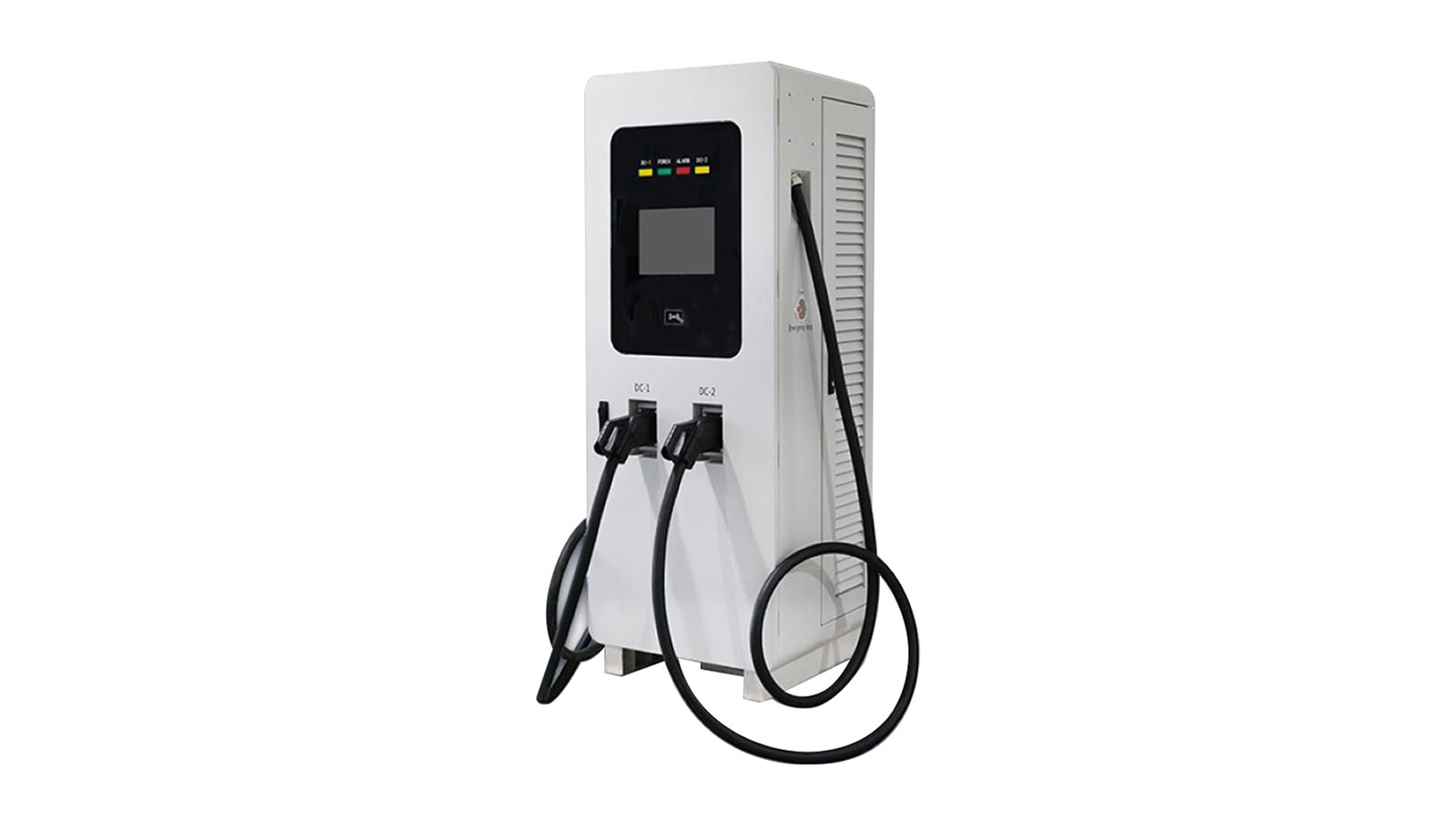
EV charging station, IP65 rating, 60 to 240kW
Company: Foshan Golden Horse Technology Co. Ltd
This IP65-rated EV charging station from Foshan Golden, the GH-DC1201-9, has 380VAC rated voltage, 200A, 60 to 240kW output, 50/60Hz frequency and -30 to 50 C operating temperature.
MOQ: 2 units
Lead time: 4 days
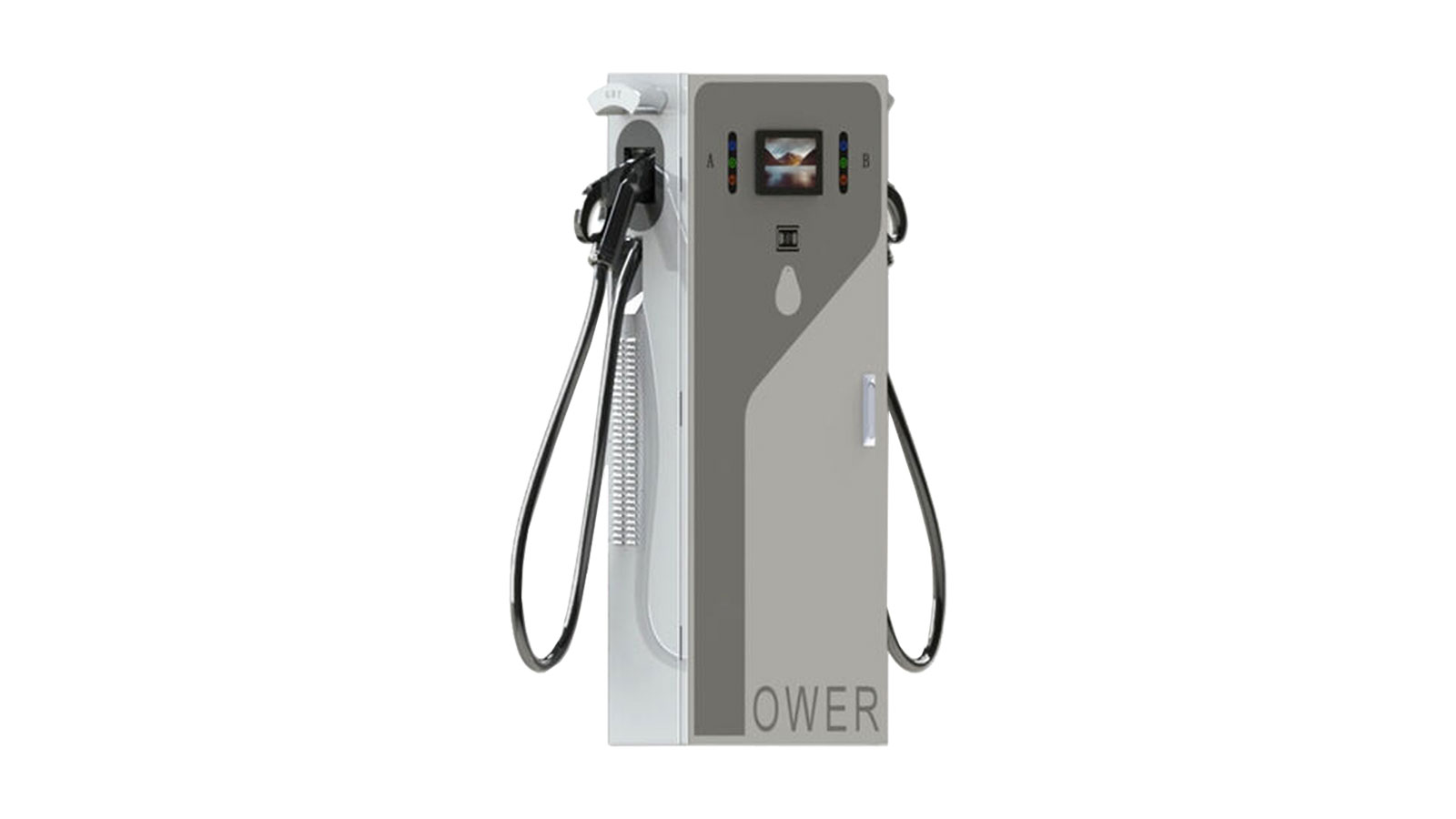
IP54-rated EV charging station, 20 to 60kW
Company: Huizhou Olink Technology Co. Ltd
Available in single- and dual-gun variants, this IP54-rated EV charging station from Huizhou Olink, the 20-60kw-3542, has 50 to 1,000VDC rated voltage, 380VAC±25 percent resistance voltage and 20 to 60kW rated power. Dimensions are 630x255x1,500mm.
MOQ: 2 units
Lead time: 7 days
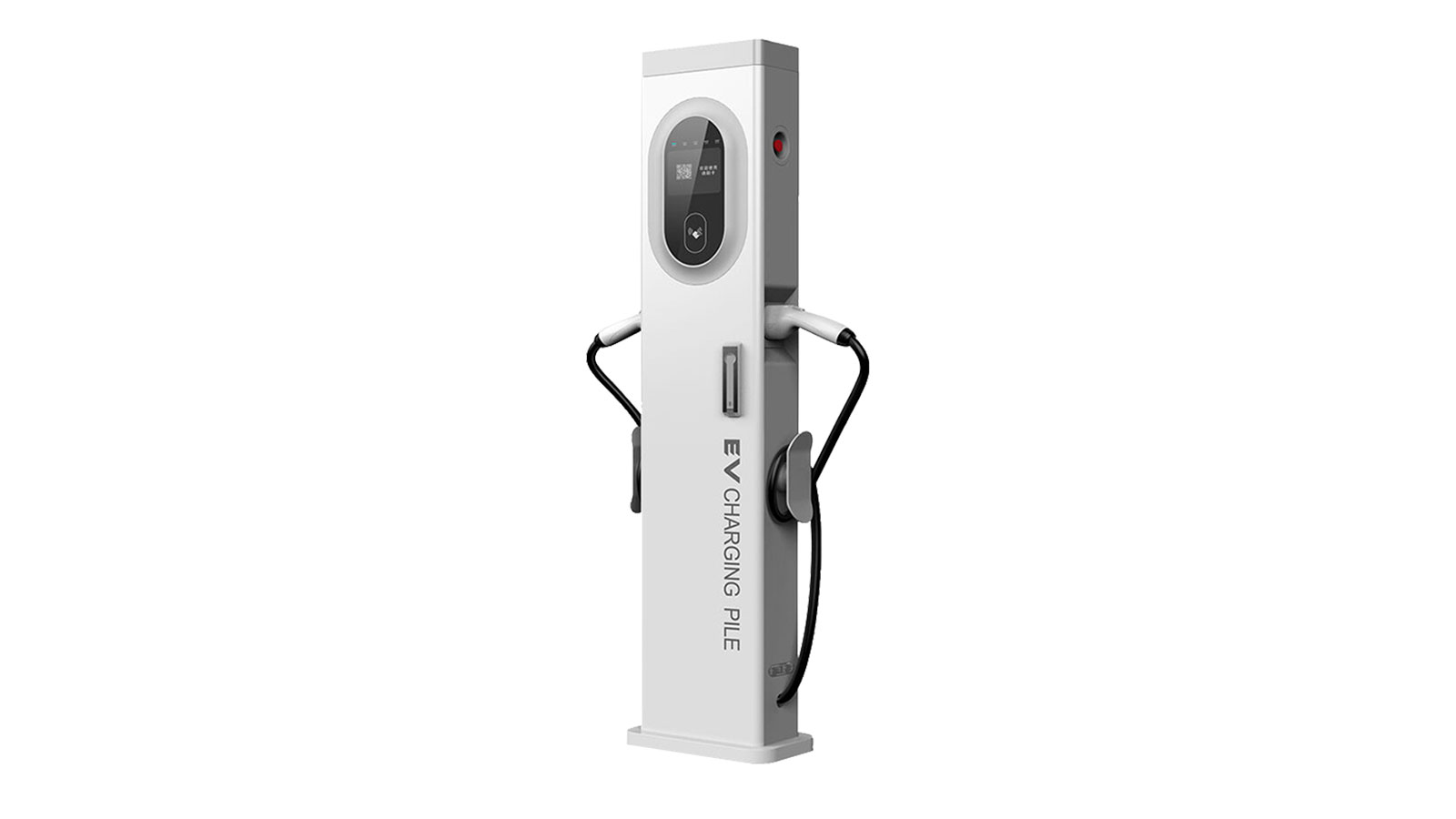
IP54-rated EV charging station, 22kW
Company: Ningbo Anbo United Electric Appliance Co. Ltd
Ningbo Anbo offers the AEV-WA-22kw EV charging station with 220VAC voltage, 16 or 32A rated current and 22kW output power. This IP54-rated unit has built-in overvoltage, -current, undervoltage, short-circuit, surge and leakage protection.
MOQ: 500 units
Lead time: 45 days
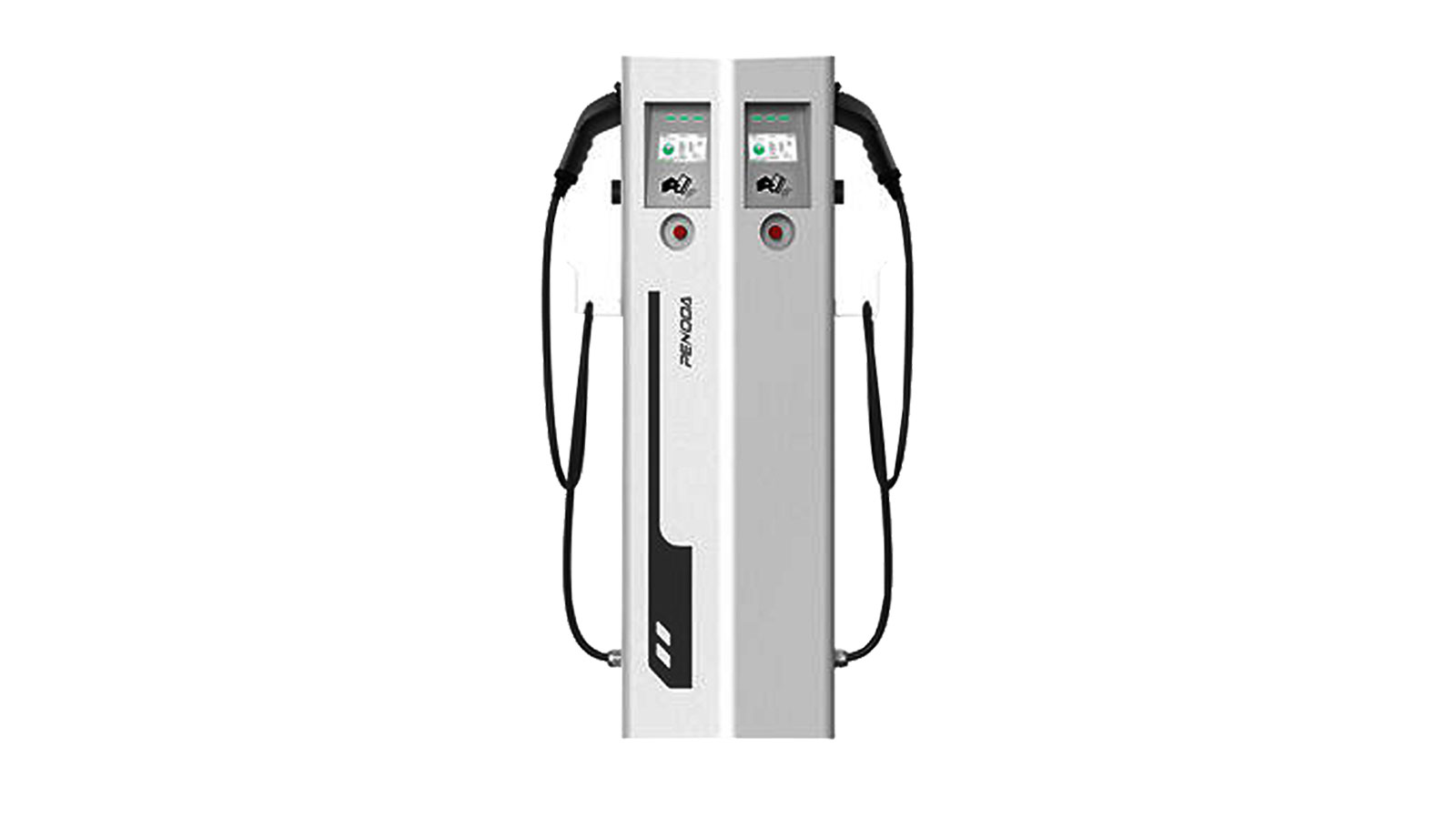
IP55-rated EV charging station, 22kW per port
Company: Penoda Electrical Co. Ltd
Rated at 22kW per port, the PAH-22-23102602 EV charging station from Penoda has 400VAC±15 percent rated voltage, 64A rated input current and 32A rated output current adjustable from 6A. The standby power is 7W. This CE-marked unit has an IP55 rating and built-in overcurrent, -voltage, -temperature, undervoltage, ground surge and residual current device protection.
MOQ: Negotiable
Lead time: 15 days

