Download App
Better Online and Trade Show Sourcing Experiences.Scan the QR code to download.
Learn More
Hot Topics
Several foreign companies are investing in US facilities because of their emphasis on sustainability, safety and technological innovation.
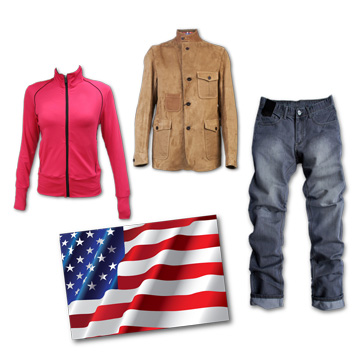
Increased safety and environmental consciousness, and technological innovation are contributing to the resurgence of the textile and apparel manufacturing industry in the US. This is according to a report in the latest issue of Textile Outlook International, the news website of global business information firm Textile Intelligence. Such factors are prompting a number of China- and India-based companies to invest in facilities in the US.
This comes as retailers and brands take a more active role in ensuring social responsibility and environmental preservation. The report indicated that the process of reshoring is happening because it is easier to control factory safety and ecological sustainability in supply chains in the US than those in far-off developing nations.
Recent technological innovation, particularly in automation and robotics, is also enabling US factories to cut costs. In addition, proximity to the market is providing manufacturers a competitive advantage in terms of quick response and market knowledge.
Reshoring appears to have the public's support as well, with almost eight out of 10 US consumers admitting that they prefer to buy a US-made product than an imported one. Of these, more than 60 percent said they are willing to pay 10 percent more.
The resurgence, however, has been fairly modest and comes in the heels of substantial losses between 2005 and 2008. It is also important to take note that the US suppliers account for less than 3 percent of the domestic apparel market in terms of volume. The US apparel market continues to be dominated by low-cost hubs in Asia, meaning cost minimization still plays a vital role in sourcing decisions.
Another huge obstacle is the shortage of skilled manpower, including those who can provide sufficient training. Many experienced staff is retiring without being replaced by fresh blood. Technicians adept at maintaining sewing machinery are likewise lacking.
Many factories are turning to migrant workers to fill the gap. According to the report, these employees are generally younger and more energetic than their US counterparts. Migrants are likewise motivated by the desire to increase their standard of living are, therefore, willing to put in the necessary time and effort to achieve this. Many also bring with them the sewing skills they acquired from the countries of origin.
The availability of foreigners as a human resource, however, is likely to limited by public opinion. The subject of migration is a sensitive issue in most host countries and there is enough reason to believe that the tide is very much against migration on a significant scale.
More Sourcing News
Read Also

关注 “环球资源外贸” 官方微信,获取实时外贸资讯
iOS & Android
iOS & Android(Mainland China)
Copyright © 2026 Publishers Representatives Limited. All rights reserved.




