Download App
Better Online and Trade Show Sourcing Experiences.Scan the QR code to download.
Learn More
Hot Topics
by Cecile de Veyra (Managing Editor)
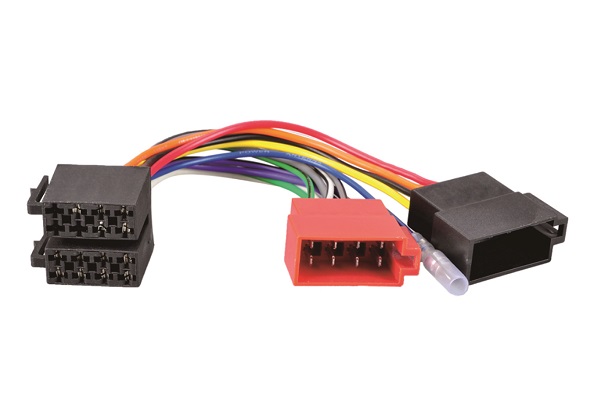
Wire harnesses are designed for a range of applications, from household appliances, electronics, telecom products and vehicles to the fields of medicine, construction and aerospace technology. While their biggest market is the automotive industry, the R&D spotlight today is not on the dominant fuel-powered segment but on the popular green electric and hybrid alternatives.
Sales of battery electric vehicles (BEV) and other EVs worldwide were expected to reach 2.5 million in 2020, according to IHS Markit’s December 2020 forecast. The same report projects a surge of about 70 percent in 2021 and global sales of more than 12.2 million in 2025.
Analysts at the International Energy Agency attribute this growth, despite lowered expectations due to the pandemic, to existing policy support and targeted stimulus responses.
With greater opportunities ahead, manufacturers of wire harnesses are pursuing the development of robust interconnects compliant with the requirements of HEVs and EVs.
One key specification is high voltage. Unlike conventional engines that run on gasoline or diesel fuel, these new-generation vehicles depend entirely on electric motors that need a constant supply of power. Their drivetrains consist of a high-voltage battery, inverters and motors.
Weight is another key factor. For better efficiency, vehicles have to be light despite the greater number of onboard devices and equipment. This means using fewer components, to avoid an unnecessary burden that will jack up power consumption.
Elon Musk was widely reported to have said that there were about three kilometers of wire harnesses in the Tesla Model S, which were reduced to half that length in the Model 3. He has also been quoted about decreasing this further to 100 meters, though this did not materialize in the Model Y. Nonetheless, it may eventually emerge in future EV releases, engendering development efforts toward shorter wiring systems.
In addition to EVs and HEVs, the wire harness sector will benefit from the rollout of new products as 5G deployment continues, which in turn will boost the adoption of the Internet of Things (IoT) technology. There will be 25.1 billion IoT devices by 2025, according to GSM Association. For these applications, lightweight and integrated wiring systems will be the norm.
More Sourcing News
Read Also

关注 “环球资源外贸” 官方微信,获取实时外贸资讯
iOS & Android
iOS & Android(Mainland China)
Copyright © 2026 Publishers Representatives Limited. All rights reserved.




