Download App
Better Online and Trade Show Sourcing Experiences.Scan the QR code to download.
Learn More
Hot Topics
Besides reducing trade barriers, Vietnam's free trade agreements have encouraged investment in various stages of the garments and textiles supply chain.
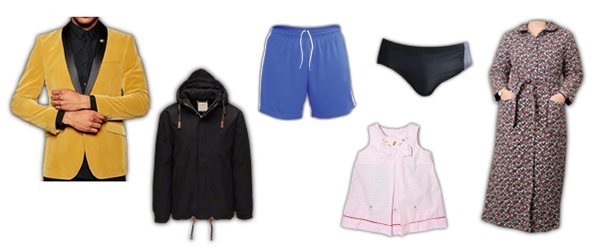
Vietnam's garments industry offers casual and formal apparel, sportswear, underwear and sleepwear.
Vietnam's garment suppliers benefit from the various trade agreements that the country has signed, as these have reduced import barriers and facilitated entry into overseas markets.
In addition, the trade deals have encouraged increased investment in various stages of the garments and textiles supply chain, including spinning, weaving, knitting and dyeing. Foreign direct investment into Vietnam rose 12.5 percent year on year in 2015 to $22.8 billion, of which about $2 billion went into the garment and textile sectors, according to a US Department of Agriculture (USDA) Foreign Agricultural Service Global Agricultural Information Network (FAS GAIN) report dated April 1, 2016.
Vietnam's exports of garments and textiles amounted to $22.8 billion in 2015, up 9 percent from 2014, according to data from the General Department of Customs, Ministry of Finance of Vietnam. The US, Japan, South Korea and the EU were key export destinations, according to data from the General Statistics Office of Vietnam.
Among the FTAs that are in effect are the following: ASEAN Free Trade Area (AFTA); the ASEAN-Australia and New Zealand FTA (AANZFTA); the ASEAN-India Comprehensive Economic Cooperation Agreement (ASEAN-India CECA); the ASEAN-Japan Comprehensive Economic Partnership (AJCEP); the ASEAN-People's Republic of China Comprehensive Economic Cooperation Agreement (ACFTA); the ASEAN-[Republic of] Korea Comprehensive Economic Cooperation Agreement (AKFTA); the Japan-Viet Nam Economic Partnership Agreement (Japan-Viet Nam EPA); the Chile-Viet Nam FTA; and the [Republic of] Korea-Vietnam FTA. The Viet Nam-Eurasian Economic Union FTA took effect in 2016.
Another advantage that Vietnam’s apparel industry enjoys is its access to craft villages which provide a pool of workers skilled in needlework, weaving and dyeing. Vietnam's wages are also generally lower than those in China.
Challenges
Among the headwinds preventing apparel manufacturers in Vietnam from fully utilizing these advantages to boost exports is their reliance on imported materials. The country's textiles and garment industry imports approximately 70 percent of raw materials, Dong Nai Garment Corp. Chairman Bui The Kich said in a report posted January 2016 on Viet Nam News.
The sector's cotton requirements, in particular, are typically sourced from the US, India, Brazil, Australia or Cote d'Ivoire since local production cannot meet demand. Cotton production in Vietnam has gone down due in part to declining cotton prices, which have led growers turning to other crops that are more profitable. In the first nine months of 2016, Vietnam imported 784,364 tons of cotton, according to statistics from the General Department of Customs.
Sourcing raw materials overseas, along with higher wages and rising electricity and transportation costs, places the price competitiveness of Vietnam's products at risk. Additionally, FTAs have rules of origin which require that for garments or textiles to enjoy preferential tariffs, production starting from the yarn or fabric should be done within signatory countries.
To take full advantage of the benefits from trade deals, a number of apparel makers are working closely with domestic yarn providers to curb imports and increase the local content of their products. A few large manufacturers are investing in factories to produce their own yarn or fabric.
Some garment factories are boosting their competitiveness by upgrading to more efficient production lines.
This article and its contents are provided by the Hinrich Foundation, a partner of Global Sources in promoting trade across Asia. The products and the suppliers featured in this article are export assistance program beneficiaries of the Hinrich Foundation.
More Sourcing News
Read Also

关注 “环球资源外贸” 官方微信,获取实时外贸资讯
iOS & Android
iOS & Android(Mainland China)
Copyright © 2026 Publishers Representatives Limited. All rights reserved.




