Download App
Better Online and Trade Show Sourcing Experiences.Scan the QR code to download.
Learn More
Hot Topics
The rise of Virtual Reality continues as companies are now incorporating VR-based training for their employees.
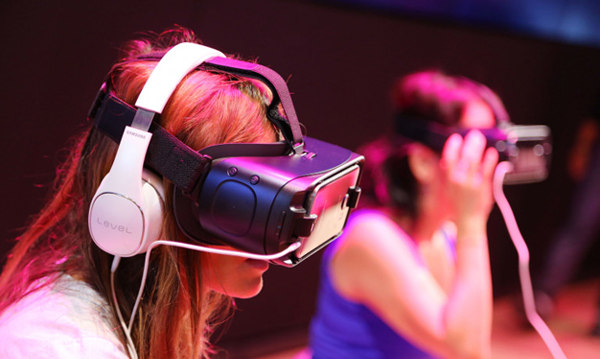
Image Source: The Wrap
Hearing VR, what comes into mind first are usually VR games and personal theatre headsets. This is because in the past few years, VR has been strongly associated with the gaming and entertainment industry, but this technology is slowly advancing into the corporate field as a new training tool for employees. Companies like Walmart and several hotels and hospitals are making use of VR headsets in order to train their employees – and the benefits are evident.
The CTA has reported that Walmart, the largest employer in the US, already incorporates situational scenarios for employees via VR in order to simulate their reactions. For instance, employees can respond to situations in real-time and are able to hone their reactive skills in case of emergencies like a break-in. They are also able to gain experience before real-world situations happen such as the frenzy during Black Friday rush. This is all thanks to the interactive environment that VR can provide. What’s the best part of these trainings? It is safe, time and cost efficient, and these simulations can be repeated and altered per scenario.
Hotels have also taken employee training one step further in roleplaying with the use of VR. Best Western Hotels & Resorts creates simulations “that mimic real-life customer reactions” via a live hospitality virtual simulator. Employees working at “the front desk, housekeeping, maintenance and breakfast area” are then able to practice and improve their interpersonal skills which will benefit the customers, the hotel and the employees themselves. It’s a win-win situation. In fact, Best Western has seen a one-point improvement in its Net Promoter Score, an increase in customer service ratings and a decrease in customer complaints. Moreover, Hilton wants to push virtual reality-based training (VRBT) even further though a conflict resolution program. Through the training, employees will be able to gain important skills at service recovery.
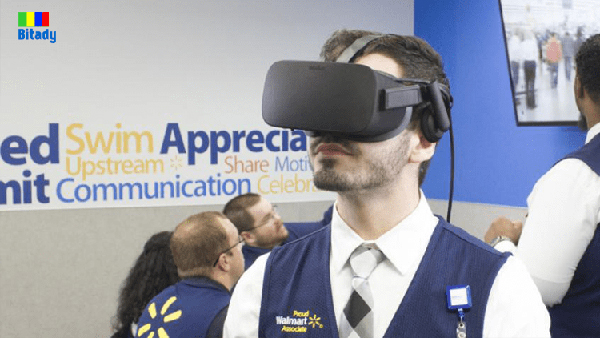
Image Source: Bitady
In a general sense, what are the main reasons as to why VR technology has become beneficial in training employees? As noted in Virtual Speech, people learn best through experiences because experience increases knowledge retention and quality of learning. Why? Since VR is interactive, it elicits an emotional response and makes employees problem-solve on their own in a given scenario. It makes it easier for them to remember what they have just learned. The process also takes the inevitable boredom away of having to learn through theories only. An employee’s performance can also be easily reviewed and assessed by upper management, which can make the training process more efficient. They are also able to learn the necessary work skills faster through the exercises and practices in VRBT. For instance, KFC employees were able to learn how to make fried chicken in just ten minutes in comparison to the general 25 minutes when learning the process in an a real-life scenario.
Even in the recruitment process, the HR staff can be trained when interviewing applicants by practicing interview questions and looking for key signs of an applicant’s skills and even red flags. On the onboarding process, new hires can learn about the company faster – company details, workplace locations and more can all be imparted through VR technology.
Safety and finance are also important points to mention. Simulating high-risk scenarios that might cause a life such as a doctor’s performance in a surgery, an emergency scenario at a power plant or factory or even general flight training for pilots are too risky and costly to be done in real life. Thanks to VR, proper skills can be taught in a safe and practical way.
Now aside from the advancement of VR use in the corporate setting, let us not forget where this technology is still currently thriving and growing – gaming and entertainment. According to Grand View’s research as cited in ThinkMobiles, VR’s market size is still expanding, and it’s expected that the VR gaming market will experience an annual growth of 25 to 27 percent, which can amount to over a $45 billion revenue by the year 2025. Due to innovations in VR headsets like the advancement of freedom of movement when playing games, the possibility to mimic the five basic human senses help propel the rise of VR. Last but not the least is the cost. Top VR manufacturers such as Oculus, HTC, Sony, Google are providing more affordable VR headsets; even Nintendo, Microsoft, and Sony are lowering their VR game products.
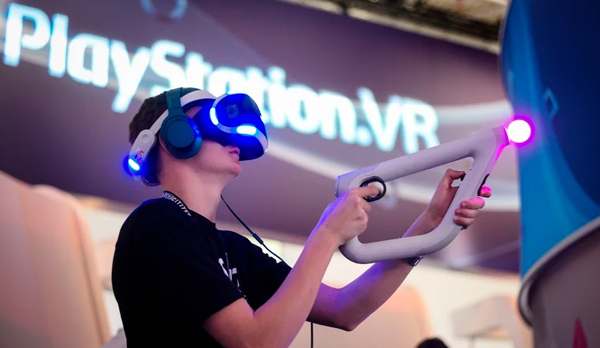
Image Source: Time
With price being a driving factor of the growing popularity of VR, Global Sources offers a vast range of affordable all-in-one VR headsets, cardboard VR kits, and other VR accessories from verified Asian manufacturers.
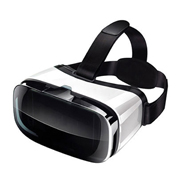
Company: Shenzhen King-Sunny Technology Co. Ltd
With a net weight of 410g, the model KY-BLACK 6536 VR headset has a lightweight design, which is made for comfortable viewing.
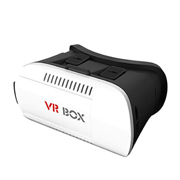
Company: Shenzhen Meo Digital Co. Ltd
The model MEO-EL-V6 VR headset uses advanced lenses made of high quality PMMA glasses that prevent users from experiencing vertigo or dizziness.
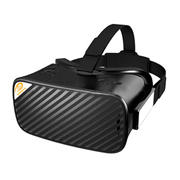
Company: Q-Mall Industry Co. Ltd
This VR box, the VR-001 model, comes with adjustable spherical lenses that will allow users to fit their below 600-degree myopia glasses.
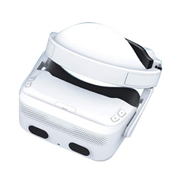
Company: Jinjiang Jiaxing Import & Export Co
This personal theatre VR headsets-P24 model supports Wi-Fi and has a 64GB storage capacity via TF card.
Company: Hunan Yuning Electronic Co. Ltd
The VR1 model from is a VR PlayStation headset that supports 8K videos.
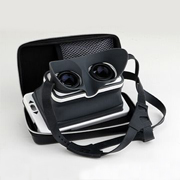
Company: Eastern Times Technology Co. Ltd
The model ET-VR01 VR case is meant for playing games in 3D and watching movies with split screen function. It suits 4.7 to 6in phones.
More Sourcing News
Read Also

关注 “环球资源外贸” 官方微信,获取实时外贸资讯
iOS & Android
iOS & Android(Mainland China)
Copyright © 2026 Publishers Representatives Limited. All rights reserved.




