




 Table of Contents
Welding Machine Market Analysis
6 Most Common Welding Mechines
What Are Welding Machines
Welding machines are a cornerstone of the manufacturing, construction, and fabrication industries, playing a vital role in joining materials together. This introduction aims to provide an overview of what welding machines are, their various types, and their significance in different applications.
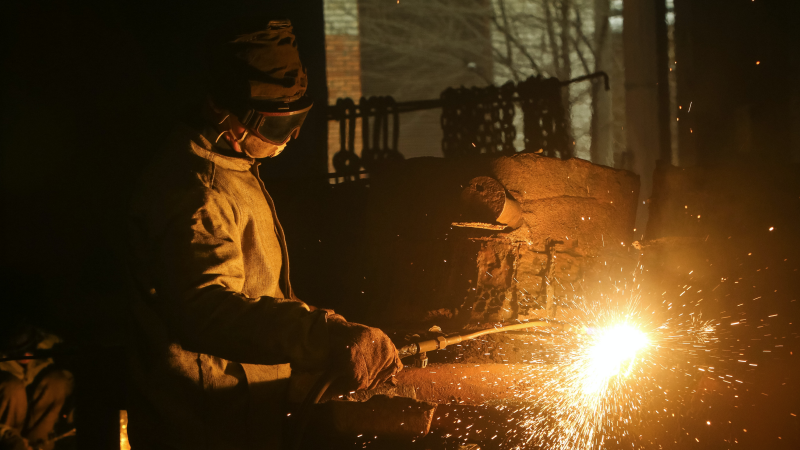
At its core, welding is a fabrication or sculptural process that involves joining two or more parts together. These parts are usually metals or thermoplastics, and they're fused by applying high heat, pressure, or both. As the parts cool, they form a joint, effectively becoming one piece. The equipment used to generate this heat and often feed a filler material into the joint to facilitate the fusion process is what we call a welding machine.
Welding machines are designed with a specific 'duty cycle.' This term refers to the amount of time one can weld at a given output without overheating or damaging the power source. For instance, a hobby welder might require a welder with a 20% duty cycle, meaning they could weld continuously for 2 minutes out of every 10 at full output. In contrast, a professional welder might use a machine with a 100% duty cycle for heavy-duty, continuous welding.
There are also semi-automatic welding machines. These machines combine manual welding with automatic control over one or more of the welding conditions. The welder manually manipulates the welding gun to create the weld while the machine automatically feeds the electrode to the arc.
There are various types of welding machines available, each designed for specific welding processes and applications. For instance, there's the stick welding machine, also known as Shielded Metal Arc Welding (SMAW) machine. This type of machine is relatively simple in design but requires skill to master. It's ideal for open spaces or outdoor settings because it's less sensitive to wind and rain compared to other types of welding.
Another common type is the Gas Metal Arc Welding (GMAW) machine, often referred to as Metal Inert Gas (MIG) welder. MIG welding is known for its versatility and ease of use, making it suitable for both beginners and professionals. It can be used on a wide range of materials and is commonly used in automotive repair and fabrication.
In conclusion, welding machines are essential tools in many industries. They enable the creation of durable joints between materials, making them invaluable in a range of applications from construction and fabrication to automotive repair and more. Their versatility and adaptability underscore their importance in today's industrial landscape.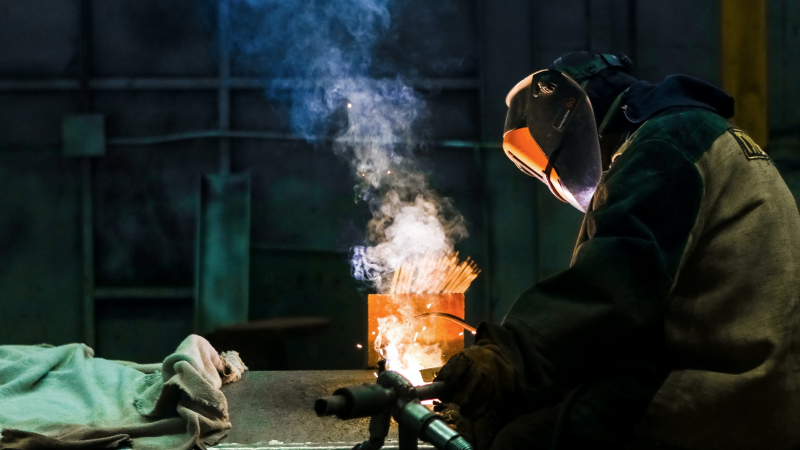
Welding Machine Market Analysis
The welding machine market, a crucial segment of the manufacturing industry, has been experiencing consistent growth. This growth is driven by several factors, including the increasing demand for welding machines in a variety of industries, advancements in technology, and the rising need for infrastructure development globally.
As of 2022, the global welding market size was valued at USD 23.75 billion and the welding equipment market size was estimated at USD 18,831.6 million [1][3]. The welding products market size was estimated at USD 13.49 billion in 2021 [4].
The welding market is projected to grow from USD 24.73 billion in 2023 to USD 34.18 billion by 2030, exhibiting a Compound Annual Growth Rate (CAGR) of 4.7% during the forecast period [1]. Similarly, the welding equipment market is projected to reach USD 18.79 billion by 2026, growing at a CAGR of 6.3% during the 2019-2026 forecast period [2]. The welding products market is expected to expand at a CAGR of 4.4% from 2022 to 2030 [4].
The market's growth can be attributed to a variety of factors. First, there is an increasing need for welding equipment in various industries, including automotive, construction, aerospace, and more [3]. Second, advancements in technology, such as automation and robotics, have improved the efficiency and quality of welding processes, driving their adoption. Finally, the rising need for infrastructure development globally has fueled the demand for welding machines.
Furthermore, factors such as design flexibility, reduction in the overall weight of buildings and structures, and ease in modification are projected to promote the use of welding products [4].
In conclusion, the welding machine market is expected to witness substantial growth in the coming years due to increasing demand from various industries, technological advancements, and global infrastructure development needs.
Sources:
1. [Welding Market Size, Share | Global Research Report [2030]]
2. [Welding Equipment Market Size, Growth & Share | Analysis Report [2030]]
3. [Welding Equipment Market Size, Share & Growth Report, 2030]
4. [Welding Products Market Size & Share Report, 2030 - Grand View Research]
6 Most Common Welding Mechines
Welding is a fabrication process that involves joining materials, usually metals or thermoplastics, by causing coalescence. This is often done by melting the workpieces and adding a filler material to form a pool of molten material that cools to become a strong joint. The welding industry uses various types of welders, each with unique characteristics and applications. This article will introduce some of the most common types of welders.
1. Shielded Metal Arc Welding (SMAW)
Also known as stick welding, SMAW is one of the oldest and most popular welding methods. It uses a consumable electrode coated in flux to lay the weld, which creates a gas shield and provides filler material. This type of welding is versatile and can be used with a variety of metals and alloys. It's often used in the construction industry because of its simplicity and portability.
2. Gas Metal Arc Welding (GMAW/MIG)
Gas Metal Arc Welding, commonly known as Metal Inert Gas (MIG) welding, uses a continuously fed wire electrode to form the weld. An external supply of a shielding gas protects the weld pool from contamination. MIG welding is praised for its speed and adaptability. It's commonly used in automotive repair, construction, and industrial fabrication.
3. Gas Tungsten Arc Welding (GTAW/TIG)
Gas Tungsten Arc Welding, or Tungsten Inert Gas (TIG) welding, uses a non-consumable tungsten electrode to produce the weld. The weld area is protected from atmospheric contamination by an inert shielding gas, and a filler metal is normally used. TIG welding allows for strong, high-quality welds but requires significant skill. It's often used for thin sections of stainless steel, non-ferrous metals like aluminum, magnesium, and copper alloys.
4. Flux-Cored Arc Welding (FCAW)
Flux-Cored Arc Welding is similar to MIG welding, but instead of solid wire, it uses a tubular wire filled with flux. With this method, no external shielding gas is needed because the flux protects the weld. FCAW is known for its high welding speed and portability, making it popular in construction projects.
5. Submerged Arc Welding (SAW)
In Submerged Arc Welding, the weld and arc zone are submerged beneath a blanket of granular fusible flux. This flux provides a molten cover on the weld, which protects it from contamination. SAW is commonly used in industrial applications for large products and in manufacturing steel structures.
6. Plasma Arc Welding (PAW)
Plasma Arc Welding uses a constricted arc or plasma to produce a high-temperature, concentrated heat source at the tip of the torch. This allows for precise control of the weld area. PAW is typically used in aerospace applications where precision is required.
In conclusion, the type of welder used depends on various factors such as the nature of the work, the type of metal being welded, and the desired finish. Each welding process has its advantages and disadvantages, so it's essential to choose the right one for your specific needs.
FAQs: welder machines
What is a welder machine used for?
A welding machine is a device used to join materials, usually metals or thermoplastics, by applying heat to melt the parts together and allowing them to cool, causing fusion. Welding is distinct from lower temperature metal-joining techniques such as brazing and soldering, which do not melt the base metal.
Welding machines find extensive use across a wide range of industries. In the construction industry, they are used to build and repair infrastructure like buildings, bridges, and highways. In the automotive industry, welding machines are essential in the manufacturing and repair of vehicles. They are also used in industries like shipbuilding, aerospace, defense, and many more.
Furthermore, welding machines play a critical role in pipe fitting and plumbing, where they are used to join and seal pipes. They are also used in the fabrication of furniture and other household items. Apart from industrial use, welding machines are also used by hobbyists and DIY enthusiasts for various projects.
What is a machine welder?
A machine welder, also known as a welding machine or welder, is a piece of equipment used to conduct the welding process. It generates heat that melts the material to be joined, typically metals or thermoplastics. The molten materials are then allowed to cool and solidify, forming a joint.
Machine welders come in various types and sizes, each suited to a specific kind of welding process. Some common types of machine welders include stick welders (Shielded Metal Arc Welding), MIG welders (Gas Metal Arc Welding), TIG welders (Gas Tungsten Arc Welding), and flux-cored welders.
Each type of machine welder has its unique characteristics and uses. For example, MIG welders are known for their versatility and ease of use, making them suitable for beginners and professionals alike. On the other hand, TIG welders are known for creating high-quality, clean welds but require a significant amount of skill to operate.
What are the 3 types of welding machine?
While there are many types of welding machines available, three common types are often used: Shielded Metal Arc Welding (SMAW), Gas Metal Arc Welding (GMAW or MIG), and Gas Tungsten Arc Welding (GTAW or TIG).
- SMAW Machines: Also known as stick welders, these machines use a consumable electrode coated in flux to lay the weld. They are simple to use, portable, and work well with a variety of metals and alloys.
- GMAW/MIG Machines: These machines use a continuously fed wire electrode and an external supply of shielding gas to form the weld. They are known for their speed and adaptability, making them suitable for many applications.
- GTAW/TIG Machines: These machines use a non-consumable tungsten electrode and an external supply of shielding gas to produce the weld. They can create strong, high-quality welds but require more skill to operate than SMAW or GMAW machines.
Which welding machine is best for home use?
For home use, versatility, ease-of-use, and affordability are important considerations. Given these factors, a MIG (Metal Inert Gas) welder is often considered the best choice for home use.
MIG welding is one of the easiest types of welding to learn, making it suitable for beginners. It's also versatile enough to work with a wide variety of metals, including steel, stainless steel, and aluminum. MIG welders can handle a range of thicknesses, making them suitable for a variety of home projects, from auto repair to crafting furniture.
One popular choice for home use is the Hobart Handler 140 MIG Welder. It's known for its durability, ease of use, and excellent performance. It operates on standard 115V household current while delivering industrial performance, making it an excellent choice for home DIY projects.
Remember that no matter which welding machine you choose for home use, safety should always be your top priority. Always use appropriate safety gear, including welding helmets, gloves, and protective clothing.

