




AI glasses have emerged as the next frontier in personal computing, moving digital intelligence from our hands to our faces. Unlike traditional eyewear, these sophisticated devices integrate cameras, sensors, and generative AI to understand your surroundings and provide hands-free assistance through audio or subtle visual displays.
In essence, what are AI glasses? They are wearable computers designed to keep you connected and informed while staying present in the physical world. As the technology rapidly matures in 2026, understanding what AI glasses offer—and which model suits your needs—has become essential for anyone considering this transformative wearable.
What are AI Glasses
AI glasses are wearable devices that integrate artificial intelligence—specifically generative AI and large language models—into traditional eyewear. Equipped with cameras, microphones, sensors, and wireless connectivity, they understand context and provide hands-free assistance through audio or subtle visual displays. Unlike standard glasses, they can identify landmarks, translate languages in real-time, summarize conversations, and answer questions about your surroundings.
Modern AI glasses evolved from early experiments like Google Glass, shifting focus from recording to practical assistance. Leading examples include Meta's Ray-Ban collaboration, Solos with ChatGPT integration, and Even Realities' lightweight, design-focused models. Their purpose is simple: deliver digital intelligence while keeping you present in the physical world.
AI Glasses vs. Smart Glasses vs. VR/AR: What's the Difference?
Smart glasses are the hardware base—eyewear with cameras and speakers that extend your phone's capabilities. AI glasses add contextual understanding through large language models, interpreting your environment to provide intelligent assistance. VR headsets block the real world entirely for digital immersion, while AR glasses overlay digital objects onto your actual view. The table below summarizes the distinctions:
| Category | Primary Function | Intelligence Level | Relationship to Reality |
|---|---|---|---|
| Smart Glasses | Phone extension | None (dumb peripherals) | Observe and capture |
| AI Glasses | Contextual assistance | High (LLM-powered) | Understand and assist |
| AR Glasses | Visual overlay | Low to medium | Augment with digital objects |
| VR Headsets | Digital immersion | Medium | Replace completely |
How Do AI Glasses Work?
AI glasses function through a seamless integration of miniaturized hardware components and intelligent software systems that capture, process, and deliver information in real-time.
They combine sensors to gather environmental data, onboard or cloud-based AI to understand context, and audio or visual outputs to communicate with the wearer—all while maintaining a lightweight, glasses-like form factor suitable for all-day use.
Core Components and Their Functions:
- Input Capture: Cameras capture visual data (what you're looking at), while multiple microphones pick up voice commands and environmental sounds. Accelerometers and gyroscopes detect head movements and gestures for hands-free control.
- Processing: A dedicated onboard chip (such as Snapdragon AR1) handles basic tasks locally for speed and privacy, while complex queries requiring large language models are processed via cloud connection through Bluetooth or Wi-Fi.
- Intelligence Layer: Generative AI and multimodal LLMs analyze combined audio and visual input to understand context—identifying objects, translating languages, or answering questions about what you're seeing.
- Output Delivery: Information reaches users through open-ear speakers or bone conduction audio that maintains environmental awareness, or through discreet heads-up displays (like monocular screens) that project text, directions, and notifications into your field of view.
- Power Management: Rechargeable batteries provide 4-9 hours of active use depending on features, with charging cases extending runtime throughout the day—similar to wireless earbuds.
- User Interaction: Control methods include voice commands ("Hey Meta"), touch gestures on frame surfaces, physical buttons for capture, and in some models, head movements or eye tracking.
Key Features of Modern AI Glasses
The functionality of modern AI glasses is defined by their software and miniaturized hardware, delivering practical assistance that integrates seamlessly into daily life. While designs vary across brands, the following features represent the core capabilities available in today's leading models.
- Contextual AI Assistance: Multimodal AI models analyze real-time visual and audio input—identifying landmarks, translating foreign menus, summarizing conversations, and answering questions about your surroundings through natural voice interaction.
- Hands-Free Capture: Integrated cameras (typically 12MP) capture photos and 1080p video from your perspective using voice commands or touch controls, with LED indicators ensuring privacy awareness.
- Discreet Audio Output: Open-ear speakers or bone conduction technology deliver calls, music, and AI responses while keeping you aware of environmental sounds—combining functionality with safety.
- Optional Visual Displays: Select models feature small heads-up displays (HUDs) that project notifications, directions, and translations into your field of view without full augmented reality complexity.
- All-Day Wearability: Lightweight construction (typically under 50 grams) with prescription-compatible lenses ensures these glasses can replace your everyday eyewear rather than supplement it.
- Reliable Connectivity: Bluetooth and Wi-Fi maintain constant connection to smartphones for cloud-based AI processing, with companion apps managing media transfer and device settings.
- Intuitive Controls: Multiple interaction methods include voice commands ("Hey Meta"), touch-sensitive frame surfaces, physical capture buttons, and in some models, head gestures or eye tracking.
- Extended Battery System: Rechargeable batteries provide 4-9 hours of active use, with charging cases delivering multiple full charges—similar to wireless earbuds—for all-day reliability.
What Are AI Glasses Used For? (Real-World Applications)
AI glasses have evolved from experimental technology into practical tools that enhance daily life across multiple domains. The following applications represent how AI glasses are being used in the real world today.
- Content Creation and Photography
Integrated cameras (typically 12MP) allow users to capture photos and 1080p video from a first-person perspective using voice commands or simple touches. This hands-free documentation is ideal for content creators, journalists, and anyone wanting to record experiences naturally—from family moments to travel adventures—without interrupting the flow of the moment. - Athletic Performance and Fitness
AI glasses designed for active use provide workout insights, real-time stats, and training alerts through audio cues and subtle displays. When paired with fitness devices like Garmin, they can deliver pace updates, distance tracking, and route suggestions while keeping hands free and eyes on the road or trail. - Real-Time Language Translation
One of the most powerful practical applications is live translation of conversations, menus, and signs. Users can understand and communicate across language barriers instantly, with translations delivered through audio or displayed discreetly in the field of view—making travel and international business significantly more accessible. - Productivity and Task Management
Voice-controlled AI assistants handle reminders, notifications, messages, and calendar management without requiring phone interaction. Users can dictate notes, set alarms, check weather, and control smart home devices while cooking, driving, or working—maintaining focus on the task at hand. - Music and Audio Entertainment
Built-in open-ear speakers or bone conduction technology deliver music, podcasts, and calls while keeping users aware of surrounding sounds. This combines the convenience of personal audio with the safety of environmental awareness, unlike traditional earbuds that block outside noise. - Communication and Social Connectivity
Integration with messaging platforms and social media allows hands-free calling, voice messaging, and live streaming directly from the glasses. Users can stay connected with family, friends, or audiences without interrupting their physical activities. - Navigation and Wayfinding
Turn-by-turn directions appear audibly or on discreet displays, guiding users through unfamiliar streets, airports, or campuses. This is particularly valuable for pedestrians, cyclists, and drivers who need navigation without constantly checking phone screens. - Memory and Moment Capture
Parents document children's first steps, travelers record spontaneous experiences, and professionals capture important meetings or events—all from their natural perspective. The hands-free nature means precious moments aren't missed while fumbling for a phone. - Accessibility Support
For individuals with visual or hearing impairments, AI glasses provide audio descriptions of surroundings, identify objects and faces, read signs aloud, and offer real-time captioning of conversations. This transforms daily independence and social participation for many users. - Object and Scene Recognition
Point your gaze at a landmark, plant, or product, and the AI identifies it while providing relevant information. This turns the world into an interactive learning environment—useful for curious minds, travelers, shoppers comparing products, or anyone wanting to understand their surroundings better. - Professional and Industrial Applications
In specialized contexts, AI glasses support remote expert guidance, equipment inspection, inventory management, and training scenarios where hands-free access to information increases safety and efficiency.
The Best AI Smart Glasses 2026
The definition of "best" in the AI glasses category depends entirely on how you intend to use them. Unlike smartphones, where one flagship model can serve nearly everyone, AI glasses have diversified into distinct specialties: some excel at augmented reality displays for entertainment, others prioritize stylish design with camera-focused AI features, and a growing category focuses on discreet heads-up displays for professionals.
After extensive testing and market analysis, the following models represent the top contenders across these categories for 2026.
Best Overall: Ray-Ban Meta Gen 2
The Ray-Ban Meta Gen 2 has earned its position as the world's best-selling AI glasses by delivering exactly what most users want: iconic style combined with genuinely useful technology. Now in its second generation, Meta addresses the primary limitation of the original with up to 8 hours of battery life—double the previous version—transforming these from occasional gadgets into true daily drivers.

The glasses feature a 12MP ultra-wide camera capable of 3K video capture, with hyperlapse and slow-motion modes for creative flexibility. Open-ear speakers deliver audio while maintaining environmental awareness, and the upgraded Meta AI provides context-aware assistance through natural voice commands. Available in classic Ray-Ban silhouettes (Wayfarer, Skyler, Headliner) starting at $379, these glasses seamlessly blend into everyday life—whether you need prescription lenses or simply want stylish sunglasses that happen to be incredibly smart.
Best for: Users who want fashionable, camera-centric AI glasses for daily wear, content creation, and hands-free assistance.
Best for Display/AR: XREAL One Pro
For users seeking the ultimate visual experience, the XREAL One Pro sets a new benchmark in augmented reality glasses. Powered by XREAL's proprietary X1 spatial computing chip, these glasses require no special software for advanced functionality—simply plug in via USB-C and access a virtual display up to 171 inches.
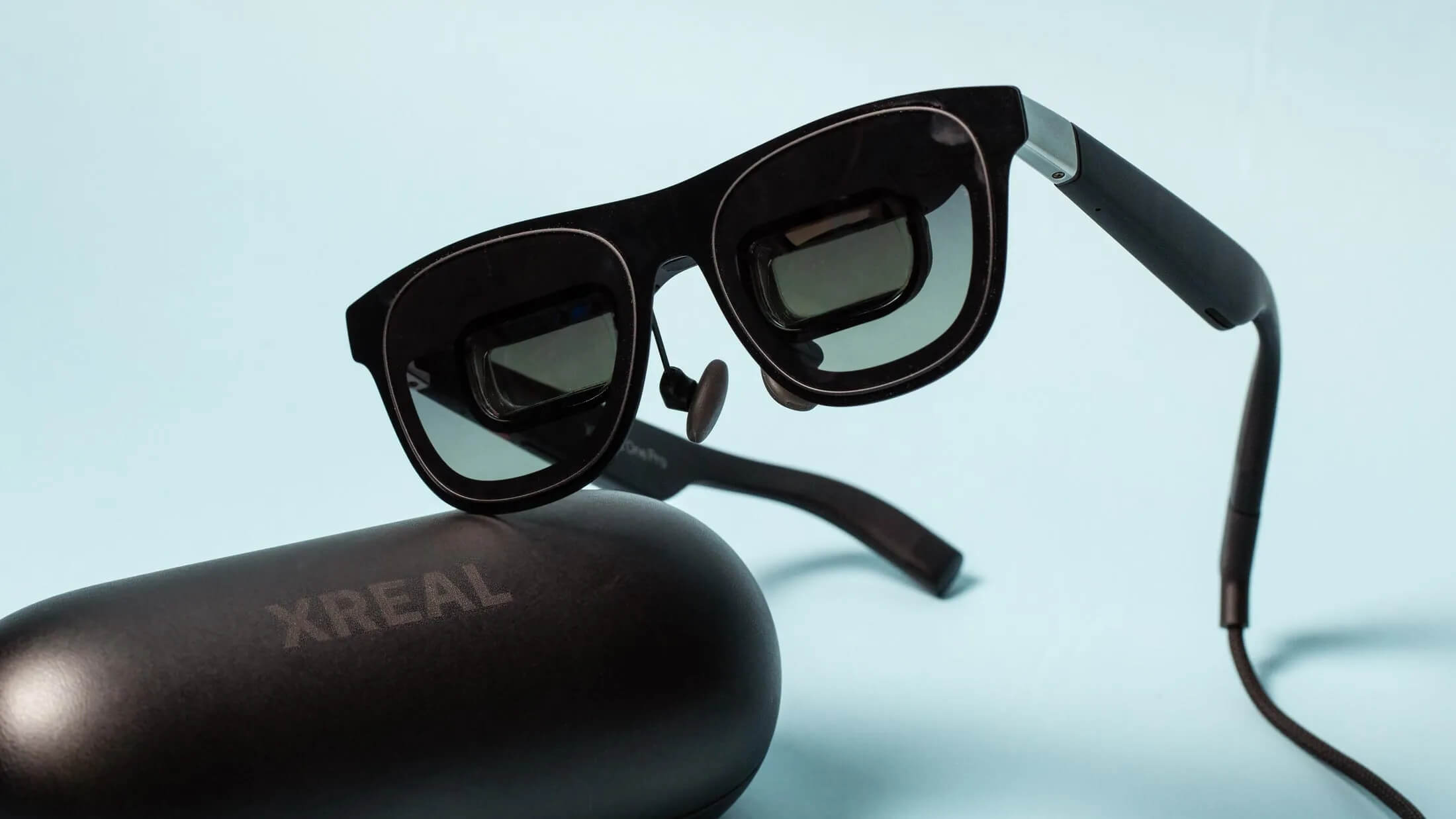
The 57-degree field of view is currently the widest available in any consumer AR device, and the Sony Micro-OLED displays deliver vibrant visuals at up to 120Hz refresh rates. Audio, developed in partnership with Bose, provides an immersive experience without disturbing those around you. At 87 grams with adjustable nose pads and temple angles, they remain comfortable for extended use. Priced at $599, they deliver premium AR experiences for entertainment and productivity.
Best for: Travelers wanting a private cinema, professionals needing portable multi-monitor setups, and AR enthusiasts seeking the widest field of view.
Best for Gamers: Asus ROG Xreal R1
Gamers have unique requirements, and the Asus ROG Xreal R1—a collaboration between ASUS's gaming arm and Xreal—delivers a world-first: AR glasses with a 240Hz refresh rate. This eliminates motion blur entirely, making fast-paced games look phenomenally smooth on the projected 171-inch virtual display.
The Control Dock enables Anchor Mode, allowing you to pin your virtual screen in space and move freely without misalignment. The Control Dock enables Anchor Mode, allowing you to pin your virtual screen in space and move freely without misalignment. Expected to launch at a premium $799 price point, these glasses represent the pinnacle of gaming-focused AR wearables.
Best for: Competitive and casual gamers who demand the highest refresh rates and most immersive virtual displays.
Best for Professionals: Even Realities G2
For users who want AI assistance without looking like they're wearing technology, the Even Realities G2 is unmatched. At just 36 grams, these titanium and magnesium frames look indistinguishable from premium prescription eyewear while packing a remarkable 75 percent larger display than their predecessor.
The heads-up display delivers crisp green text at up to 1,200 nits brightness, visible only when needed. Features include real-time translation (supporting 33+ languages), a teleprompter mode for public speaking, navigation with built-in geomagnetic sensors, and "Conversate"—an AI feature that provides contextual talking points during conversations. The optional $249 R1 smart ring enables subtle control without touching the glasses. At $599 (plus prescription options), these are for professionals who value discretion and utility over flashy features.
Best for: Business professionals, public speakers, and users who want AI assistance in glasses that look like normal premium eyewear.
Best Budget-Friendly: Rokid AI Glasses
For users seeking AI glasses on a tighter budget, the Rokid AI Glasses deliver impressive value at just $299. They offer functionality similar to Meta's Ray-Bans—including a camera, open-ear speakers, and AI voice assistance—at a significantly lower price point.
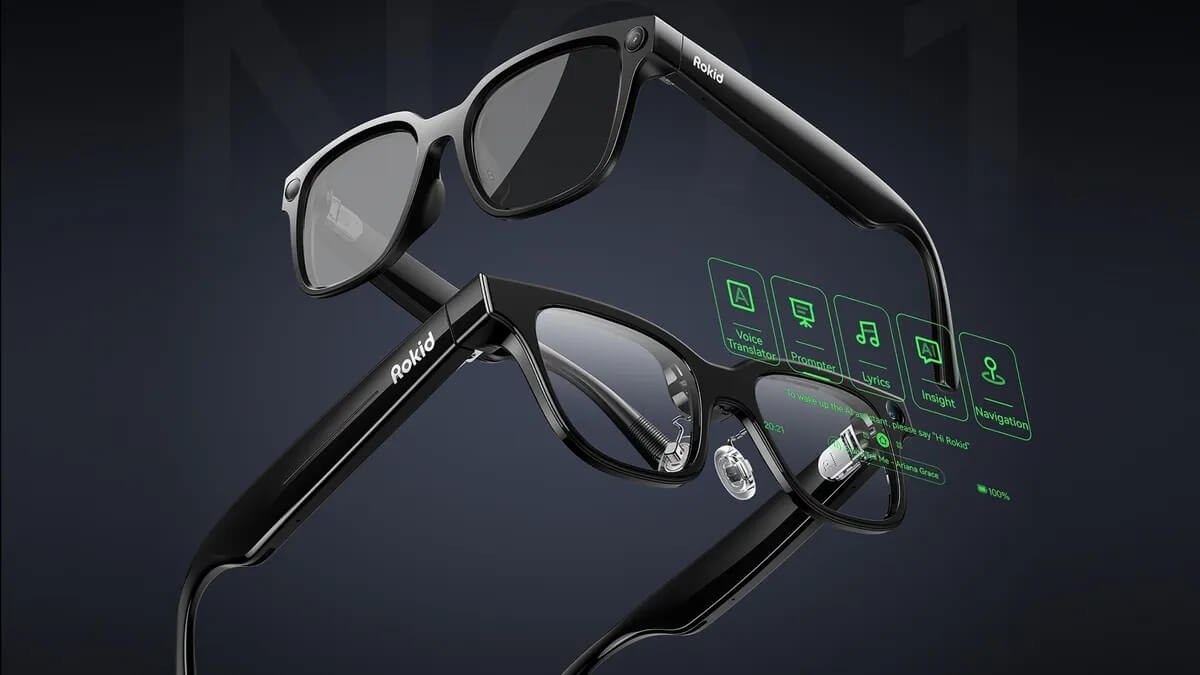
With up to 12 hours of battery life (surpassing many competitors) and a lightweight design featuring actual nose pads for all-day comfort, they undercut Meta while delivering comparable core features. The proprietary charging mechanism is a minor inconvenience, but the value proposition is strong for users wanting to enter the AI glasses space without the premium investment.
Best for: Budget-conscious consumers who want camera and AI features without spending over $300.
Advantages and Disadvantage of AI Glasses
Understanding both the benefits and drawbacks is essential for deciding whether AI glasses are a worthwhile investment for your specific needs.
Pros
- Hands-Free Convenience
Access information, capture moments, and control devices without pulling out a smartphone. Whether cooking, driving, or exercising, AI glasses keep your hands free while keeping you connected. - Contextual Intelligence
Unlike basic smart glasses, AI models understand your environment—identifying landmarks, translating foreign text in real-time, and answering questions about what you're seeing. This transforms passive wearables into active assistants. - First-Person Content Creation
Built-in cameras capture photos and video from your natural perspective, ideal for content creators, parents documenting family moments, and adventurers wanting to record experiences without holding a device. - Enhanced Navigation
Turn-by-turn directions delivered through audio or subtle visual displays keep eyes on the road or path, improving safety for pedestrians, cyclists, and drivers. - Real-Time Translation
Break language barriers instantly during travel or international business, with translations appearing audibly or on discreet displays—making foreign environments more accessible. - Open-Ear Audio
Bone conduction or directional speakers deliver music, calls, and AI responses while maintaining awareness of surrounding sounds—combining entertainment with safety. - Accessibility Support
For visually or hearing-impaired users, AI glasses provide scene descriptions, read signs aloud, and offer real-time conversation captioning, significantly enhancing independence.
Cons
- Limited Battery Life
Packing cameras, sensors, and processors into eyewear frames leaves minimal space for batteries. Most models deliver only 4-9 hours of active use, requiring mid-day charging for heavy users. - Privacy Concerns
Cameras on faces make bystanders uncomfortable. Despite LED recording indicators that are easy to miss, the potential for covert recording remains a significant social hurdle and echoes the "Glasshole" backlash that doomed early Google Glass. - Prescription Limitations
Not all models support prescription lenses, and those that do may have limited range or require expensive custom inserts. Users needing vision correction must verify compatibility before purchasing. - High Cost vs. Practical Value
With prices ranging from $250 to over $600, AI glasses represent a significant investment—especially when core features like music playback and voice assistance are already available on smartphones and headphones most users already own. - Social Acceptance
Wearing AI glasses can feel performative or alienating in social settings. Friends and strangers may be uncertain whether they're being recorded, creating awkwardness even when cameras are inactive. - Software Dependency
Performance relies heavily on connected apps, firmware updates, and cloud services. Features can change over time, and long-term software support varies by manufacturer—potentially rendering devices obsolete. - Physical Comfort
Added weight and bulk compared to traditional eyewear can cause discomfort during all-day wear. Even lightweight models (35-50g) are heavier than standard glasses, and heat from processing components may become noticeable. - Data Security
Cloud-based AI processing means voice commands, visual data, and personal information may be transmitted to external servers. Users must trust manufacturers' data policies and security practices.
How to Choose the Right AI Glasses
Choosing the right pair of AI glasses depends on your needs, lifestyle, and budget. With prices ranging from under $300 to over $1,000 and features varying widely across models, a systematic approach helps ensure you invest in glasses you'll actually use. Consider the following factors before making your purchase.
- Define Your Primary Use Case
Identify what you'll use them for most: travel (translation and navigation), content creation (camera quality), productivity (notifications and AI assistance), or fitness (durability and audio). The best model for you depends entirely on how you plan to use it. - Set Your Budget
Entry-level models offering audio and basic AI start under $300. Mid-range glasses with camera features typically run $300-$400. Advanced models with AR displays range from $400 to over $1,000. Remember that early adopters often pay more for technology that will evolve rapidly. - Check Prescription Compatibility
If you wear corrective lenses, verify that your chosen frames support prescription inserts or custom lenses. Not all models accommodate prescriptions, and those that do may have limitations on lens coatings or prescription ranges. - Evaluate Comfort and Fit
Weight typically ranges from 35-50 grams—lighter is better for all-day wear. Look for adjustable nose pads and multiple frame sizes. Many brands offer virtual try-on tools to assess style and fit before purchasing. - Assess Battery Life Requirements
Consider your daily usage patterns. Basic notification use may last all day, but camera recording, live translation, and AR displays drain batteries faster—typically 4-9 hours of active use. Charging cases extend runtime similarly to wireless earbuds. - Verify Camera and Privacy Features
If capturing photos or video matters, compare megapixels, video resolution, and recording limits. Check for visible LED indicators when recording—essential for social acceptance and avoiding awkward situations in public spaces. - Consider the AI Ecosystem
Different models integrate with different AI assistants: Meta AI, ChatGPT, Gemini, or proprietary models. Consider which ecosystem you already use and whether open platforms (like Rokid supporting multiple AI models) appeal to you. - Review Software and Support
AI glasses rely heavily on connected apps and firmware updates. Research the manufacturer's track record for software support and whether features require ongoing subscriptions or cloud services. - Think About Social Context
Consider where you'll wear them. Schools, offices, and social gatherings may present challenges. More discreet designs (like Even Realities G2) blend in better, while camera-focused models may attract attention.
Key Trends & Future of AI Glasses
The future of AI eyewear is moving toward ambient, ever-present computing that delivers the right information at the right moment with minimal intrusion. As AI models grow more powerful and hardware continues to shrink, glasses are evolving from novelty gadgets into practical tools that seamlessly integrate into daily life.
- Ambient AI: Beyond Displays to Proactive Assistance:The ultimate destination is ambient intelligence—proactive assistance that anticipates needs without explicit commands. Future models will suggest leaving early based on traffic, remind you to buy milk when passing a store, or whisper a forgotten name as someone approaches, all while keeping you present in the real world rather than staring at a screen.
- Hardware Miniaturization and All-Day Wearability:As processors become more efficient and batteries more energy-dense, expect glasses to approach under 30 grams with all-day battery life. Displays will become invisible until activated, cameras will shrink further, and the line between regular eyewear and AI glasses will blur entirely—making the technology truly disappear into daily life.
- Privacy-First Design as Standard:Having learned from early Google Glass backlash, manufacturers now embed privacy into core design. LED recording indicators, physical camera shutters, and camera-free models like Even Realities G2 are becoming common. Social acceptance depends on bystanders feeling comfortable—a lesson the industry has finally internalized.
- Open AI Ecosystems Replace Platform Lock-In:Future glasses won't run just one AI assistant—they'll offer genuine choice. Open platforms like Rokid already support switching between ChatGPT, Gemini, DeepSeek, and others. This flexibility ensures users can leverage the best AI for each specific task, whether translation, visual recognition, or conversation.
- From Novelty to Everyday Essential:Just as smartphones evolved from luxury items to daily necessities, AI glasses are on a trajectory toward becoming a primary interface for personal computing. They help athletes push limits, let parents capture real moments without fumbling for phones, and keep creators inspired wherever they go—all while looking like normal eyewear. This is just the beginning.
Conclusion
AI glasses have come a long way from early experiments, evolving into practical wearables that genuinely enhance daily life. While battery life and privacy concerns remain works in progress, today's top models offer real value for travelers, creators, and professionals. As the technology continues to shrink and smarter, AI glasses are steadily making their way from novelty to everyday essential—helping you stay connected without staring at a screen.

