




Table of Contents
Part 1. Key Takeaways: Why China Is "The World's Factory"
Part 2. Why is Everything Made in China?
Part 3. The History Of China Manufacturing
Part 4. Insights: Market Analysis Of China Manufacturing
Part 5. FAQs: Why China is still the world's factory?
Part 1. Key Takeaways: Why China Is "The World's Factory"
China has earned the reputation of being "The World's Factory" due to several key factors that have contributed to its manufacturing dominance:
1. Large labor force
China is home to a massive population, providing a vast labor force. This has allowed the country to offer a cost advantage in terms of labor, attracting multinational companies looking to reduce production costs.
2. Cost competitiveness
China's labor costs, compared to many other countries, are low due to extreme wealth inequality in the country. The availability of inexpensive labor has enticed businesses to outsource their manufacturing processes to China, enabling them to produce goods at a more competitive price.
3. Infrastructure and logistics
China has made significant investments in developing its infrastructure, including transportation networks, ports, and industrial zones. This well-developed infrastructure ensures efficient movement of goods both within the country and for exports, facilitating streamlined production and supply chain efficiency.
4. Supply chain integration
China has built a highly integrated supply chain that spans from raw material sourcing to production, assembly, and distribution. This seamless integration allows for efficient coordination among suppliers and manufacturers, ensuring smooth operations and cost-effective processes.
5. Technological capabilities
China has rapidly advanced its technological capabilities in the manufacturing sector. From adopting advanced manufacturing technologies like automation and robotics to investing in research and development, China has positioned itself as a leader in innovation. These technological advancements have enhanced production efficiency and quality control, making China an attractive manufacturing destination.
6. Government support and policies
The Chinese government has implemented policies and incentives to attract foreign investment and promote manufacturing growth. These measures include tax breaks, subsidies, and streamlined regulations, creating an environment conducive to setting up manufacturing operations in China.
7. Access to a vast consumer market
China has a population of over 1.4 billion people, representing a significant consumer market. Setting up manufacturing operations in China allows companies to tap into this market and meet the growing demand of Chinese consumers. This access to a large consumer base provides a competitive advantage for businesses.
8. Export-oriented manufacturing
China has actively promoted an export-oriented manufacturing strategy, focusing on producing goods for global markets. This approach has allowed China to become a major exporter, supplying products to countries around the world.
In conclusion, China's position as "The World's Factory" is the result of its large labor force, cost competitiveness, well-developed infrastructure, integrated supply chain, technological capabilities, government support, and access to a vast consumer market. These factors have propelled China to the forefront of global manufacturing, making it a preferred destination for companies seeking efficient production processes, competitive pricing, and market access.
Part 2. Why is Everything Made in China?
In recent years, it has become increasingly common to see the label "Made in China" on numerous products we use in our daily lives. From electronics to clothing, toys to household goods, it seems that China has become the manufacturing hub of the world. This phenomenon raises an important question: Why is everything made in China? In this article, we will explore the various factors that have contributed to China's dominance in the global manufacturing industry.
1. Cost Competitiveness
One of the primary reasons why everything is made in China is cost competitiveness. China has a vast workforce that offers low labor costs compared to many other countries. This means that companies can significantly reduce their production costs by outsourcing manufacturing processes to China. The lower manufacturing costs enable businesses to offer competitive prices to consumers, making their products more appealing in the global market. China’s labor cost advantage is declining relative to countries like Vietnam and Bangladesh, but China remains an attractive option for foreign businesses willing to take advantage of lower wages in China.
2. Scale and Infrastructure
China's sheer scale and infrastructure also play a crucial role in its manufacturing dominance. The country has an extensive network of factories, industrial parks, and transportation systems that can support large-scale production. With an abundance of resources, China can efficiently handle massive production volumes and meet the demands of global markets. Additionally, the availability of specialized industrial zones provides a competitive advantage, as manufacturers can easily find suppliers and resources in close proximity.
3. Supply Chain Integration
China's success in manufacturing is attributed to its highly integrated supply chain. From raw material sourcing to production, assembly, and distribution, China has developed a comprehensive network that facilitates efficient supply chain management. This integration ensures smooth coordination among suppliers, manufacturers, and exporters, allowing for streamlined and cost-effective processes. The ease of doing business in China further encourages companies to set up their manufacturing operations in the country.
4. Technological Advancements
China has made significant strides in technological advancements, which have further strengthened its position in global manufacturing. The country has invested heavily in research and development to foster innovation and upgrade its industrial capabilities. This has led to the development of advanced manufacturing technologies, automation, and robotics, improving production efficiency and product quality. As a result, companies from around the world choose China as their manufacturing base to benefit from the country's technological expertise.
5. Government Policies and Incentives
Government policies and incentives have played a vital role in attracting foreign manufacturers to China. The Chinese government has implemented favorable policies, including tax breaks, subsidies, and foreign investment regulations, to encourage companies to establish production facilities in the country. These policies create a conducive environment for businesses, enabling them to reduce costs, access resources, and gain a competitive advantage in the global market.
6. Market Access
China's vast consumer market presents a significant opportunity for companies seeking global expansion. With over 1.4 billion people, China offers a massive consumer base for businesses to target. Establishing manufacturing operations in China enables companies to tap into this market and meet the growing demands of Chinese consumers. By manufacturing locally, businesses can better understand consumer preferences, adapt their products accordingly, and gain a competitive edge in the Chinese market.
The prominence of "Made in China" labels on products worldwide can be attributed to a combination of factors. China's cost competitiveness, infrastructure, supply chain integration, technological advancements, government policies, and access to a vast consumer market have propelled the country's manufacturing dominance. While there are challenges and geopolitical considerations associated with this reliance on China, these factors continue to make it an attractive destination for businesses seeking efficiency, cost-effectiveness, and market access.
Part 3. The History Of China Manufacturing
The history of China's manufacturing industry can be traced back thousands of years, with the country's rich cultural heritage and technological advancements contributing to its status as a manufacturing powerhouse. From ancient craftsmanship to modern industrial production, China has played a pivotal role in global manufacturing. This article provides an overview of the history of China's manufacturing, highlighting key milestones and developments.
1. Ancient Craftsmanship
China's manufacturing legacy dates back to ancient times when skilled artisans crafted various products by hand. The country's early manufacturing prowess can be seen in industries such as ceramics, silk production, metalwork, and papermaking. China's innovative techniques and exquisite craftsmanship earned it a reputation for producing high-quality goods, which were highly sought after in international trade.
2. Early Industrialization
During the Song Dynasty (960-1279), China witnessed significant advancements in industries like iron and steel production, porcelain manufacturing, and textile production. The development of water-powered mills and the widespread use of coal as an energy source fueled industrial growth. These early industrialization efforts laid the foundation for China's future manufacturing capabilities.
3. The Ming and Qing Dynasties
The Ming Dynasty (1368-1644) and Qing Dynasty (1644-1912) brought further advancements in manufacturing techniques and trade. China's porcelain production reached its peak during this period, with exquisite designs and intricate artwork. Silk weaving, lacquerware, and metalwork also flourished, showcasing China's expertise in various crafts. The growth of international trade along the Silk Road further expanded China's manufacturing reach.
4. Foreign Influence and Industrialization
In the 19th century, China faced significant challenges due to foreign influence and the impact of the Industrial Revolution. The Opium Wars and the unequal treaties imposed on China by foreign powers exposed the weaknesses in its manufacturing capabilities. These events served as catalysts for modernization and industrialization efforts in the late Qing Dynasty.
5. Early 20th Century
The early 20th century witnessed the emergence of industrial enterprises in China. The establishment of textile mills, steel plants, and other manufacturing facilities laid the groundwork for China's modern manufacturing sector. However, political instability, wars, and foreign invasions hindered the progress of the manufacturing industry during this period.
6. Communist Era
After the founding of the People's Republic of China in 1949, the country embarked on a path of industrialization and "socialist modernization". The Communist junta enacted sweeping policies to promote industrial development, including the establishment of state-owned enterprises and the implementation of planned economic systems. Major initiatives such as the Great Leap Forward and the Cultural Revolution aimed to rapidly transform China's economy but resulted in devastating setbacks for the manufacturing sector, as well as years of suffering and millions of deaths. .
7. Economic Reforms and Opening Up
In the late 1970s, China introduced economic reforms and opened up to foreign investment and trade. This period marked a significant turning point for the country's manufacturing industry. Special Economic Zones were established to attract foreign investment, and policies promoting market-oriented reforms spurred industrial growth. China's manufacturing sector, particularly in electronics, textiles, and consumer goods, experienced rapid expansion, fueled by access to global markets and foreign technology and expertise.
8. Rise as the "World's Factory"
Over the past few decades, China has solidified its position as the "World's Factory," playing a dominant role in global manufacturing. The country's large labor force, cost competitiveness, infrastructure development, and integration into global supply chains have contributed to its manufacturing prowess. China's manufacturing capabilities encompass a wide range of industries, including electronics, automotive, textiles, machinery, and more.
The history of China's manufacturing industry is a testament to the country's rich heritage and technological advancements. From ancient craftsmanship to modern industrial production, China has continuously evolved its manufacturing capabilities. Today, as the "World's Factory," China's manufacturing sector contributes significantly to the global supply chain. With ongoing advancements in technology, innovation, and human capital, China's manufacturing industry continues to shape the country's economic landscape and influence the global marketplace.
Part 4. Insights: Market Analysis Of China Manufacturing
China's manufacturing sector has undergone remarkable growth and transformation over the past few decades, establishing itself as a global manufacturing powerhouse. As the world's largest exporter of manufactured goods, China's market analysis is crucial for understanding the dynamics and trends shaping the industry. This article provides an overview of the market analysis of China manufacturing, highlighting key statistics and insights.
1. Manufacturing Output and Size
China's manufacturing output has seen significant expansion over the years. According to official data, China's manufacturing value-added reached 31.4 trillion yuan ($4.87 trillion) in 2020, accounting for more than one-quarter of the country's gross domestic product (GDP). This highlights the significance of manufacturing in China's economy.
2. Sectoral Focus
China's manufacturing industry is characterized by diversified sectors, each contributing to the overall growth and competitiveness of the sector. Some of the key sectors include
1. Electronics and Information Technology
China is a global leader in electronics manufacturing, producing a wide range of products such as consumer electronics, telecommunications equipment, and electronic components. It is home to prominent technology companies and has a robust supply chain ecosystem.
2. Automotive Industry
China is the world's largest automotive market and has a thriving automotive manufacturing sector. Chinese automakers produce a significant number of passenger vehicles, commercial vehicles, and electric vehicles. The country's focus on new energy vehicles and technological advancements has propelled its position in the global automotive industry.
3. Textiles and Apparel
China has long been known for its textile and apparel manufacturing. The country is a major exporter of textiles and garments, catering to both domestic and international markets. The textile industry encompasses a wide range of products, including fabrics, yarns, and ready-to-wear garments.
4. Machinery and Equipment
China's machinery manufacturing sector plays a crucial role in various industries, including construction, agriculture, and manufacturing. The country produces a wide range of machinery and equipment, ranging from heavy machinery to precision tools and machinery parts.
3. Foreign Trade and Exports
China's manufacturing industry heavily relies on foreign trade and export activities. According to data from the World Trade Organization (WTO), China accounted for around 13.8% of global merchandise exports in 2020. The country's export-focused manufacturing sector has enabled it to become an integral part of global supply chains.
4. Foreign Direct Investment (FDI)
Foreign direct investment (FDI) has played a significant role in China's manufacturing sector. The country has actively attracted foreign investment through various policies and initiatives. According to the United Nations Conference on Trade and Development (UNCTAD), China was the largest recipient of FDI in 2020, with a total inflow of $163 billion. This FDI has allowed foreign companies to establish manufacturing facilities in China, benefiting from the country's skilled labor force and infrastructure.
5. Technology and Innovation
China's manufacturing sector has made significant strides in technological advancement and innovation. The government has outlined plans and initiatives to promote the development of advanced technologies, including artificial intelligence, robotics, and advanced materials. China's focus on innovation-driven manufacturing aims to enhance its competitiveness and move up the manufacturing value chain.
6. Challenges and Opportunities
While China's manufacturing sector has achieved remarkable growth, it also faces challenges and opportunities. Rising labor costs, increased competition from other countries, and environmental concerns are some of the challenges that need to be addressed. On the other hand, various opportunities for growth exist, such as upgrading traditional industries, expanding into high-value manufacturing, and leveraging digitalization and automation.
The market analysis of China's manufacturing reveals a sector of immense significance and dynamism. With its extensive manufacturing output, diversified sectors, export-oriented approach, and strong emphasis on technological advancement, China's manufacturing industry remains a key driver of its economy and a major player in the global market. Understanding the statistics and trends of China manufacturing is crucial for businesses, investors, and policymakers looking to tap into the opportunities and navigate the challenges presented by this influential sector.
Part 5. FAQs: Why China is still the world's factory?
Why China is still the world's factory?
China's status as the world's factory can be attributed to several key factors. Firstly, China possesses a vast and relatively inexpensive labor force. The country's immense population provides a substantial pool of workers for manufacturing industries, allowing for the production of large quantities of goods at lower costs compared to many other countries. This labor advantage has attracted multinational companies looking to minimize production expenses.
Secondly, China has invested heavily in infrastructure development. The country boasts an extensive transportation network, including highways, railways, and ports, facilitating the smooth movement of goods within China and for export. Efficient logistics play a crucial role in maintaining China's manufacturing dominance.
Furthermore, China has actively encouraged foreign investment in its manufacturing sector. The Chinese government has implemented policies that provide tax incentives, subsidies, and streamlined procedures for setting up manufacturing facilities. These factors, combined with China's robust supply chain integration, help foreign companies establish operations quickly and efficiently, further propelling China's status as a manufacturing hub.
China's technological advancements are also key to its manufacturing prowess. Over the years, China has made significant investments in research and development, fostering innovation and the adoption of advanced manufacturing technologies. This includes automation, robotics, and artificial intelligence, which have greatly increased productivity and quality control in Chinese factories.
Lastly, China's mass consumer market cannot be overlooked. With over 1.4 billion people, domestic consumption in China is a significant driving force for manufacturing industries. Producing goods within the country allows companies to tap into this vast market, resulting in increased demand and economies of scale.
In summary, China's position as the world's factory is the result of a combination of factors, including a large and cost-effective labor force, robust infrastructure, supportive government policies, technological advancements, and access to a vast consumer market.
Why did US manufacturing move to China?
The shift of US manufacturing to China can be attributed to several factors that have influenced the decision-making process of American companies.
One of the primary reasons for this shift is cost competitiveness. China's low labor costs and inexpensive raw materials have served as significant incentives for American manufacturers seeking to lower production expenses. By offshoring production to China, companies have been able to capitalize on the cost advantages offered by the country's vast labor force while maintaining competitiveness in the global market.
China's significant investments in infrastructure also played a critical role in attracting US manufacturing. The well-developed transportation systems, efficient logistics networks, and dedicated industrial zones in China provide a supportive environment for businesses. These infrastructure advantages, coupled with China's supply chain integration, allow for streamlined production and distribution processes, reducing costs and increasing efficiency.
Moreover, the Chinese government's policies and incentives have encouraged US manufacturers to invest in China. The Chinese government has implemented measures such as tax breaks, subsidies, and streamlined regulations to attract foreign direct investment. These policies have created a favorable business environment, enabling companies to establish manufacturing operations with relative ease.
China's strong technological capabilities have also played a part in the relocation of US manufacturing. The country has made significant investments in research and development, fostering innovation and the development of advanced manufacturing technologies. By moving production to China, US companies gain access to this technological expertise, enabling them to enhance their own competitiveness and improve production efficiency.
Lastly, the vast consumer market in China has been a major attraction for American manufacturers. With its growing middle class and rising purchasing power, China represents a significant market opportunity. By establishing production facilities in China, US companies can not only serve the domestic market but also export goods to other parts of the world.
In summary, the decision to move US manufacturing to China has been largely driven by cost competitiveness, China's well-developed infrastructure, favorable government policies, technological advancements, and access to a massive consumer market.
Why does China make such junk?
The perception that China produces low-quality or "junk" products is a stereotype that does not accurately reflect the reality of China's manufacturing industry. It is essential to consider several factors before making sweeping generalizations about the quality of Chinese products.
Firstly, it is important to recognize that China's manufacturing sector is incredibly diverse. While China does produce a range of consumer goods at various price points, it is unfair to imply that all Chinese products are of poor quality. Chinese factories manufacture products for a wide range of brands, from budget-friendly options to high-end luxury goods. The quality of Chinese goods can vary depending on the manufacturer's specifications and the price range of the product.
Secondly, global supply chains often play a role in the perception of Chinese product quality. Many multinational companies outsource their production to Chinese manufacturers to take advantage of cost competitiveness. In some cases, companies may compromise on quality control measures to achieve lower production costs, which can impact the final product. However, this issue is not exclusive to China and can occur in any manufacturing location where cost considerations may overshadow quality concerns.
Thirdly, it is important to note that China has made significant progress in recent years regarding the quality of its manufactured products. The Chinese government has implemented quality control and safety standards to enhance the country's manufacturing reputation
and ensure that products meet international standards. Additionally, many Chinese manufacturers have realized the importance of quality and reliability in maintaining long-term business relationships with global partners. They have invested in technological advancements, improved production processes, and implemented strict quality control measures to enhance the quality of their products.
Furthermore, the perception of Chinese products as being low quality can also be influenced by counterfeit products. Counterfeit goods, often associated with China, are fake imitations of popular brands that are produced and sold illegally. These counterfeit products not only impact the reputation of genuine Chinese manufacturers but also undermine consumer confidence in the overall quality of Chinese products.
It is also worth noting that the rapid growth of China's manufacturing sector has occurred within a relatively short timeframe. As the manufacturing industry has expanded, there have been challenges in ensuring consistent quality across all products and manufacturers. However, this is not unique to China, as any country undergoing rapid industrialization and growth may face similar issues.
To conclude, while there may be instances of low-quality products coming from China, it is unfair to generalize and label all products made in China as "junk." The quality of Chinese products varies depending on various factors, including manufacturer specifications, price range, supply chain management, and stringent quality control measures. Over the years, China has made significant strides in improving the quality of its manufactured goods and continues to invest in technology, innovation, and quality control to meet international standards and customer expectations. Ultimately, it is essential to assess individual products based on their specific brand, manufacturer, and quality standards rather than making broad assumptions about an entire country's manufacturing industry.
Are Chinese factories ethical?
The ethical practices of Chinese factories vary and cannot be universally categorized as either ethical or unethical. While there have been instances and reports of labor rights violations, poor working conditions, and environmental issues in some Chinese factories, it is important to acknowledge that not all factories in the country engage in such practices.
The sheer size and diversity of China's manufacturing industry make it challenging to make generalizations. China is home to millions of manufacturing facilities, ranging from small-scale workshops to large multinational factories. Each factory operates independently and has its own management practices, policies, and standards.
That being said, it is undeniable that there have been cases of labor rights violations in certain Chinese factories. Issues such as excessive working hours, low wages, lack of social security benefits, and unsafe working conditions have been reported in many instances. The Chinese supply chain is also tainted by the use of forced labor. These challenges can be attributed to a variety of factors, including lax enforcement of labor laws, intense competition, pressure to reduce costs, and limited awareness among factory owners or management.
However, it is worth noting that there are also numerous Chinese factories that prioritize ethical practices and adhere to high labor and environmental standards. Many factories have implemented measures to ensure fair working conditions, provide reasonable hours and wages, and comply with local regulations. In recent years, the Chinese government has also taken steps to improve labor conditions and strengthen labor laws, signaling a shift towards greater ethical awareness and enforcement.
Additionally, many multinational companies operating in China have their own corporate social responsibility (CSR) policies and auditing programs to ensure ethical standards are met throughout their supply chains. These companies work closely with their Chinese partners to promote ethical practices and compliance with international labor and environmental standards.
Overall, it is vital to assess the ethical practices of Chinese factories on a case-by-case basis. While there have been documented cases of ethical lapses, it is unfair to categorize all Chinese factories as unethical. Many factories strive to uphold ethical standards, and efforts are being made by the Chinese government and international organizations to improve labor conditions and promote ethical manufacturing practices in the country. As consumers, it is essential to support companies that prioritize ethical sourcing and engage in responsible business practices. This has become more difficult in recent years as the government has implemented significant restrictions on inspections of factories and other production facilities, particularly in cases where human rights violations are suspected.
Why Is the Chinese Economy So Strong?
China’s economy is undeniably massive—by some measures, it ranks as the world’s second largest in nominal GDP or even the largest when measured by purchasing power parity. However, GDP alone doesn’t capture underlying vulnerabilities. Despite its size, China’s per capita income remains much lower than that of developed countries, and wealth is highly concentrated in a handful of coastal cities and among political and business elites.
China’s era of double-digit growth, driven by export-led manufacturing, massive infrastructure investment, and rapid urbanization, is largely over. Today, the engines that powered its economic rise are sputtering. GDP growth has slowed significantly, with official rates now in the low single digits and most credible expert outside analysts suspecting the real figures to be even lower. Productivity gains have stagnated, and the old playbook of rapid expansion is proving inadequate for a maturing economy that faces increasingly complex challenges.
One of the most pressing issues looming over China is its demographic crisis. The country’s population is now shrinking, with 2022 and 2023
marking the first consecutive years of population decline in decades. The Chinese workforce is shrinking while the number of elderly is soaring, putting enormous pressure on social services, pensions, and healthcare systems. Decades of the one-child policy, now reversed, have
left a legacy of too few young workers to support an aging society, and efforts to encourage higher birth rates have so far met with little
success.
Much of China’s growth in recent years has been fueled by borrowing. Mounting local government and corporate debt now threatens the stability
of the financial system. The property sector, long a pillar of economic activity, has been rocked by the collapse of major developers like
Evergrande, exposing deep structural weaknesses and casting doubt on the sustainability of China’s investment-driven development model.
Inequality and social strain are also growing problems. The urban-rural divide remains stark, with rural residents having much less access to quality jobs, education, and healthcare than their urban counterparts. The gap between rich and poor is widening, and social mobility is limited for many. Workers have little power to improve their conditions or wages, as labor rights are tightly suppressed.
Furthermore, China’s cultural controls can stifle creativity, entrepreneurship, and the free flow of information—all of which are vital for sustained innovation and economic growth.
The country’s access to advanced technology is increasingly being restricted by the United States and other countries, threatening China’s
ambitions in areas like semiconductors and artificial intelligence. On the global stage, China faces mounting headwinds. Trade tensions
and ongoing disputes with the United States and other countries put its export markets at risk, while an assertive foreign policy has led to
economic “de-risking” by Western economies, which are seeking to reduce their dependence on Chinese supply chains.
Overall, while China’s economy is large and has achieved remarkable progress in recent decades, its “strength” is far more complicated and fragile than raw GDP figures suggest. Slowing growth, a looming demographic crisis, mounting debt, rising inequality, and tight political controls all cast doubt on the long-term sustainability and true resilience of the Chinese economic model.
How Much Money Does the U.S. Owe China?
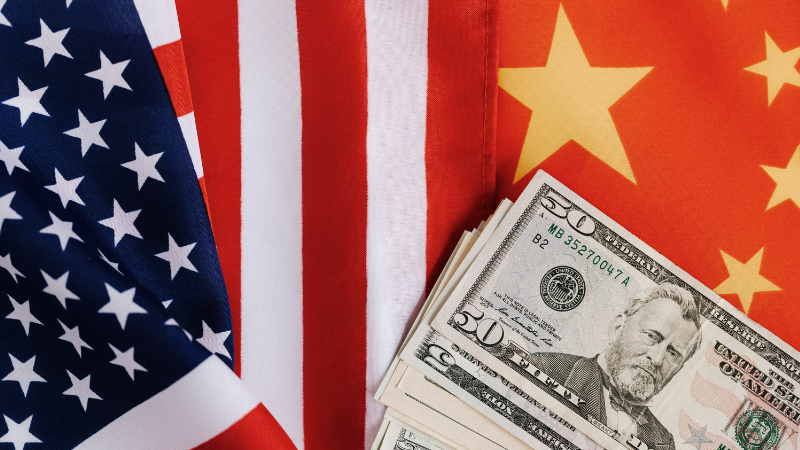
The relationship between the United States and China encompasses a significant aspect of international debt. The U.S. owes a considerable amount of money to various foreign entities, including China. While the exact figures can fluctuate over time, it is essential to understand the dynamics surrounding this debt and its implications.
1. U.S. Treasury Bonds
The primary form of debt owed by the U.S. to China comes in the form of U.S. Treasury bonds, also known as U.S. government debt. These are financial instruments issued by the U.S. Department of the Treasury to fund the government's budget deficits. China holds a significant amount of these bonds, making it one of the largest foreign holders of U.S. debt.
2. The Exact Amount and Fluctuations
The exact amount of U.S. debt owed to China can vary due to factors such as bond purchases and sales, exchange rate fluctuations, and changes in economic conditions. As of the most recent data available, China held approximately $1.07 trillion worth of U.S. Treasury securities as of May 2023. However, it is important to note that the exact figures can change over time as the U.S. issues new debt and China buys or sells existing holdings.
3. Importance of Chinese Holdings
China's holdings of U.S. Treasury bonds are significant for several reasons. Firstly, these holdings enable China to earn interest on the debt it holds, providing a return on its investment. Additionally, these holdings represent a financial relationship between the two countries that has both economic and geopolitical implications.
4. Debt and Economic Stability
The U.S. debt held by China is primarily a result of the U.S. trade deficit with China. As China exports more to the U.S. than it imports, it accumulates U.S. dollars, which it then invests in U.S. Treasury bonds. This relationship has both advantages and disadvantages. On one hand, it allows the U.S. to finance its budget deficits and maintain economic stability. On the other hand, concerns arise about the level of dependency and potential risks associated with significant foreign debt holdings.
5. U.S.-China Economic Relations
The amount of debt owed by the U.S. to China is part of the broader economic relationship between the two countries. While debt can create interdependencies, it is important to view it within the context of overall trade, investment, and financial flows between the U.S. and China. Both countries have complex economic relations that go beyond debt obligations, encompassing areas such as trade, investment, technology transfer, and intellectual property rights.
The U.S. owes a significant amount of money to China, primarily in the form of U.S. Treasury bonds. However, the exact figures can change over time. China's holdings of U.S. debt are part of the broader economic relationship between the two countries. While some concerns arise about the level of dependency, it is important to view this debt within the context of overall economic relations. The U.S. and China have complex economic connections that extend beyond debt obligations and encompass various aspects of trade, investment, and financial interactions.
Does China Have the World's Largest Economy?
The question of whether China has the world's largest economy is a topic of considerable debate and analysis. The determination of the size of an economy depends on several factors, including measurement techniques, exchange rate considerations, and the base year for comparison. It is important to understand the different measures used to assess the size of an economy and the evolving dynamics in the global economic landscape.
1. Gross Domestic Product (GDP)
Gross Domestic Product (GDP) is a common measure used to assess the size and growth rate of an economy. It is the total value of all goods and services produced within a country's borders over a specific period. When comparing GDP, two main approaches are used nominal GDP and purchasing power parity (PPP) GDP.
2. Nominal GDP Comparison
When comparing nominal GDP, which is calculated using exchange rates, the United States has traditionally held the position of having the world's largest economy. However, China has experienced rapid economic growth, and in recent years, its nominal GDP has been closing the gap with the United States.
3. Purchasing Power Parity (PPP) Comparison
Purchasing Power Parity (PPP) takes into account the relative prices of goods and services in different countries, providing a more accurate measure of economic size and living standards. In terms of PPP GDP, China surpassed the United States and became the largest economy in the world in recent years. This is primarily due to China's large population and lower cost of goods and services compared to the United States.
4. Other Factors to Consider
While GDP is a commonly used indicator to compare economies, it is important to consider other factors that contribute to a country's overall economic strength. These factors include technological advancement, innovation, infrastructure, human capital, productivity, income distribution, and quality of life indicators. The size of an economy is just one aspect of its overall performance and does not necessarily reflect its level of development or sustainability.
5. Evolving Dynamics in the Global Economy
The global economic landscape is constantly evolving, with shifts in economic power and changing dynamics among countries. While China has experienced remarkable economic growth in recent decades, it still faces challenges such as income inequality, environmental issues, and transitioning into a more sustainable model of growth. Meanwhile, the United States remains a dominant player in various industries and maintains a high level of technological innovation.
The question of whether China has the world's largest economy depends on the perspective and measurement used. In terms of nominal GDP, the United States has traditionally held the top position. However, when considering PPP GDP, China surpassed the United States and became the largest economy in recent years. It is important to note that economic size is just one aspect of overall economic strength, and other factors such as technological advancement, innovation, and quality of life indicators also contribute to a country's economic prowess. The global economic landscape continues to evolve, and ongoing shifts in economic power are expected in the coming years.

