




Image from iStock
Technological advancements in various sectors, especially automotive, communications and industrial, have resulted in more improvements in wire harnesses. This efficient, organized and protective cabling will continue to trend toward high performance and weight reduction while matching the more complex requirements in today’s applications.
In the automotive industry, there are divergent specifications, one for internal-combustion engine (ICE) vehicles and the other for electric and hybrid types. EVs and HEVs call for wire harnesses that can handle high-voltage architectures, ranging from 400 to 800V or even 1,000V and above compared to the 12 or 48V in conventional vehicles. Such high-voltage systems are designed so that EVs can accelerate and charge faster. However, they must be supported by smaller and lighter cables for overall vehicle efficiency, range and performance, in addition to easier routing and installation.
Across electronics applications, the requirement is for wire harnesses that can support high-speed data transmission, driven by 5G, AI and IoT deployment. In addition, these cable looms must likewise be lightweight and space-saving in consonance with the miniaturization trend. They should also be durable to withstand environmental conditions, as they are used in data centers, telecom networks and advanced systems in vehicles for automated driving and in factories for industrial automation.
Alternative conductor materials
Copper remains the conductor material of choice for wire harnesses because of high conductivity and durability but is expensive, being vulnerable to demand and supply chain changes.
In comparison, aluminum is significantly cheaper, has more stable pricing and is about 30 percent lighter. However, it has lower electrical and thermal conductivity and tensile strength and higher contact resistance than copper.
To capitalize on this material’s weight and cost advantages, there are aluminum alloy materials being developed to address these issues.
One early breakthrough was from Sumitomo, which used an aluminum, iron and magnesium composition to realize “both workability and performance, achieving tensile strength and conductivity exceeding the target levels.” The company’s study was on the “physical properties of materials that allow aluminum wires with a maximum cross-sectional area of 0.75 mm2 to replace conventional standard copper wires for low voltage with a cross-sectional area of 0.5 mm2.” It also covered the development of terminals specifically designed for aluminum wires and a corresponding crimping method.
Furukawa AS, meanwhile, introduced aluminum wiring harnesses based on aluminum and copper wire with copper terminals. It came up with a welding technology as well, to achieve a corrosion-resistant joint, eliminating the need for and the additional cost of covering it with plastic.
In China, Henan Tianhai Electric Appliance has produced an aluminum alloy wire for use in automotive batteries. This is a composition of aluminum, iron, copper and magnesium. Copper is included to boost resistance stability, iron to increase creep resistance and prevent relaxation or deformation problems from sustained stress, and magnesium to improve tensile strength and corrosion resistance.
As for the high voltage requirement in EVs, Sumitomo will continue to pursue further research, acknowledging that “aluminum wiring harnesses, which can reduce vehicle weight, will become increasingly important.”
Protective coatings that ensure minimum oxidation reaction and long operating life are also used and being further developed.
China’s manufacturing agenda
Chinese manufacturers will sustain initiatives for the development of lighter and improved wire harnesses, especially high-voltage types, in the coming years.
Being in the largest EV market, companies will remain focused on this growing application base. Kunshan Huguang, for instance, realized a total sales value of $222.5 million from high-voltage wire harnesses for automotive use in 2023, posting an annual growth rate of 51.5 percent from 2021. Encouraged by this expansion, the company announced a new project in 2024, investing $86.11 million to be able to turn out 1.65 million sets every year. In addition, its annual output of special wire harnesses will reach 300,000 sets once mass production begins.
Based on statistics from Huajing Intelligence Network (www.huaon.com), China’s market for high-voltage automotive wire harnesses hit $1.23 billion in 2021, soaring by 159.8 percent year on year. In 2022, this category grew further and reached $1.96 billion, still a sizeable 59.6 percent increase and projected to maintain a two-digit annual growth rate through 2025.
Shangpu Consulting breaks down the China automotive wire harness market to $13.15 billion and $5.09 billion, respectively, for ICE and electric vehicles by the end of 2025.
Globally, wire harnesses for the automotive industry stood at $57.47 billion in 2023, with China accounting for $55.34 billion, according to YuBoZhiYe Industry Research Institute. The same source said the category would rise to $89.5 billion worldwide by 2030. Based on its estimates, chassis, body and HVAC wire harnesses are the top types with a combined market share of about 50 percent.
Production pool
There are over a thousand makers of wire harnesses in China, led by Kunshan Huguang, Luxshare, Zhejiang Chint and Tongwei. They also include global leaders such as Yazaki, Sumitomo and Furukawa.
The factories are found in Shenzhen, Dongguan, Foshan, Suzhou, Changzhou, Ningbo and Hangzhou, with some operating in inland provinces such as Shandong and Sichuan.
China-made wire harnesses
Copper- and aluminum-based wire harnesses for automotive, communications, medical and industrial applications are available in China. These usually have PVC or PE jackets, with plugs from AMP, TE Connectivity, Molex, Harting, JST, LEMO and Amphenol.
Customization remains widely accommodated by most Chinese makers, with such products accounting for more than 70 percent of their shipments.
Regardless of specifications, China-made wire harnesses follow industry standards, including UL, CE, TUV, VDE, CSA, CCC, SAA and RoHS.
At time of writing, material costs are expected to remain stable and keep prices of wire harnesses flat until the end of 2025.
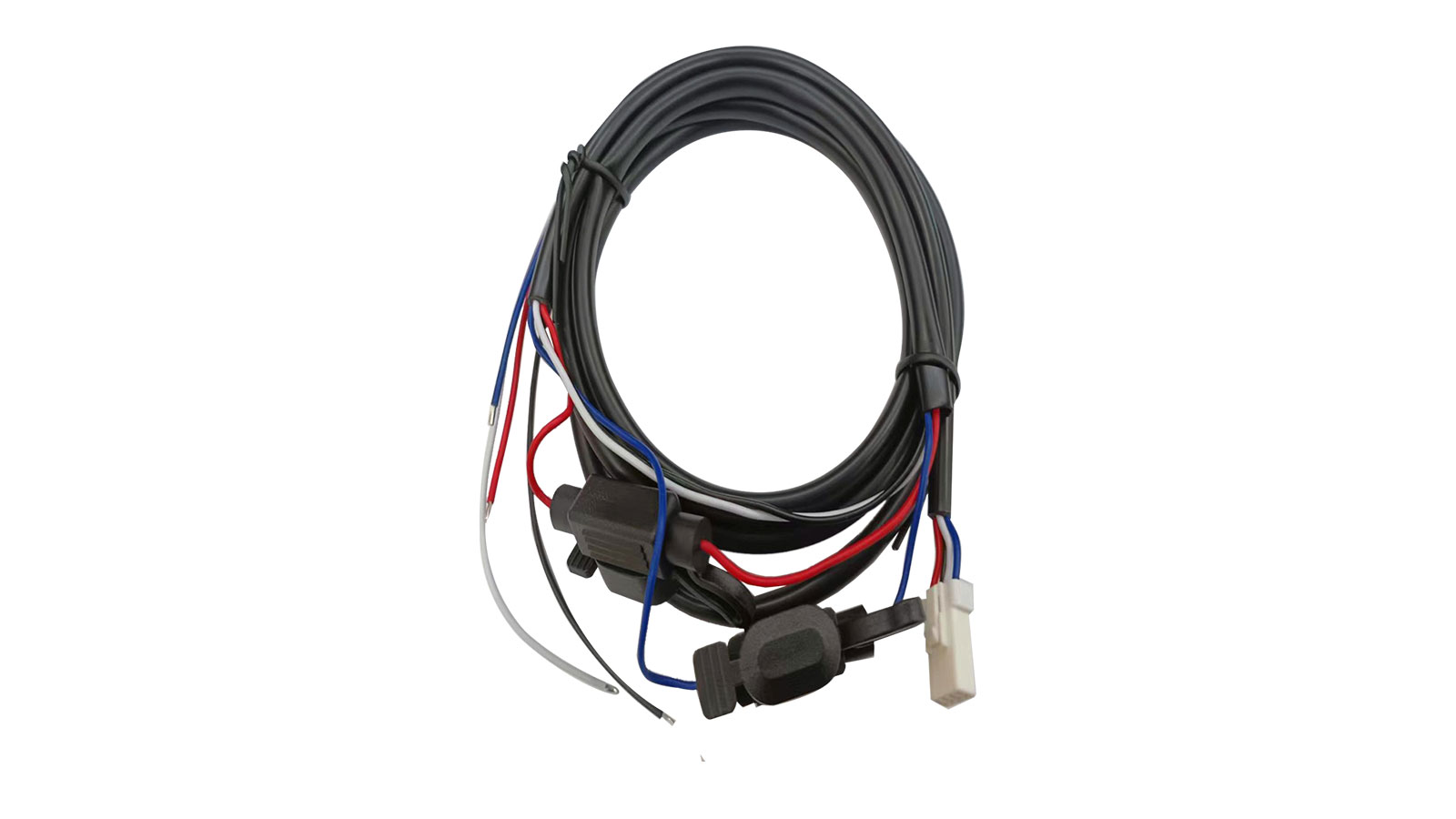
Wire harness, 28 to 32AWG wires
Company: Dongguan Enkang Electronic Technology Co. Ltd
The EK wire harness from Dongguan Enkang uses nylon 66 or LCP for the housing, phosphor bronze with tin plating or selective gold for the terminals and wires in 28 to 32AWG sizes.
MOQ: 2,000 units
Lead time: 15 days
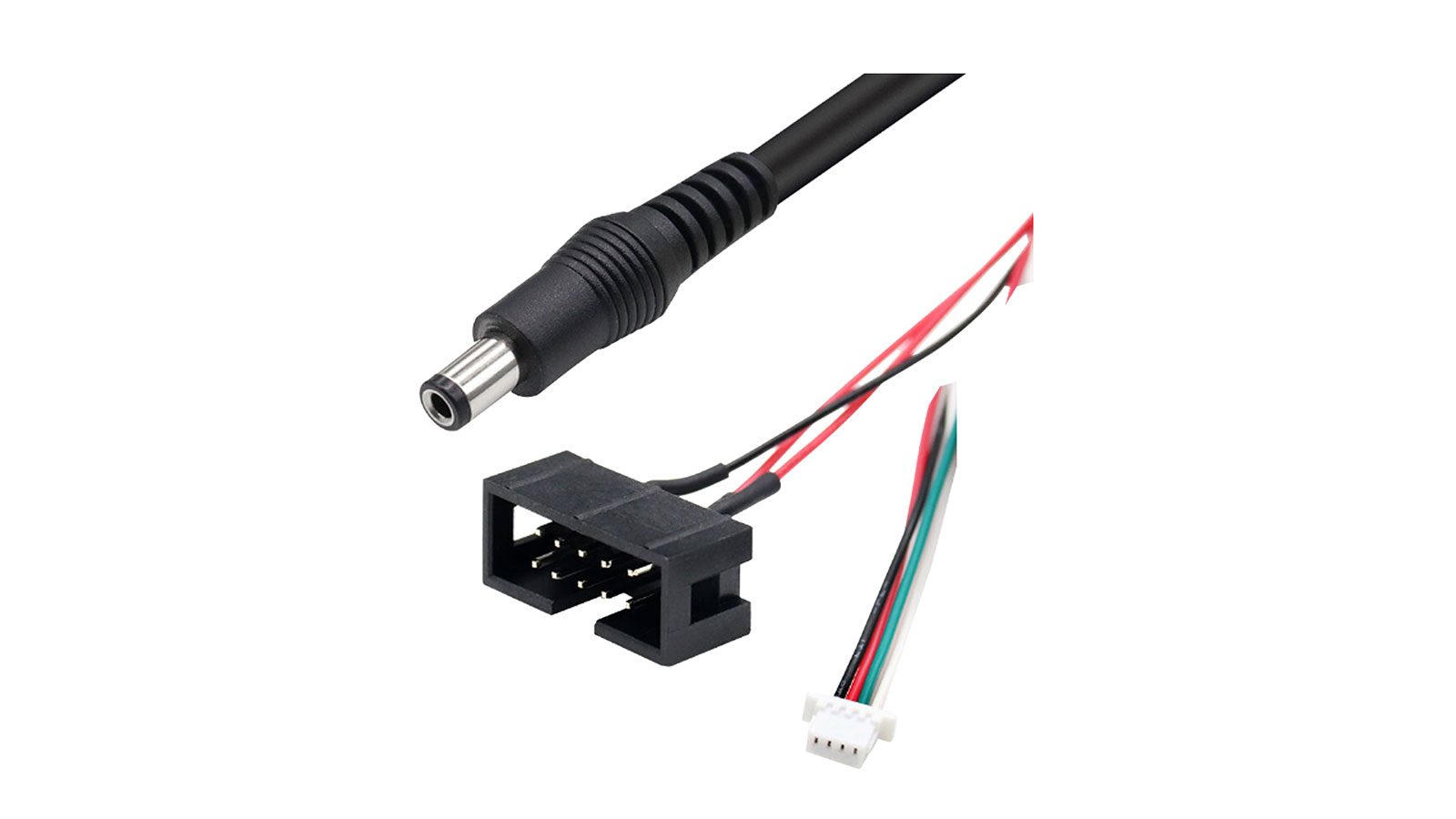
Wire harness, four- and 10-pin connectors
Company: Dongguan Hundu Electronic Co. Ltd
From Dongguan Hundu, the HD20240722-01 is a UL-listed wire harness consisting of HSG wires with four-pin connectors and a 10-pin connector.
MOQ: Negotiable
Lead time: 3 days
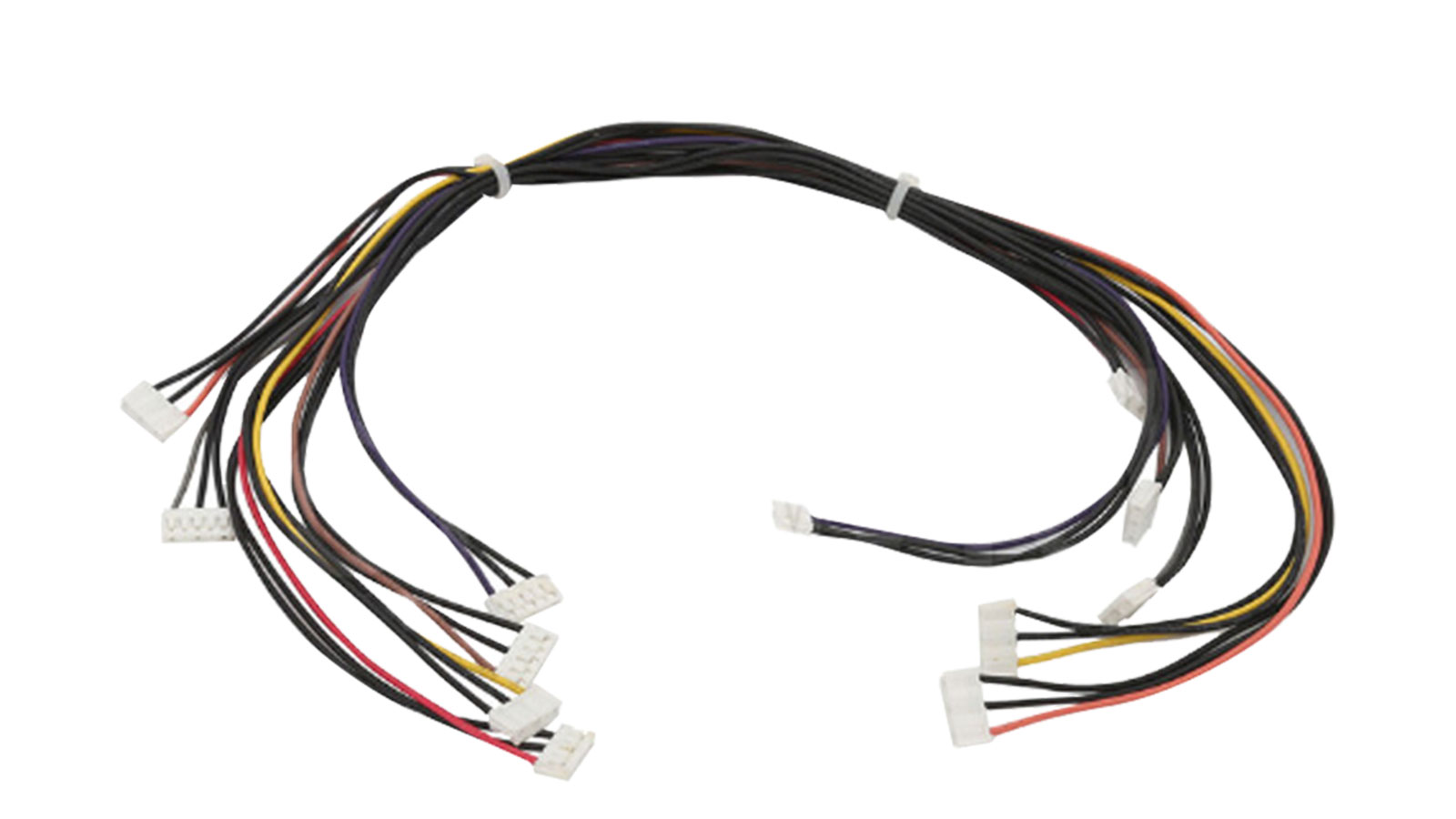
Wire harness, six-way connectors
Company: Guangzhou City Youye Electronics Co. Ltd
Designed for use in washer-dryers, the YY250114-08 wire harness from Guangzhou City Youye uses six-way JST-branded connectors, pure copper or custom wires and PVC, silicone, PE, Teflon, rubber or LSZH insulation. It conforms to CE, RoHS and TÜV standards.
MOQ: 200 units
Lead time: 10 days
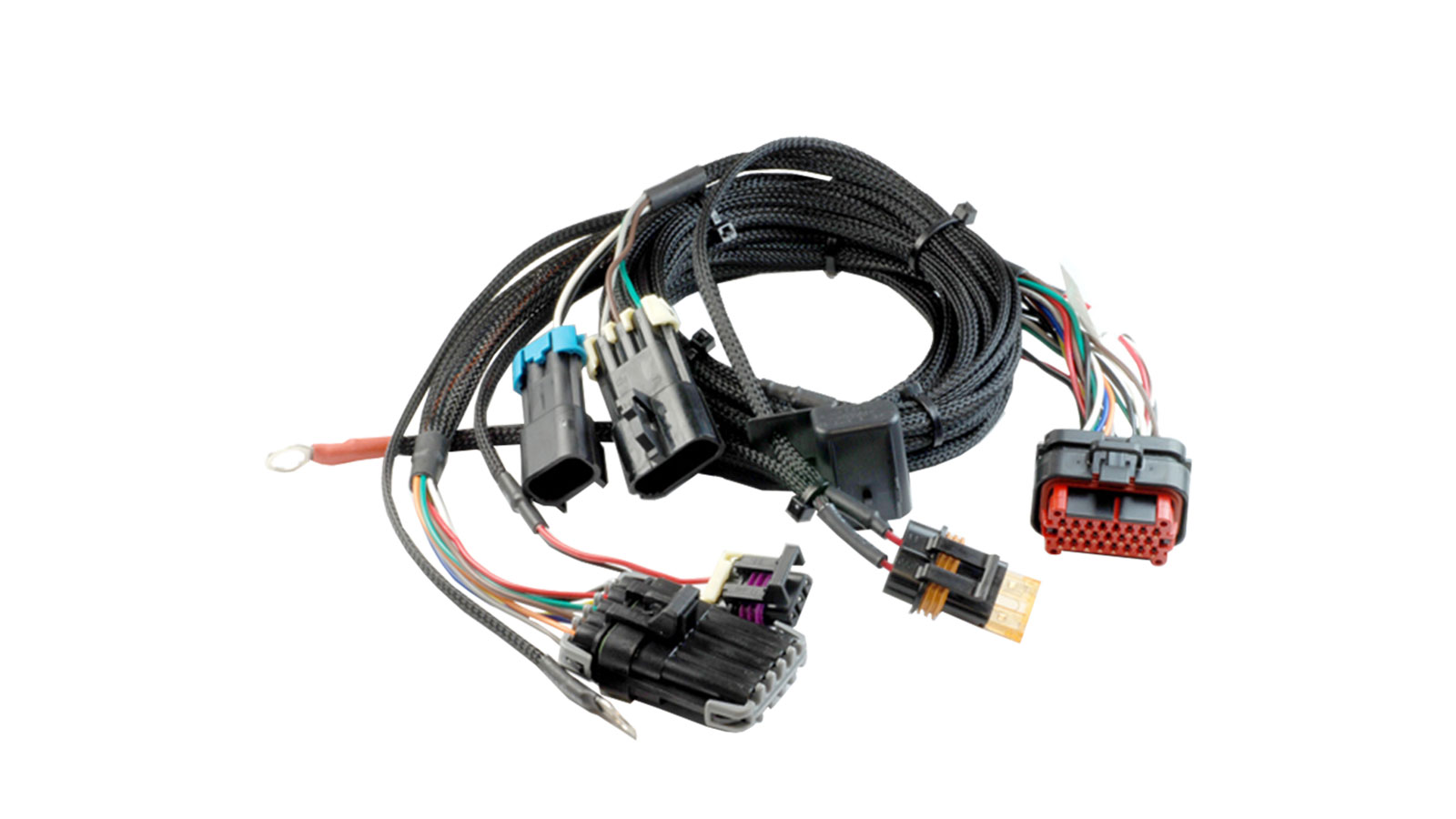
Wire harness, IPC Class 2, UL, RoHS
Company: Juscom Inc.
Juscom’s 1160-252 wire harness meets IPC Class 2 and above as well as UL and RoHS standards.
MOQ: 1,000 units
Lead time: 7 days

