Download App
Better Online and Trade Show Sourcing Experiences.Scan the QR code to download.
Learn More
Hot Topics
Companies look to introduce more multicoil inductive types, while a few start offering wireless charging coils based on magnetic resonance.
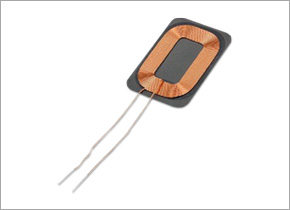
High growth projections for wireless chargers spur China manufacturers of the key component, coils, to step up product efforts. On the agenda is improved performance, with more companies eyeing the release of multicoil types to raise power transfer efficiency to 80 percent. Only large and midsize local makers offer such kinds as part of their standard selections at present.
Slimmer units are also an objective to match the continuing miniaturization trend in electronics. Suppliers have realized coils as thin as 0.5mm for smartphone wireless chargers, and will target leaner configurations in coming models. In general, they can customize dimensions to suit requirements.
To cover a range of devices based on different wireless charging standards, makers plan to adopt multimode or all-in-one solutions. They are still watching developments in this area but will be ready to introduce models that support two magnetic inductive methods, and those with inductive and resonant charging capability. Current turnout uses magnetic induction technologies Qi and PMA, with units based on the former constituting the bulk of supply.
In response to the projected shift to magnetic resonance, a few domestic enterprises, including Shenzhen Linyang, have begun releasing Qi 1.2 wireless charging coils. More are expected to follow suit in coming years as adoption accelerates. The technology will account for up to 80 percent of the wireless charging device industry's estimated $15 billion sales value by 2020, according to Pike Research. At present, its share is 10 percent.
The major applications that will ramp up demand for wireless chargers and, consequently, coils include smartphones, wearable devices and electric vehicles. In wireless charging receivers, volume for smartphones and wearables in 2015 reached more than 120 million and 20 million units, respectively, according to IHS. This will have increased over 50 percent by end-2016. In terms of revenue, receivers for wearable electronics will increase to $800 million in 2017 from $430 million in 2015.
The burgeoning line is expected to attract more companies in China, especially those specializing in coils and transformers. The current count surpasses 200, with at least 70 percent locally owned. Most factories are in Guangdong, Zhejiang and Jiangsu provinces, specifically in the cities of Shenzhen and Dongguan in the first and Ningbo in the second.
The majority of the makers ventured into the category in the past one or two years. Wireless charging coils account for 10 to 20 percent of their deliveries.
XP Power Electronics Co. Ltd, which has been manufacturing passive and discrete components since 1992, began offering wireless charging coils in 2015. It looks forward to sales growth exceeding 40 percent in the next one or two years. Meisongbei Electronics Co. Ltd is confident shipments will rise by more than 20 percent again in 2017.

More Sourcing News
Read Also

关注 “环球资源外贸” 官方微信,获取实时外贸资讯
iOS & Android
iOS & Android(Mainland China)
Copyright © 2026 Publishers Representatives Limited. All rights reserved.




