Download App
Better Online and Trade Show Sourcing Experiences.Scan the QR code to download.
Learn More
Hot Topics
by Arvi Marie Dacuba (Content Editor)
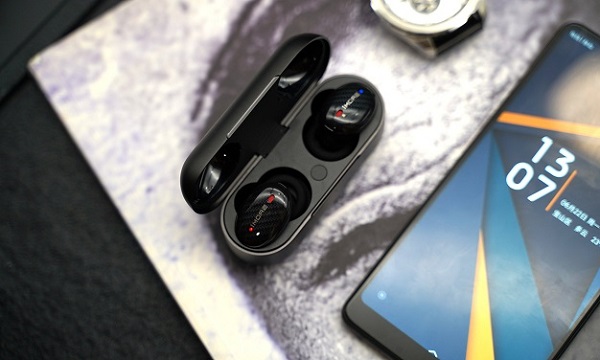 Image Source: Pixabay
In the past few years, consumers have slowly been adapting to wireless technology, with the use of wireless audio and charging devices being the most common. This new lifestyle change has paved way to a plethora of wireless mobile accessories. Counterpoint Research estimates 310 million TWS earphones to be shipped in 2021, a 33 percent increase compared to 2020 sales. Strategy Analytics also notes that 50 percent of consumers prefer to use wireless earbuds. With wireless tech getting more popular day by day, buyers might wonder: will cables be obsolete or are they here to stay? Will wireless devices slowly replace cables? Which of them should be sourced?
The ease of use of wireless earbuds, Bluetooth headphones, speakers and wireless chargers has allowed users to enjoy an untethered lifestyle. They are able to move around freely and do various activities without any hassle such as cooking, working out, running and riding public transport to name a few. The use of cables in such instances can cause a minor inconvenience. Kevin Francisco of The Modern Creatures notes in an Analyst's Choice episode that cabled earphones "magically tangle themselves" when placed inside bags, an everyday hassle almost everyone can relate to. Several wireless earbuds can also auto-connect, which saves the users the hassle of having to manually connect to the phone every time. When charging on the go, people with wireless charging power banks won't have to bring cables with them since today's Qi-enabled power banks are equipped withsuction cups or magnets that keep the phone in place.
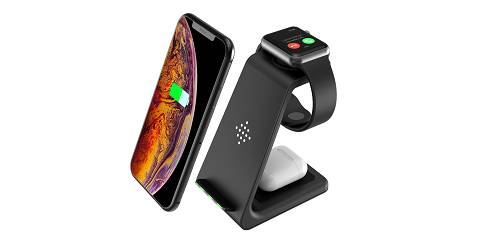 Image Source: Pixabay
In a work from home or office setup, the cluttering of cables in a desk can hinder productivity. This is where wireless charging pads can serve as an advantage since users can simply plop their phones and other mobile accessories on top of these chargers. In addition, Wi-Fi and cellular connectivity offer great advantages for mobility compared to LAN cables for internet connectivity. As such, in terms of portability and convenience, wireless devices are the way to go.
Despite the popularity of wireless peripherals, the use of cables is still prevalent. One of their main advantages is their faster data transfer speed when uploading files from phones and cameras to a computer. In this day and age where 4k videos are becoming a standard in high quality content, using cables will only take seconds to a few minutes in transferring data compared to wirelessly uploading files to the Cloud or via Bluetooth, which can take up to several hours.
Another advantage of cables is the charging speed. Most of today’s USB power adapters range from 20 to 65W compared to the 5 to 15W range of wireless chargers. Phones can be charged from zero to 100 percent in just half an hour. Wireless charging on the other hand is still quite inefficient and will take hours to completely charge a phone. If the phone is not properly placed at the center of a Qi-enabled charger, charging speed will be slower than normal, a disadvantage that won't happen in cables. Wireless charging also produces more heat, and too much heat can be harmful to a phone battery's health. In terms of charging, cables still have the upper hand. In fact, the global revenue for USB chargers is estimated to reach US$36.1 billion by 2027, growing at a CAGR of 4.7 percent. These data imply that consumers still use cables to charge their phones and are not completely switching to wireless charging just yet.
In terms of reliability and stability of internet, cables are still the real winner. Although cellular data and Wi-Fi offer the convenience of mobility, their signals can be unstable at times. This occurrence is clearly seen during livestreams and Zoom meetings wherein participants accidentally disappear due to poor internet connectivity. Hence, LAN cables offer the advantage of a faster and undisrupted connection.
Other pros of cables are in pricing and audio quality. Wireless devices cost twice or thrice as much as traditional cabled accessories. For audio, latency won't be an issue. Audio detail and clarity are intact with high quality wired headphones. However, it is important to note that there are now several flagship TWS earbuds with low latency and active noise-cancelling features.
Wireless technology offers convenience and mobility but can be inefficient and costly. Cables on the other hand can be a handful, but they offer reliability, stability, and affordability. Cables are here to stay, as wireless charging and data transfer still have not reached the same level of reliability and efficiency that cables provide. Both have their pros and cons, but it's really up to the consumers in terms of their needs and lifestyle. Both are being used based on the advantages they bring to the table. Hence, sourcing both wireless and wired accessories here at Global Sources would be a smart move.
More Sourcing News
Read Also

关注 “环球资源外贸” 官方微信,获取实时外贸资讯
iOS & Android
iOS & Android(Mainland China)
Copyright © 2026 Publishers Representatives Limited. All rights reserved.




