Download App
Better Online and Trade Show Sourcing Experiences.Scan the QR code to download.
Learn More
Hot Topics
Xiaomi’s latest flagship smartphone is perhaps its most distinguishing, but the device still comes at a great price.
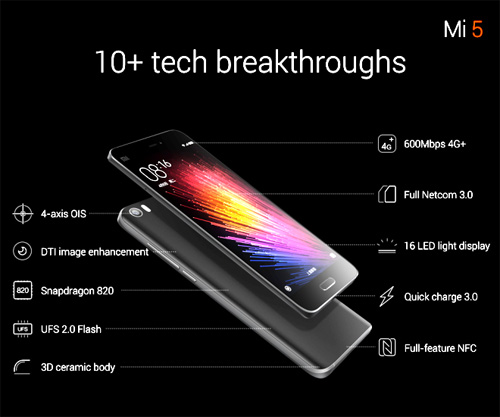
The features of the Mi 5 match other top-tier phones in many ways,
including its Snapdragon 820 processor (Image: Xiaomi)
Samsung and LG were two of the biggest names to announce new smartphones at the Mobile World Congress in Barcelona, but Xiaomi has been getting just as much attention as the bigger players. The company has quickly become one of the largest smartphone makers in the world by shipment, of course, but it is not yet a major player internationally as it relies largely on sales in China. With the Mi 5, Xiaomi seems to have a more international focus. The company wants to be seen as one building unique designs and not just copying Apple, which is believed to be the reason it has not expanded to Western markets lest it faces patent lawsuits.
The Mi 5 does appear to be following Apple and the OnePlus X thanks to is smooth glass or ceramic back. OnePlus offered the same options for its OnePlus X phone, with the ceramic variant costing more in both cases. The Mi 5 has a 16MP camera, up to 128GB of storage and uses the Qualcomm Snapdragon 820 with 4GB of RAM. It also has a 3,000mAh battery, which is becoming a floor in top-tier Android phones. In fact, all these specifications are quite normal for a flagship phone this year, but as always, the standout feature is the price. It will cost CNY1,999, or a little more than $300, for the basic model.
The Mi 5 starts selling in China on the first week of March, sometime after which it will go to India and then head to other markets, according to Xiaomi. While the company is the China smartphone maker with the most buzz, and frequently referred to as the most valuable startup in the world, the country’s increasing dominance in the smartphone market comes courtesy of many different companies. Huawei and ZTE have a much bigger footprint in foreign markets. Xiaomi's challenge is to now expand in a similar way. As the giants in China smartphones start to take the reigns in design, smaller local manufacturers will also be taking more leads from homegrown companies than what they see coming in from overseas.
More Sourcing News
Read Also

关注 “环球资源外贸” 官方微信,获取实时外贸资讯
iOS & Android
iOS & Android(Mainland China)
Copyright © 2026 Publishers Representatives Limited. All rights reserved.