
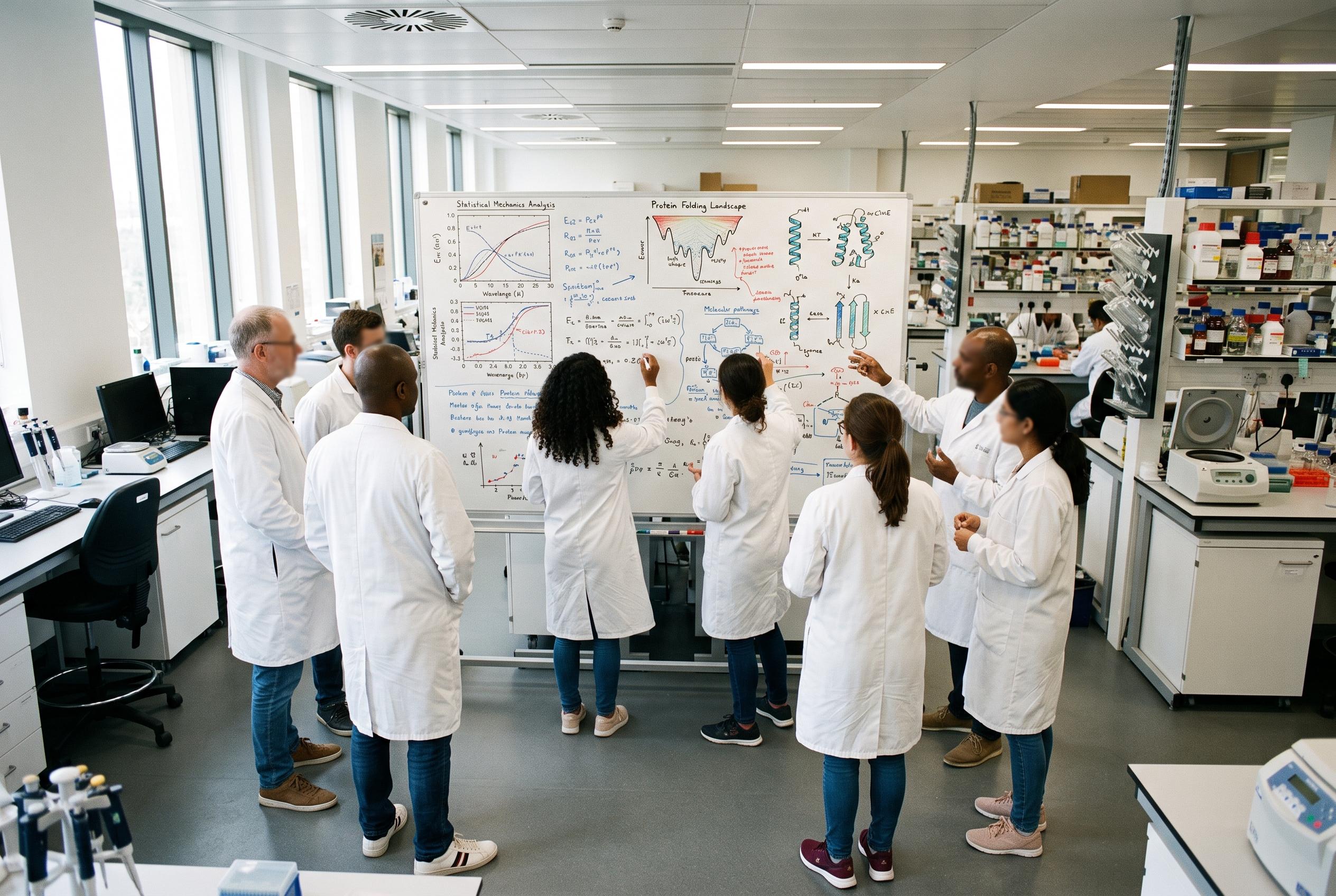
- Researchers use AI and statistical physics to identify almost 800 promising plant proteins as emulsifiers
- Effective tests conducted on common proteins like pea and potato support AI predictions
- New approach could accelerate development of sustainable, plant-based products across industries
AI Finds Nearly 800 Plant Proteins That Might Act as Emulsifiers
Researchers at the University of Leeds have turned to an AI system to detect almost 800 plant proteins that could potentially serve as emulsifiers. This breakthrough could speed up the development of plant-based foods, cosmetics, pharmaceutical products, paints, and other kinds of manufactured goods.
The study tackles a longstanding problem in ingredient discovery. Companies and scientists on the hunt for new emulsifiers often have to sift through tons of possibilities, testing numerous proteins before finding ones that do the job well. Traditional screening methods involve a lot of lab work, which can be both costly and time-consuming, sometimes prohibitively so.
The Leeds team says that their approach could ease some of that burden by combining machine learning with concepts from statistical physics, allowing them to scan through millions of potential proteins much faster. Instead of relying on years of trial and error to test every candidate, researchers can use the model to pinpoint the most promising options and then direct lab resources toward them.
This shift could be a game-changer for suppliers working across various sectors, food, cosmetics, pharmaceuticals, and industrial formulations, because in all these fields, emulsifiers are key to creating products that are stable, reliable, and easy to use. Plus, being able to find plant-based options more quickly might be especially appealing for companies seeking to develop plant-based formulations.
Why Emulsifiers Really Matter
Emulsifiers are important because they keep oil and water mixed together. Without them, these two substances tend to separate, which can mess with a product’s look, texture, stability, and how well it works.
In food, they are used in a bunch of staples like mayonnaise, sauces, and ice cream, helping maintain the right structure and consistency. But the same idea applies outside of food, lotions and medicinal creams often contain both water and oil components that need to stay combined. Likewise, paints rely on ingredients that help maintain a uniform mixture.
Since emulsifiers are used in such a wide variety of products, ingredient makers are very eager to find options that not only meet technical specs but also fit evolving consumer and industry preferences. Plant-based proteins are becoming a hot focus, especially because many are exploring alternatives to animal-derived ingredients.
Now, the Leeds researchers aren’t saying all 800 proteins are ready to go right now, far from it. What they’ve done is highlight a list of promising candidates. The next step will be testing these proteins under real-world conditions to see how they perform in actual products.
How AI Helps Narrow Down the Search
This model leverages machine learning along with statistical physics. Basically, machine learning helps spot patterns in the available data and suggests which proteins might have the right properties. On the other hand, statistical physics offers a framework for understanding how materials behave and interact, kind of like a guidebook for predicting the behavior of these proteins.
Putting these tools together, the team can make educated guesses about which plant proteins might work as emulsifiers. This is super helpful because the universe of potential proteins is gigantic. Testing each one individually would take forever, cost a lot, and require tons of lab capacity.
Dr. Simha Sridharan, a postdoctoral researcher involved in the project, commented that as demand for sustainable, plant-based ingredients rises, researchers face a huge challenge. The number of potential proteins out there is vast, and assessing them with standard methods just isn’t practical.
So, instead of starting with broad, mostly experimental screening, the AI-powered approach lets scientists first do a data-driven hunt. The model points out promising leads, and then lab work can zoom in on those candidates specifically.
Of course, physical testing isn’t going anywhere, an emulsifier’s performance still needs to be verified in real formulations. Sometimes, a protein that looks ideal in the model might not perform well in a specific product or under certain processing conditions. Still, this approach can help make the early discovery process a lot more targeted and efficient.
Nearly 800 Options That Could Work
Prof. Anwesha Sarkar, who supervised the project, said that the model uncovered almost 800 plant proteins that might have emulsifying abilities. Interestingly enough, many of these proteins hadn’t been considered for this before.
This definitely broadens the horizon for sourcing plant-based emulsifiers. Instead of sticking to a handful of familiar ingredients, researchers now have a much wider array of options to explore.
This could be especially relevant for brands working on cleaner-label products. Whether in food or personal care, there’s increasing demand for ingredients that are simple and recognizable to consumers. The research doesn’t guarantee these proteins are ready for market, further tests would be necessary, but it does supply a solid starting point.
And for pharmaceutical and industrial products? Same idea. The model could point to proteins suitable for medicinal creams or paints, but, again, performance checks are essential since formulations differ widely depending on the specific application.
Testing Pea and Potato Proteins
As part of the project, the team looked at commercially available pea and potato proteins. Both of these showed effective emulsifying properties, providing initial support for the AI’s predictions.
That connection between computer simulations and lab results is crucial, an AI system can spot patterns and rank candidates, but real-world tests are needed to confirm whether these proteins actually work as hoped.
Seeing positive results with common plant proteins like pea and potato is encouraging because it suggests that usable options might already exist commercially. It also indicates that the approach might go beyond just theory, becoming more practically applicable.
That said, it doesn’t mean every plant protein flagged by the system will perform identically. Different proteins may react differently depending on the final formulation, the desired texture, or the manufacturing conditions. More research will be needed before any candidate could be reliably adopted at scale.
What It Means for Product Development
The study, published in Communications Chemistry, is part of a larger effort to develop plant-based alternatives to animal-based emulsifiers, like milk proteins, including caseins and whey, for example.
For ingredient suppliers, being able to identify prospects faster could cut down the early stages of product development. A data-driven method helps narrow down which proteins are worth testing in the lab, saving time and resources.
This is especially critical where texture and stability are key for consumer satisfaction. For instance, in food, emulsification influences the consistency of sauces, mayonnaise, or ice cream, while in cosmetics and pharmaceuticals, it affects how creams and lotions feel and perform. The ingredient selected must do more than just mix oil and water; it has to work well in the final product.
Over time, this research might support a more streamlined process, from initial discovery, through laboratory testing, to actual product formulation. The model flags promising candidates, lab tests determine their real-life performance, and then formulators decide whether those candidates meet the specific needs of their product.
It’s worth noting, too, that this approach isn’t claiming to produce instant, ready-to-use ingredients. The proteins still need thorough testing and validation. But what it does do is help companies focus their efforts more sharply, speeding up the early stages of innovation, an important advantage, especially as the market shifts toward plant-based products.
Implications for Sourcing and Industry
Sourcing ingredients is often tricky, especially when companies aim to replace well-established materials. They need a careful balance: meeting technical specs, ensuring availability, and satisfying the final product’s needs.
By pinpointing potential emulsifiers from a vast pool of plant proteins, the Leeds model offers researchers and formulators more options to consider. This can be particularly handy for those looking to move away from milk-based emulsifiers or explore new plant-derived alternatives.
Additionally, this kind of AI application isn’t just confined to food or cosmetics, it’s part of a bigger trend where data-driven systems are increasingly guiding decision-making across industries. Here, though, the focus is squarely on ingredient discovery, using AI to guide scientific screening instead of replacing laboratory work entirely.
In the end, though, the real test comes after the predictions. The candidates must be evaluated for their effectiveness and suitability, and while the model can help prioritize the most promising options, it doesn’t guarantee any protein will make it into a commercial product.
Moving Toward More Plant-Based Alternatives
This Leeds research reflects the growing interest in plant-based materials for formulated products. Its main contribution is combining AI, machine learning, and statistical physics to search through a staggering number of potential proteins, impressive, really.
The researchers pinpointed nearly 800 plant proteins that might act as emulsifiers, many of which hadn’t been considered before. Tests involving common proteins like pea and potato demonstrated effective emulsification properties, providing support for that approach.
For industry players, food makers, cosmetics brands, pharmaceutical companies, and industrial formulators, this could mean a faster, more focused route from initial idea to finished product. They can narrow down from a vast universe of options to a smaller, more manageable set of candidates to test in the lab.
Of course, further testing and product development are vital. The model isn’t a magic bullet, but it does show how artificial intelligence can help streamline the search for plant-based options, especially compared to traditional methods.
Key Takeaways
- - Leeds researchers used AI, machine learning, and statistical physics to identify nearly 800 plant proteins with potential emulsifier properties.
- - Emulsifiers are essential for keeping oil and water mixed in foods, cosmetics, medicines, paints, and more.
- - Testing of pea and potato proteins showed effective emulsification properties.
- - The model could cut down on time and costs during early ingredient discovery by focusing on promising candidates.
- - Further lab and formulation work are needed before these proteins could be commercialized.
Disclaimer: This article may have been created with AI assistance and reviewed by our editorial team. It is provided for general informational purposes only. Readers should verify information independently before relying on this content.
Sources:
- - https://proteinproductiontechnology.com/post/university-of-leeds-ai-search-uncovers-nearly-800-plant-proteins-with-emulsifier-potential
- - https://www.newfoodmagazine.com/ai-identifies-800-plant-proteins-for-sustainable-food-emulsifiers/2136406.article
- - https://www.proteinreport.org/digests/2026-w36
